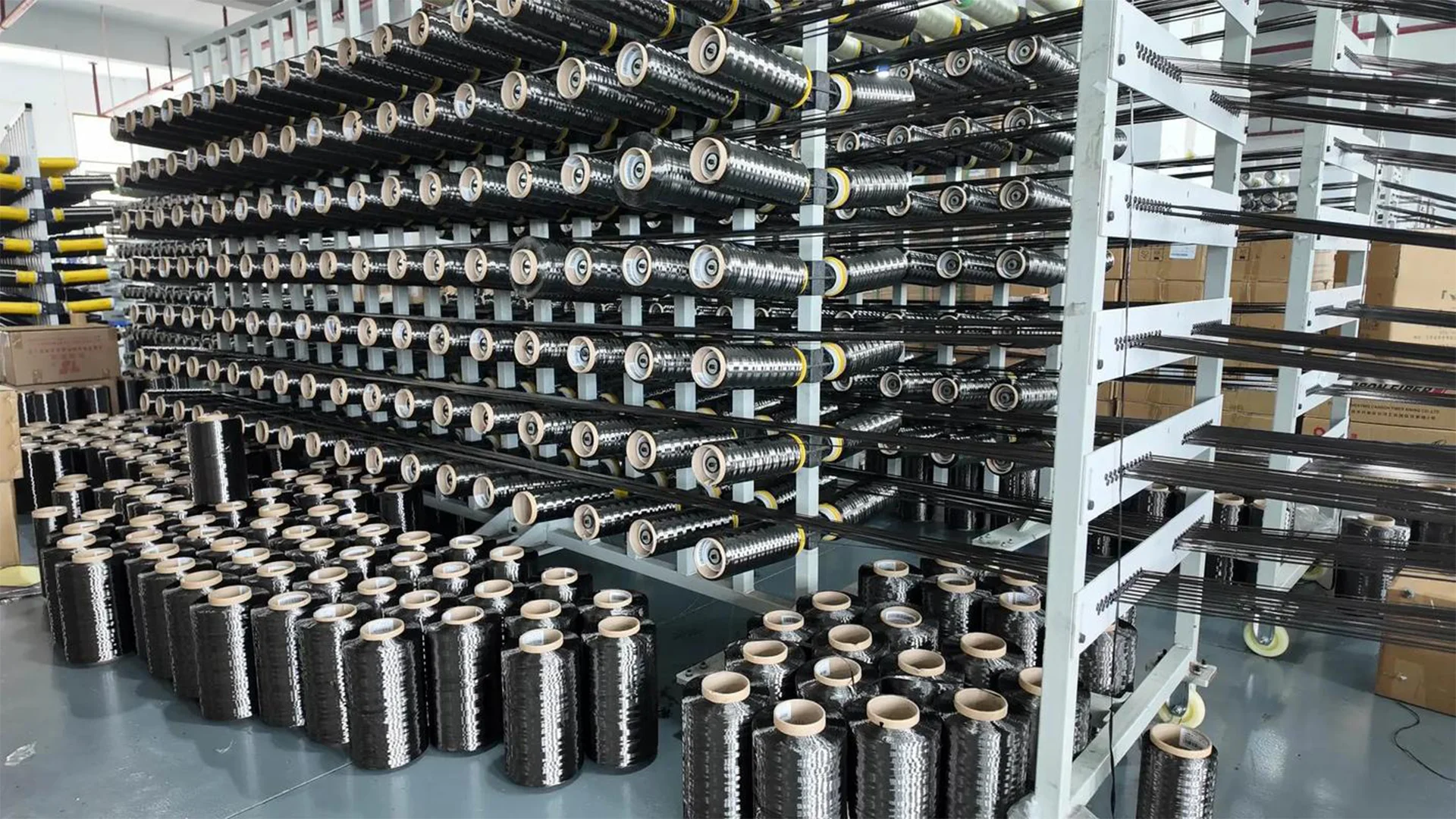
If you’ve been sourcing carbon fiber for any length of time, you know the deal: T300 and T700 are workhorses, reliable, and priced competitively. But T1100 carbon fiber mass production used to be a “someday” story — incredible specs on paper, but nearly impossible to get in volume at a price that makes sense for real projects.
That “someday” just became 2026. Two major Chinese producers have brought T1100 carbon fiber into mass production within months of each other, and the ripple effects are already hitting the market. For buyers who need high-strength carbon fiber at commercial scale, this changes the math. Let’s break down what happened, why it matters for civilian industries, and what you should think about before your next carbon fiber sheet or tube purchase order.
What Exactly Is T1100 Carbon Fiber?
T1100 carbon fiber sits at the top end of the Toray naming convention for tensile strength grades. The “1100” refers to a tensile strength of roughly 6,600 MPa — that’s 6.6 gigapascals of pulling force before this stuff breaks. To put that in plain terms: a strand thinner than a human hair can hold a weight that would snap ordinary steel wire of the same diameter. When you’re talking about carbon fiber tensile strength 6600MPa, you’re talking about a material that delivers 8–10 times the strength of steel at one-quarter the weight.
Here’s the quick comparison that matters for procurement decisions:
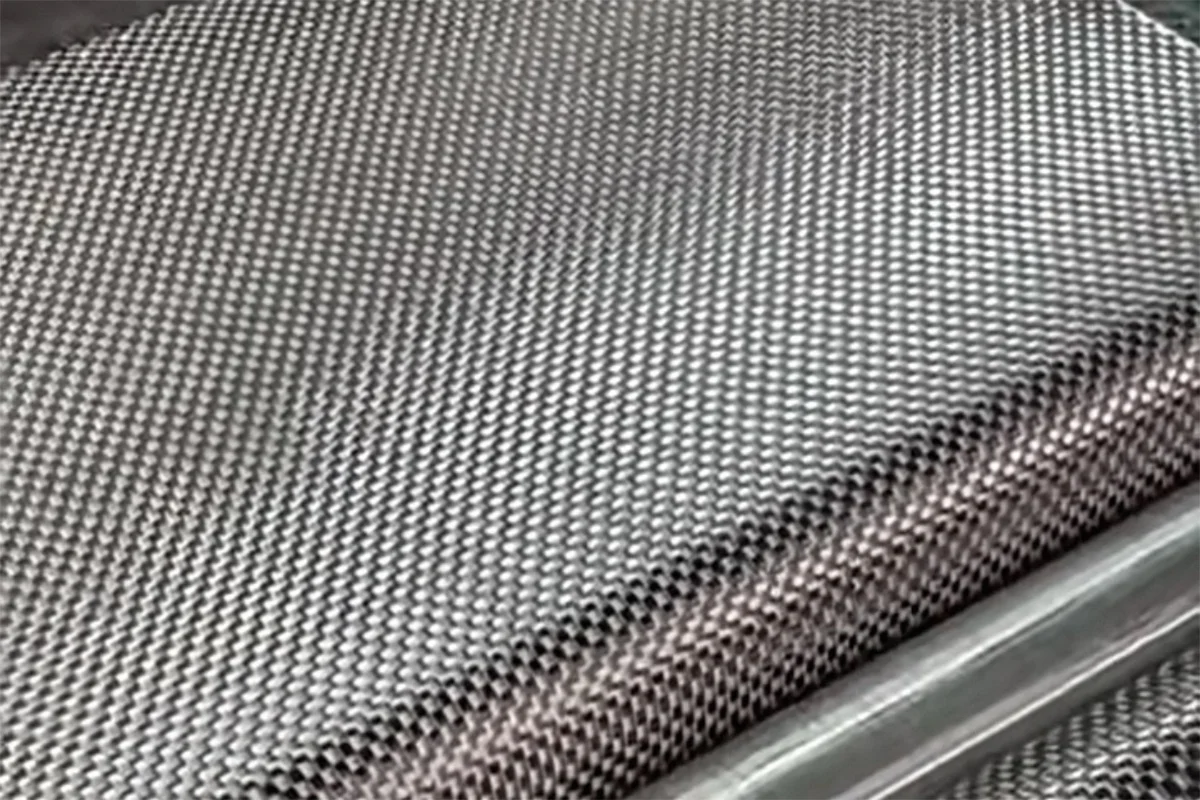
Performance comparison of standard vs. high-strength carbon fiber grades — T1100 carbon fiber delivers carbon fiber tensile strength 6600MPa:
See that last row? “Dropping” is the operative word. The cost gap between T1100 and T700 has been the biggest barrier to adoption. Mass production is exactly what closes that gap — and that’s the news we need to talk about.
T1100 Carbon Fiber Mass Production: Three Signals It’s Here for Real
1. Two Producers, Same Quarter — This Isn’t a Lab Anymore
In mid-2026, Zhongjian Technology commissioned its wet-process T1100 production line with a nameplate capacity of 5,000 tons per year. Almost simultaneously, Hengshen brought a 1,000-ton T1100 line online. Two independent producers hitting commercial scale in the same quarter is the clearest signal you can get: the process is de-risked.
When one company hits a milestone, it could be a demo. When two do it with real tonnage capacity, you’re looking at a production-grade process. That matters for supply security — you’re no longer single-source dependent.
2. Equipment Localization Above 95% — Cost Structure Has Fundamentally Changed
Here’s something that doesn’t make headlines but should: domestic production equipment for carbon fiber lines now exceeds 95% localization. That includes spinning furnaces, oxidation ovens, and carbonization furnaces — the expensive core. Plus, 3D braiding equipment has seen its own domestic breakthrough recently.
Why does this matter? Because imported equipment was the hidden cost driver. A production line built with 60% imported gear has a fundamentally different depreciation schedule than one built with 95% domestic gear. Lower capex → lower per-ton cost → T1100 becomes affordable for civilian applications that couldn’t justify it before.
3. China Hit Net Carbon Fiber Export Status in Q2 2026
The trade data tells the story: in the first half of 2026, China’s carbon fiber exports grew 36–86% year-over-year, while imports dropped 13–17%. Starting from Q2, the country became a net exporter on a monthly basis. That’s a first.
This isn’t just a vanity metric. Net export status means domestic supply comfortably exceeds domestic demand — which means T1100 isn’t being hoarded for priority channels. There’s volume available for the open market, and that’s what B2B buyers need to hear.
Where T1100 Carbon Fiber Changes the Game for Civilian Industry
Let’s get specific. Higher strength at the same or lower weight opens doors that T700 simply can’t. Here’s where the impact lands first:
Offshore Wind: 48K/50K Large-Tow Blades
Offshore wind turbines are pushing past 15 MW per unit. Blade lengths exceed 120 meters. At that scale, every kilogram matters — not just for performance, but for whether the blade can be transported and installed economically. Carbon fiber for wind energy applications has been growing fast, and T1100 in large tow counts (48K and 50K) delivers the stiffness and fatigue resistance these mega-blades need, at a per-pound cost that’s finally competitive with prepreg alternatives.
If you’re in wind energy composites, this is probably the single biggest cost-performance shift since the industry moved from glass to carbon fiber sheet in spar caps.
Low-Altitude Economy & eVTOL: Weight Is Everything
Electric vertical-takeoff-and-landing aircraft live and die by weight budget. A typical eVTOL needs to keep structural mass under 25% of maximum takeoff weight to achieve viable range. T1100 carbon fiber’s combination of 6,600 MPa strength and 335 GPa modulus means you can design thinner, lighter load-bearing structures without sacrificing safety margins.
The low-altitude economy sector — cargo drones, passenger eVTOLs, urban air mobility platforms — is one of the fastest-growing demand pools for high-grade carbon fiber for drone frames and airframe structures. See how carbon fiber drone frames benefit from this shift. Mass production means these companies can spec the material without budget overruns.
New Energy Vehicles: Every 10% Weight Cut = 6–8% Range Gain
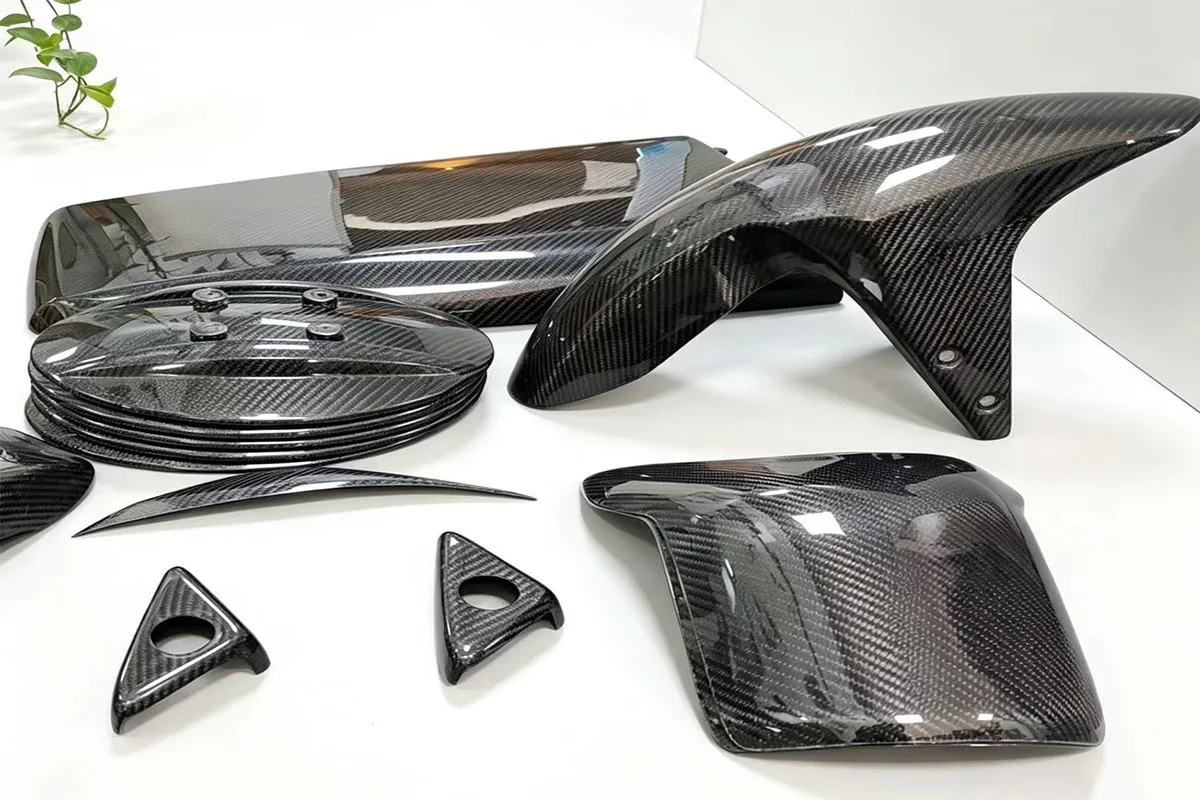
Automakers know the math: reduce body-in-white weight by 10%, and you gain 6–8% in range or equivalently shrink the battery pack. Carbon fiber lightweight automotive solutions with T1100 make structural components (B-pillars, roof rails, crash structures) lighter and stronger than T700 alternatives, which means less material is needed per part — and that partially offsets the higher per-kg price. Explore our automotive carbon fiber sheets for EV lightweighting projects.
For high-volume EV platforms, the economic crossover point is getting close. Mass production brings it closer.
Industrial Robotics, Sports Equipment & Medical Devices
Robots: Higher modulus (335 GPa) means stiffer robot arms with less deflection under load. For precision manufacturing robots, that translates directly into tighter tolerances and faster cycle times. Our robotics carbon fiber sheets are already serving this market.
Sports: Premium bicycle frames, fishing rods, racquet shafts — T1100 carbon fiber delivers the “feel” that high-end athletes pay for. With volume supply, mid-tier products can now spec it too.
Medical: Prosthetic limbs, surgical robot arms, imaging equipment supports — applications where weight and stiffness directly affect patient outcomes. Regulatory-grade T1100 supply at scale is a genuine enabler.
The Carbon Fiber Supply Chain Shift: From Import-Dependent to Net Export
For years, the supply chain story was simple: Japan and the US produced the high-end stuff, China consumed it. That’s flipped faster than most people expected.
Consider the 2026 H1 data on carbon fiber import vs export:
- Exports up 36–86% YoY — that’s not a blip, that’s a structural shift
- Imports down 13–17% — domestic substitution is working
- Q2 2026: China became a monthly net exporter of carbon fiber
And there’s another layer: recycled carbon fiber ISO 19374 is now in effect as the international standard for carbon fiber recycling. With 10,000-ton-class recycling facilities coming online, recovered fiber retains 85%+ of original tensile strength at roughly 30% lower cost. For non-primary-structure applications, this is a serious cost lever.
Bottom line: the supply base is broader, deeper, and more competitive than it was 18 months ago. If you’re still working off 2024 pricing assumptions, you’re overpaying.
Your Carbon Fiber Procurement Guide: What T1100 Mass Production Means for Your Next PO
Let’s cut to the chase. Here’s what the T1100 mass production breakthrough means for you, practically:
- Price convergence is real. T1100 pricing is trending toward 2.5× T300, down from 4–5× just two years ago. If your application can justify even a 2× premium for the performance gain, the math now works.
- Dual-source supply is available. Zhongjian at 5,000 t/yr and Hengshen at 1,000 t/yr gives you real optionality. No single-supplier lock-in.
- Lead times are shrinking. Volume production means inventory buffers. If you’re used to 12–16 week lead times for premium grades, expect 6–8 weeks for standard T1100 specifications by late 2026.
- Recycled fiber opens a cost tier. For secondary structures, fixtures, and non-critical components, recycled T1100 at 30% cost reduction with 85% strength retention is a legitimate option — and it’s now standardized under ISO 19374.
- Large tow (48K/50K) availability. If you’re in wind or industrial composites, large-tow T1100 is the cost-efficiency play. It’s now available at production scale.
The Bottom Line
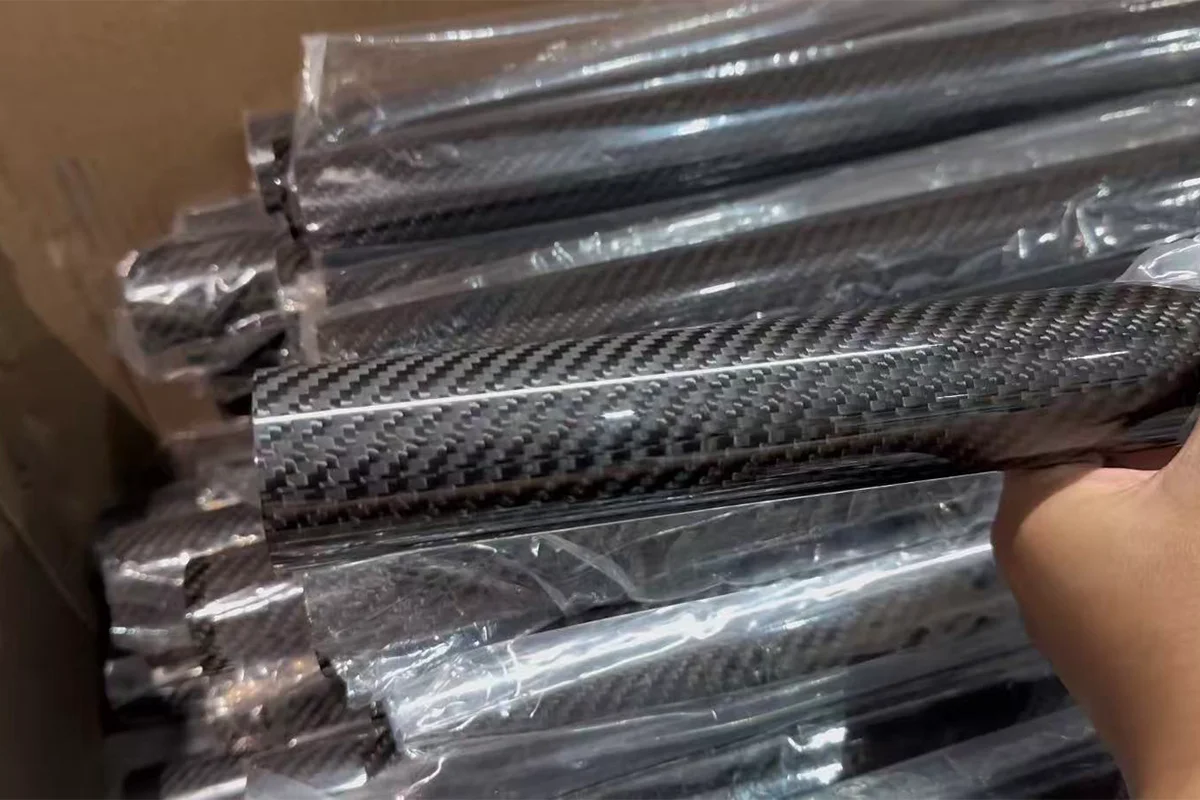
T1100 carbon fiber mass production isn’t a future milestone — it’s a 2026 fact. Two independent producers, combined 6,000+ tons per year capacity, equipment at 95%+ localization, and a supply chain that’s shifted from import-dependent to net export. The material that used to be reserved for the most demanding, budget-no-object applications is now available at commercial scale for civilian industry.
If your products involve weight-sensitive structures, fatigue-critical components, or stiffness-driven designs, it’s time to re-run your material selection with T1100 at current pricing. Whether you need carbon fiber sheets, drone-grade tubes, or CNC-machined parts, the numbers may surprise you.
© 2026 YTCarbon. All rights reserved. | Blog Category: Carbon Fiber Knowledge