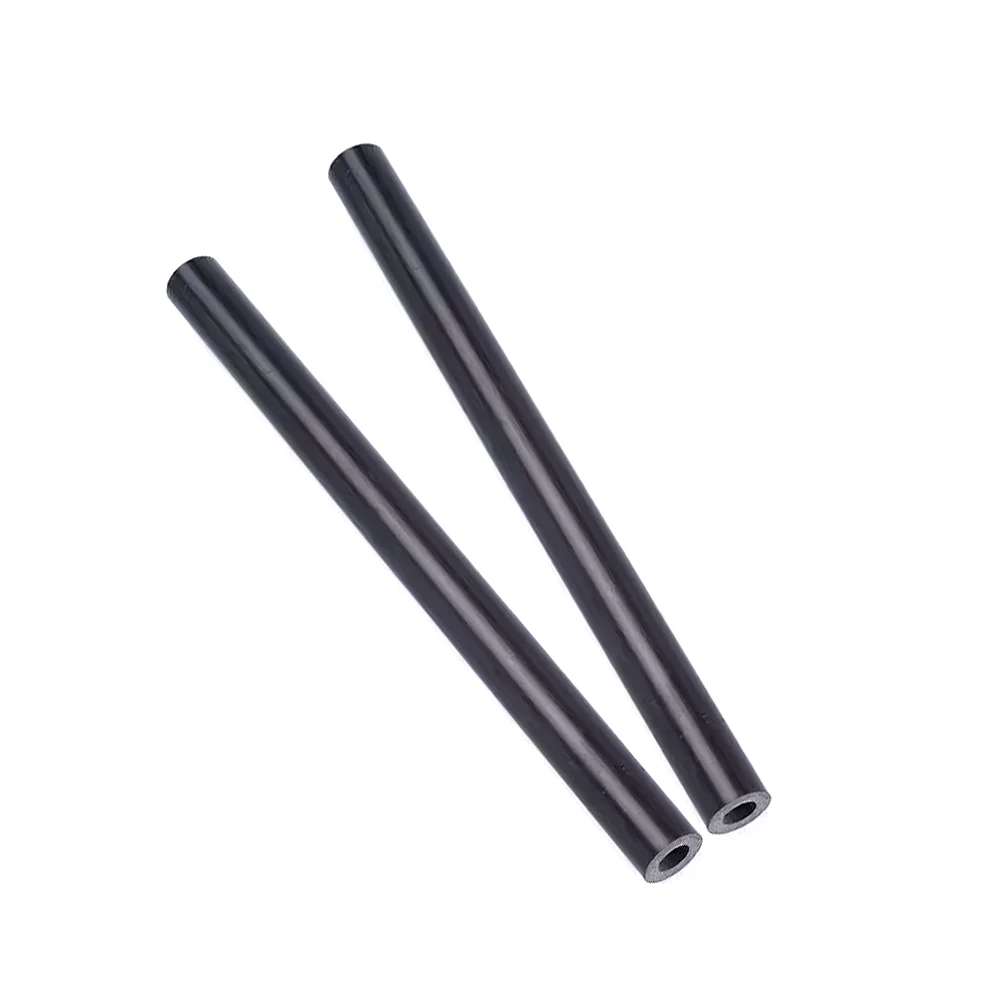
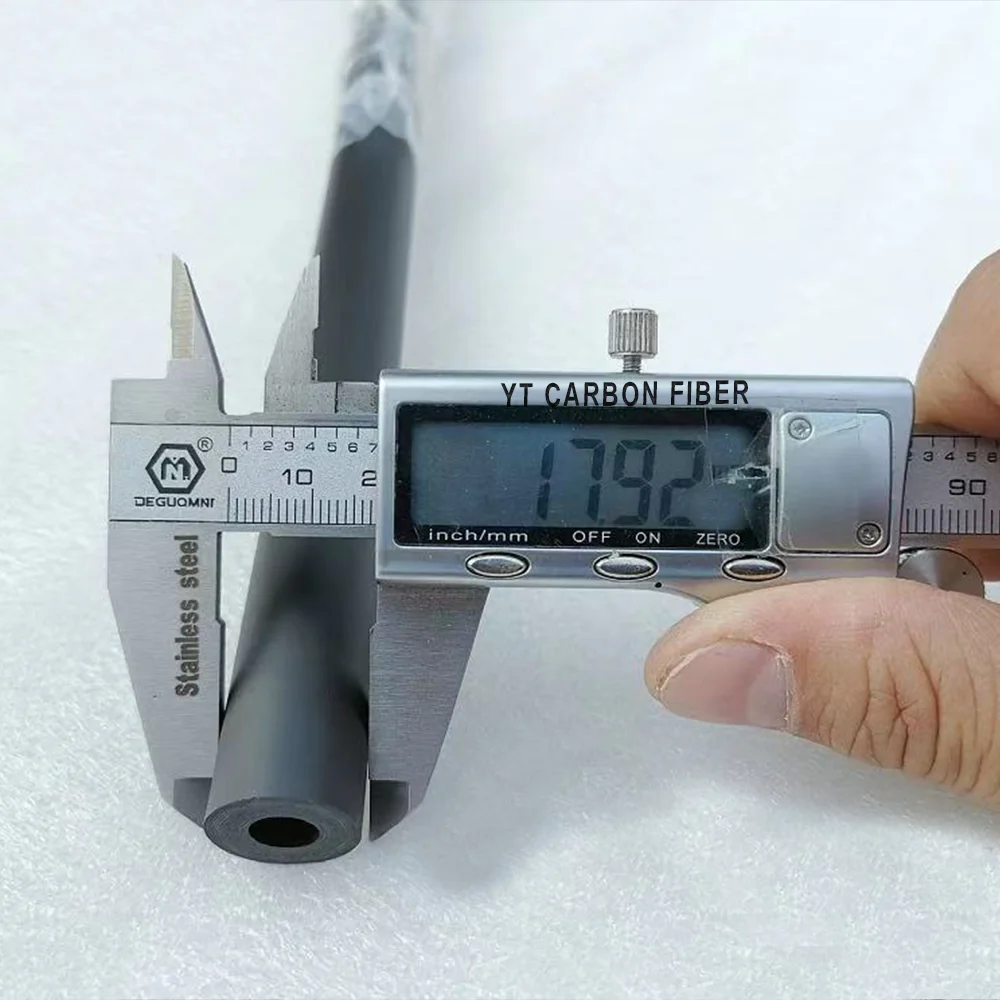
Product Details
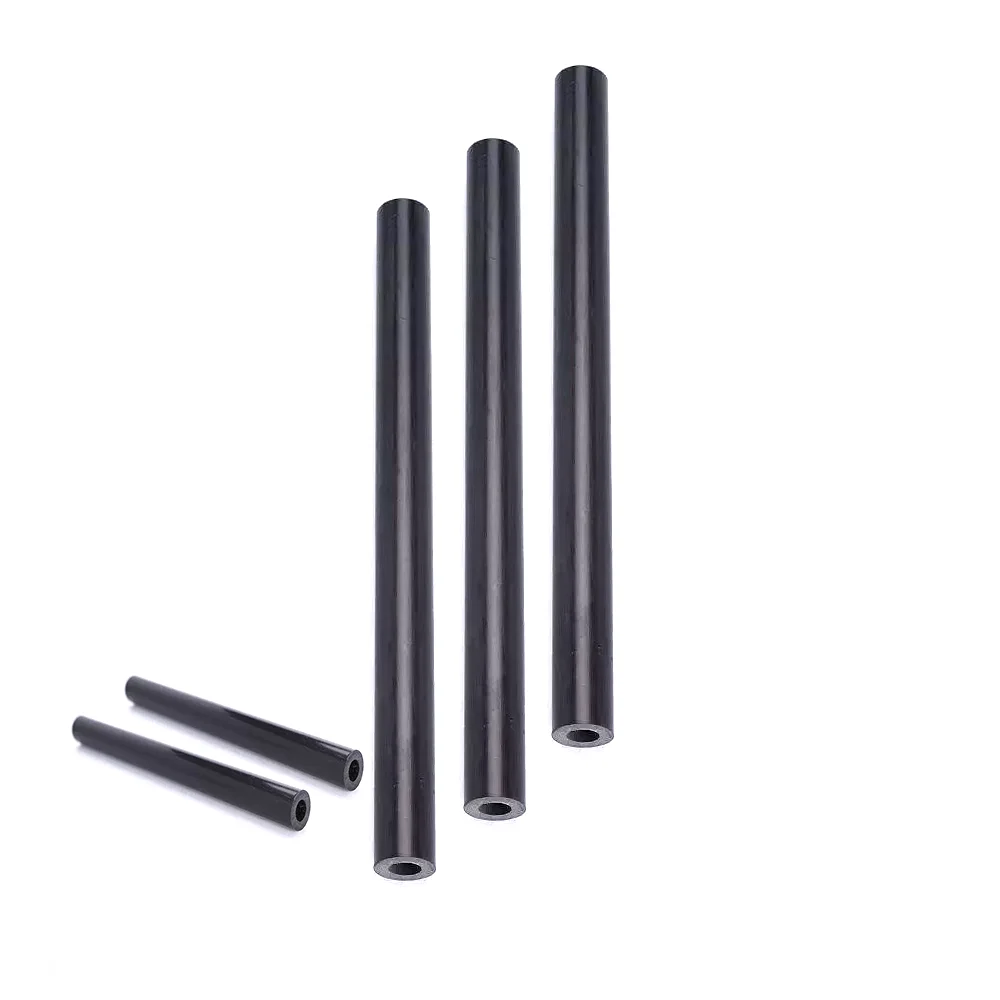
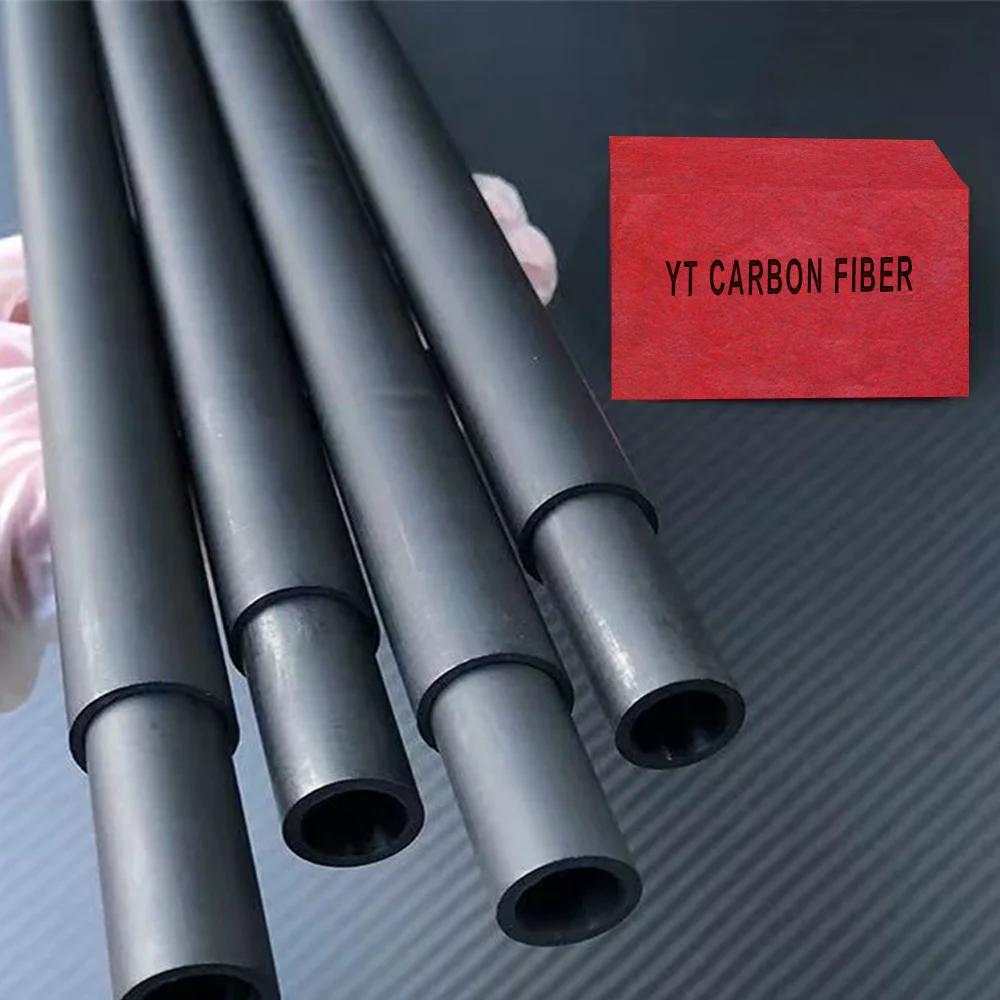
Pultrusion is the process you pick when you need carbon fiber tubes by the kilometer, not by the meter. Continuous fiber tows are pulled through a resin bath and into a heated die, where the profile cures in one pass — no mandrel wrapping, no vacuum bagging, no batch-by-batch curing. The result is a constant-cross-section tube with all fibers aligned along the 0° axis, delivering the highest longitudinal tensile strength and stiffness per dollar of any carbon fiber tube process. If your application loads the tube primarily in tension or compression along its length — structural rails, push-pull rods, spar caps — pultrusion gives you more strength where you need it for less money.
The trade-off is directional. Because virtually all the fiber runs lengthwise, a pultruded tube is weaker in transverse bending, crushing, and torsion than a roll-wrapped tube of the same dimensions. You can’t tune the ply angles or add hoop reinforcement — the die geometry and pull speed are fixed. If your design needs ±45° shear plies, 90° hoop wraps, or a cosmetic 3K twill outer layer, see our roll wrapped carbon fiber tubes. But for straight, long, axially loaded members where cost-per-meter matters, pultrusion is the right process.
Our Shenzhen pultrusion line produces single-piece tubes up to 4 meters long — one of the longest capabilities among Chinese carbon fiber tube manufacturers. Available cross-sections include round (3mm–200mm OD), square, and rectangular profiles. Wall thickness from 0.5mm to 10mm. The continuous process means every meter of a 50-meter run is dimensionally identical — same OD, same wall, same fiber content. For OEM customers ordering thousands of meters per month, that consistency is worth more than any single-tube strength spec.
Specifications
| Specification | Details |
|---|---|
| Material | T300/T700/T800 carbon fiber (continuous tow) |
| Process | Pultrusion (continuous die-formed) |
| Cross-Section | Round / Square / Rectangular |
| Outer Diameter / Side | 3mm – 200mm |
| Wall Thickness | 0.5mm – 10mm |
| Max Single-Piece Length | 4000mm (4 meters) |
| Fiber Orientation | 0° (unidirectional, longitudinal) |
| Surface Veil | Polyester veil / lightweight fabric wrap (optional) |
| Surface Finish | Smooth (die-formed) / Matte veil |
| Fiber Volume Fraction | 60–70% |
| Density | 1.55–1.65 g/cm³ |
| Tensile Strength (axial) | ≥ 1000 MPa (T700 UD) |
| Tensile Modulus (axial) | ≥ 140 GPa (T700 UD) |
| Transverse Strength | Lower than roll-wrapped (UD orientation) |
| Operating Temperature | -40°C to 120°C |
Applications
- Structural guide rails and tracks — Long, straight runs carrying axial and bending loads. The 0° fiber orientation maximizes stiffness along the rail length while keeping per-meter cost down for production volumes
- Push-pull rods and linkage bars — Tension and compression members in automation, robotics, and industrial machinery. UD fiber gives the highest axial strength per cross-section of any CF tube process
- Spar caps and stringers — Aerospace and UAV wing structures where longitudinal stiffness is the primary design driver. Lightweight, consistent, and cost-effective in volume
- Tent poles and support struts — High-volume, cost-sensitive applications that need carbon fiber’s light weight and stiffness without the premium price of roll-wrapped construction
- Electrical insulation supports — Carbon fiber’s non-conductive behavior in the transverse direction (with proper veil) makes pultruded tubes suitable for high-voltage standoff applications
Why Choose YTCarbon
- One plant, full control. We pultrude our own carbon fiber tubes from raw tow, cut, and inspect every piece in the same Shenzhen facility. No trading companies, no batch variance. We exhibited at the 2025 World UAV Expo — see what a real carbon fiber factory puts on the table
- 4-meter single-piece length. One of the longest continuous pultrusion capabilities among China carbon fiber tube factories. Tubes up to 4 meters mean fewer joints, fewer failure points, and lower assembly cost for your long-span structures.
- Volume pricing that works. Pultrusion is a continuous process — the longer the run, the lower the per-meter cost. We quote by the kilometer for OEM accounts, not by the piece. If you’re buying thousands of meters per month, the price difference vs roll-wrapped is significant
- Run-to-run consistency. Same die, same pull speed, same resin content. Every meter of a production run is dimensionally and mechanically identical. Critical for OEMs who need to qualify one spec and order it repeatedly
- T700 axial strength ≥ 1000 MPa. Higher fiber volume fraction than roll-wrapped (up to 70% vs 60–65%) because the die consolidates the laminate under mechanical pressure. More fiber, less resin, more strength per gram
Certifications
Every pultruded carbon fiber tube we ship carries documented quality credentials. Our facility holds ISO 9001 certification for quality management, and our materials are RoHS and CE compliant — required if you’re selling into the EU or supplying customers who need traceable material documentation. Need a copy for your records? Just ask and we’ll send the PDF.

How We Manufacture Your Tube
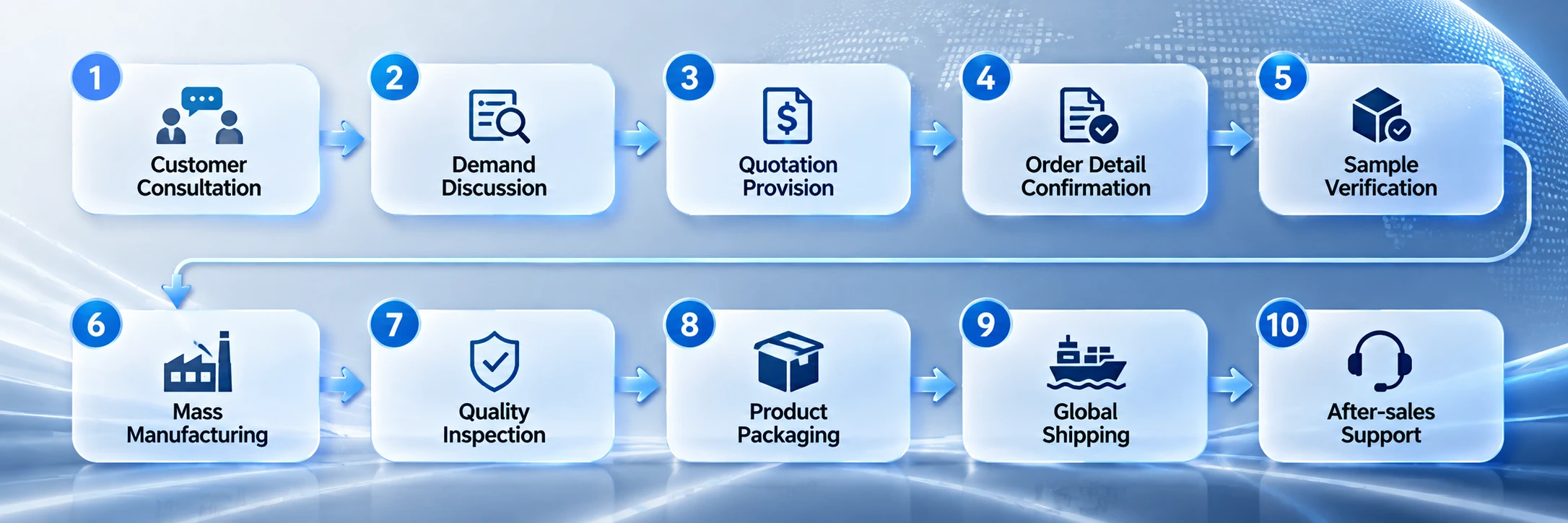
The pultrusion line runs continuously. Carbon fiber tows are pulled from creels through a resin bath where they’re impregnated with epoxy, then gathered into the entrance of a heated steel die. Inside the die, the resin cures in seconds under heat and pressure — the profile exits the die fully formed and solid. A pulling mechanism grips the cured tube downstream and feeds it at constant speed, while a flying cutter slices it to your specified length without stopping the line. Surface finish comes from the die wall: a polished die produces a smooth, semi-glossy surface; a matte veil can be added as the outermost layer if you need a non-slip texture or want to hide the longitudinal fiber lines. Every production run starts with a first-article inspection — OD, ID, wall thickness, and fiber content are verified before the line runs at speed.