
Carbon Fiber Tube Sizing: Complete Engineering Guide
Selecting the exact carbon fiber tube sizing dictates structural rigidity, assembly fit, and weight efficiency. Whether you are building commercial drone arms, robotic links, or industrial tooling, understanding the relationship between inside diameter, outside diameter, wall thickness, and tolerances is essential.
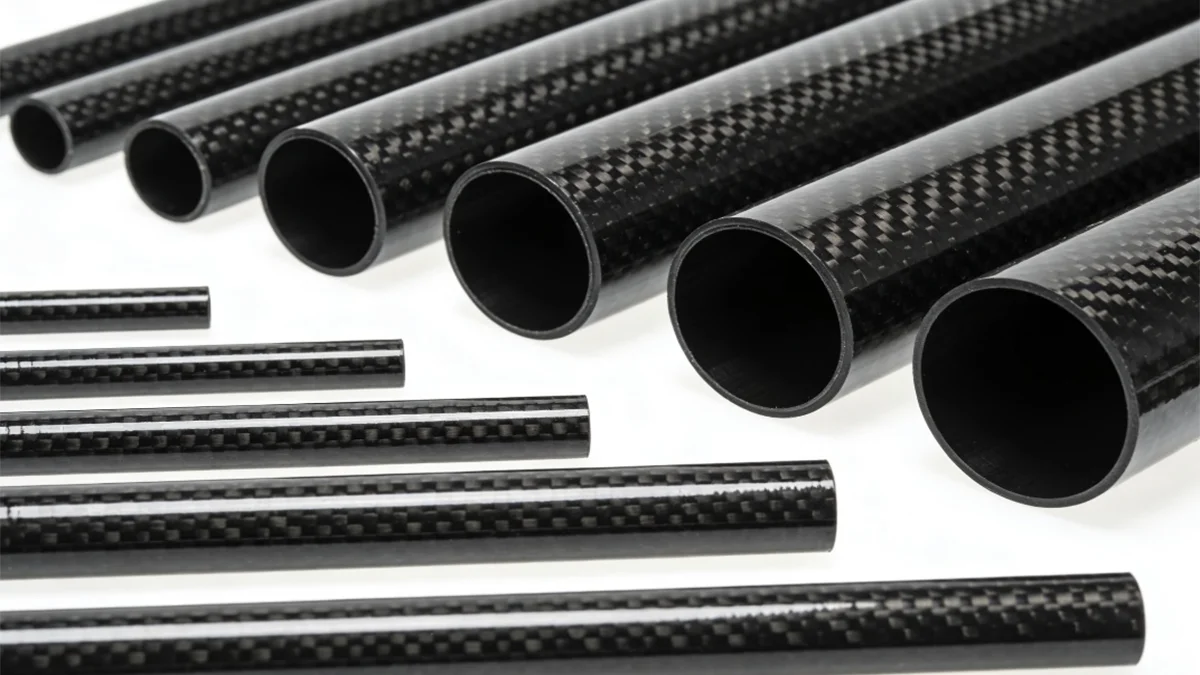
Fundamental dimensional relationships: Outside Diameter (OD), Inside Diameter (ID), and Wall Thickness
Understanding Carbon Fiber Tube Dimensions
Before evaluating mechanical performance, you must understand the geometric constraints that govern composite tubing. Specifically, three interdependent parameters define every tubular structure: inside diameter (ID), outside diameter (OD), and wall thickness. A straightforward engineering formula connects these measurements:
OD = ID + (2 × Wall Thickness)
Consequently, this geometric relationship determines connector compatibility, internal clearance, and overall payload mass. For example, a tube engineered with a 10mm ID and a 2mm wall thickness automatically yields a 14mm OD — vital data when designing sleeve fittings or bearing assemblies.
Standard roll-wrapped and pultruded tubes range from 3mm to 150mm OD, with wall thicknesses between 0.5mm and 10mm. Common off-the-shelf diameters include 6mm, 8mm, 10mm, 12mm, 16mm, 20mm, 25mm, 30mm, 40mm, 50mm, and 60mm OD options.
Inside Diameter & Wall Thickness Trade-offs
The inside diameter determines internal passage for wiring, pushrods, or drive shafts. Specifically, engineers routing ESC cables should add a 15–20% clearance margin to avoid chaffing. Similarly, shaft insertions require at least a 0.5mm diametrical clearance to accommodate epoxy bond lines.
Meanwhile, wall thickness dictates the mechanical balance between flexural stiffness and weight. Thicker walls provide immense hoop strength and resist crush forces from mounting clamps, whereas thinner walls minimize payload weight in aerial robotics.
Therefore, understanding this trade-off allows engineers to select the optimal composite layup without overpaying for unnecessary material density.
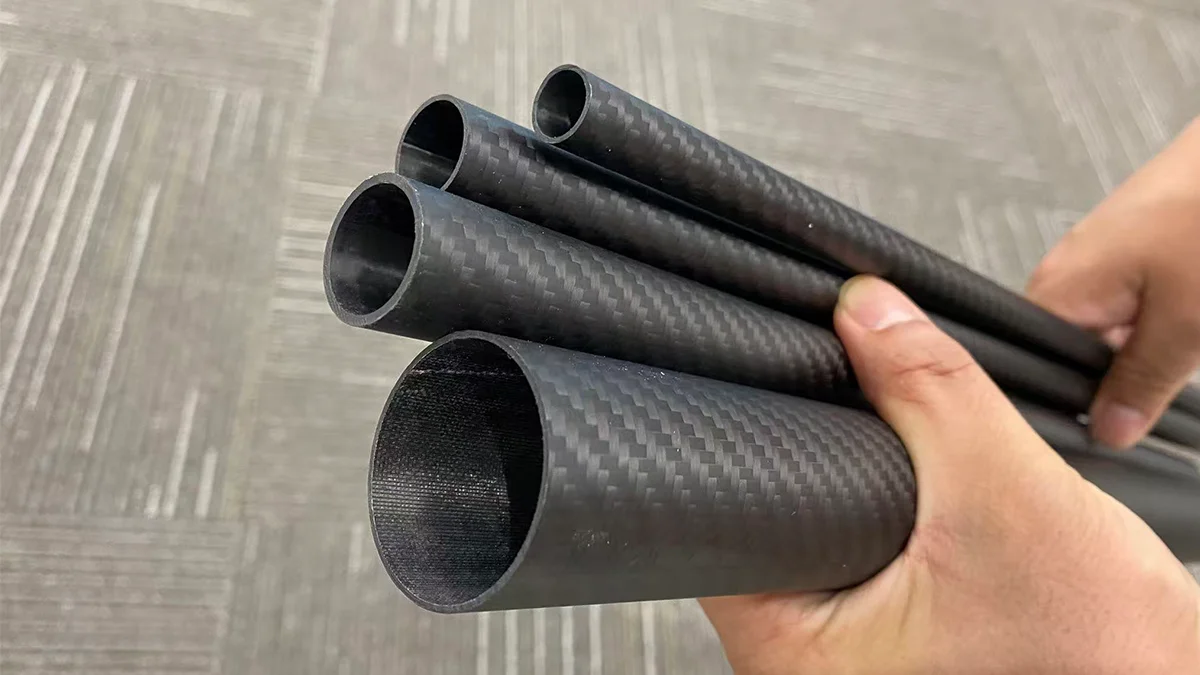
Wall Thickness vs Performance Matrix
| Wall Thickness | Relative Weight | Stiffness Gain | Optimal Application |
|---|---|---|---|
| 0.5mm – 1.0mm | Baseline | Lightweight Flex | Ultralight tent poles, racing drones |
| 1.0mm – 2.0mm | +50% to +80% | +60% to +100% | Drone motor arms, camera gimbals, cobots |
| 2.0mm – 3.0mm | +80% to +150% | +100% to +200% | Heavy-lift UAVs, industrial automation arms |
| 3.0mm – 5.0mm | +150% to +250% | +200% to +400% | Aerospace linkages, antenna masts, truss rigs |
| 5.0mm+ | +250%+ | +400%+ | Deep-sea robotics, heavy torque drive shafts |
Tolerances: Why Precision Grinding Matters
Manufacturing precision dictates assembly repeatability. Specifically, three critical tolerance parameters affect composite tube integration: outer diameter consistency, inner concentricity, and linear straightness.
Poor concentricity creates localized wall thinning, which degrades torsional strength and introduces rotational imbalance. In addition, straightness deviation must remain below 0.5mm/m for optical and telescope assemblies to avoid beam misalignment.
At YTCarbon, we employ automated centerless grinding bays to achieve outer diameter tolerances down to ±0.05mm for high-precision robotic sleeves.
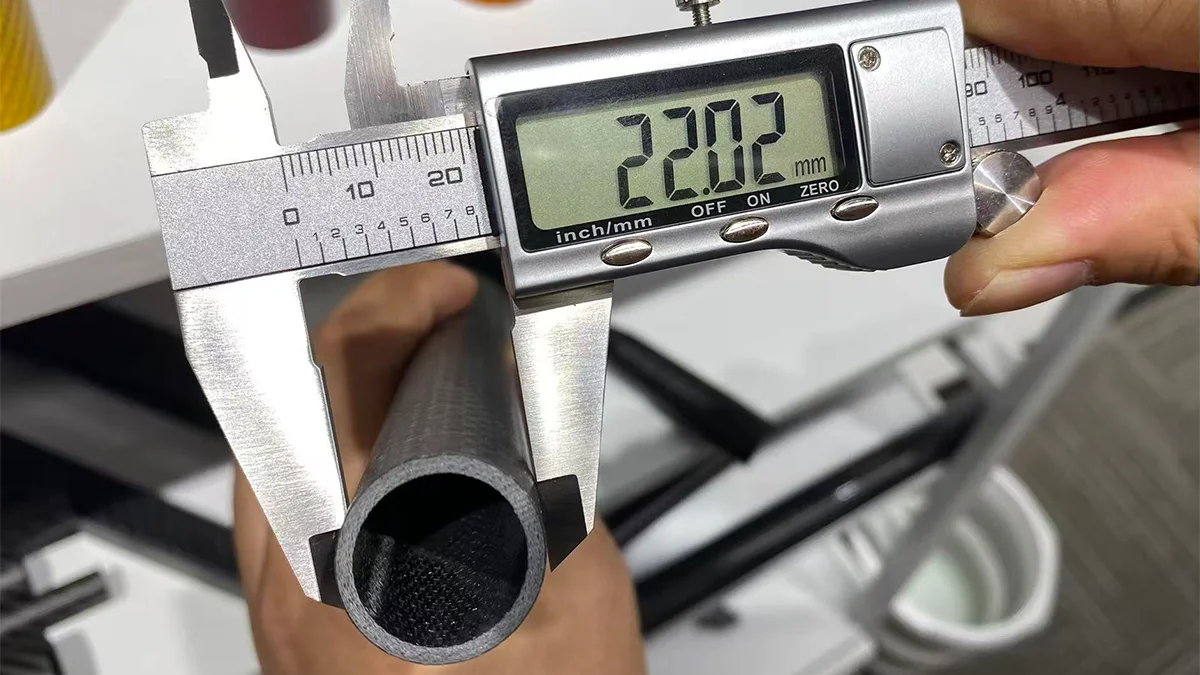
Tolerance Class Classifications
| Tolerance Class | OD Tolerance | ID Tolerance | Straightness Limit | Typical Application |
|---|---|---|---|---|
| Industrial Standard | ±0.30mm | ±0.30mm | ≤ 2.0mm/m | General framing, rapid prototypes |
| Precision Class | ±0.15mm | ±0.15mm | ≤ 1.0mm/m | Automation equipment, gimbal booms |
| High Precision | ±0.08mm | ±0.08mm | ≤ 0.5mm/m | Aerospace struts, medical instruments |
| Ultra Precision | ±0.03mm | ±0.03mm | ≤ 0.2mm/m | Telescope OTAs, metrology sensors |
Choosing the Right Tube for Your Application
Different engineering fields prioritize unique structural behaviors. For example, high-speed SCARA robots require low-inertia tubular links with rapid vibration damping. In contrast, heavy-lift agricultural drones demand thick-walled motor arms capable of resisting high motor thrust torques.
Furthermore, geometric profiles play a key role: specify round tubes for multi-axis torsional loading or aerodynamic efficiency, and specify square tubes when bolting directly to flat aluminum plates without clamping collars.
Review the engineering matrix below to match standard dimensions with your operational demands.
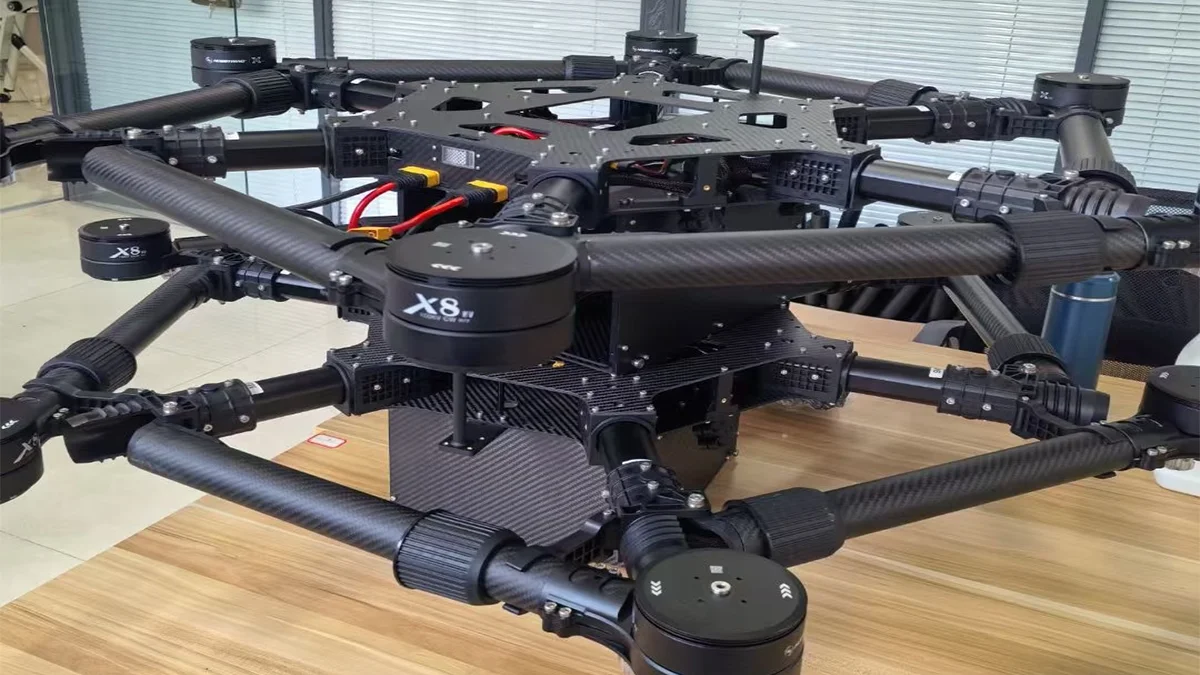
Recommended Dimension Guidelines by Sector
| Application | Recommended OD | Wall Thickness | Tolerance Class | Engineering Focus |
|---|---|---|---|---|
| FPV Racing Drones | 10mm – 16mm | 0.5mm – 1.0mm | Industrial Standard | Ultra-low all-up weight |
| Cinematic & Long-Range UAVs | 16mm – 25mm | 1.5mm – 2.5mm | Precision Class | Resonance absorption, gyro clarity |
| Heavy-Lift Industrial Drones | 25mm – 40mm | 2.0mm – 4.0mm | Precision Class | High payload thrust margin |
| Automation & Robotic Arms | 30mm – 60mm | 3.0mm – 6.0mm | High Precision | Sub-millimeter repeatability, low inertia |
| Aerospace & Satellite Struts | 20mm – 80mm | 2.0mm – 8.0mm | Ultra Precision | Traceability, zero thermal expansion |