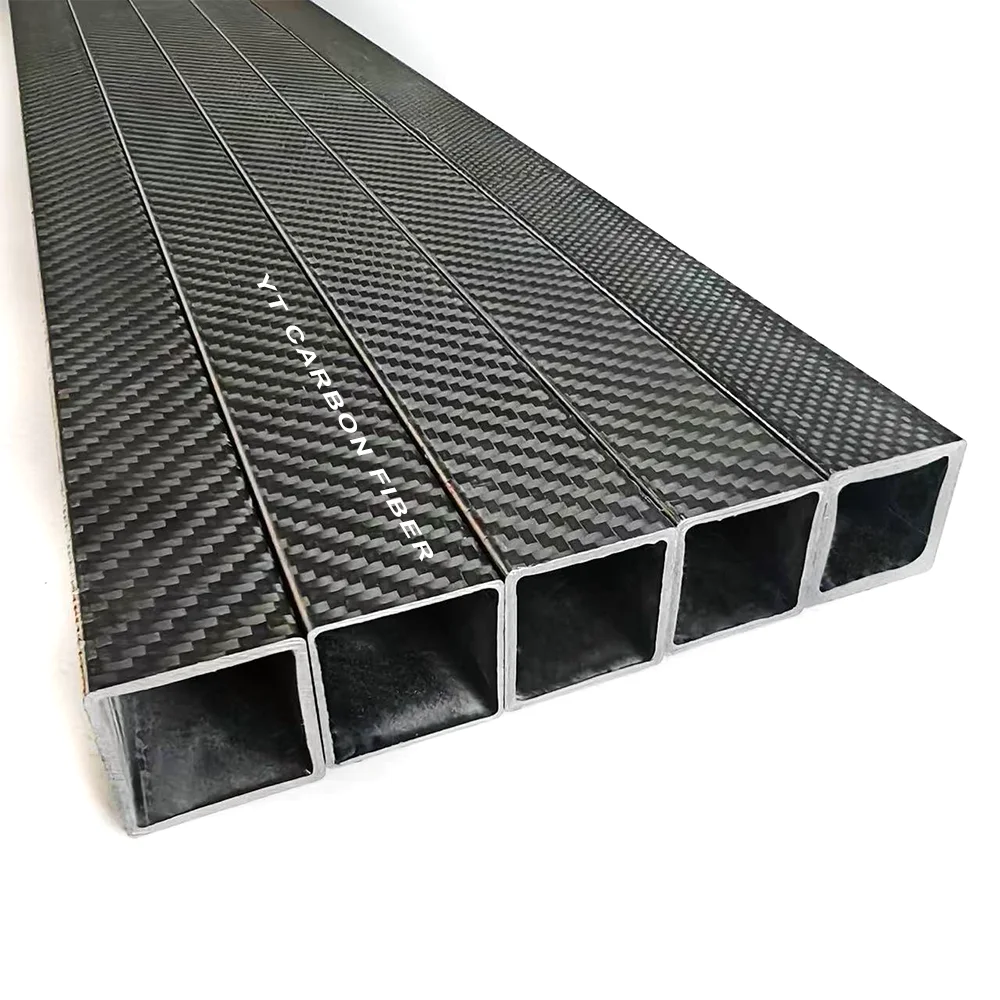
Product Details
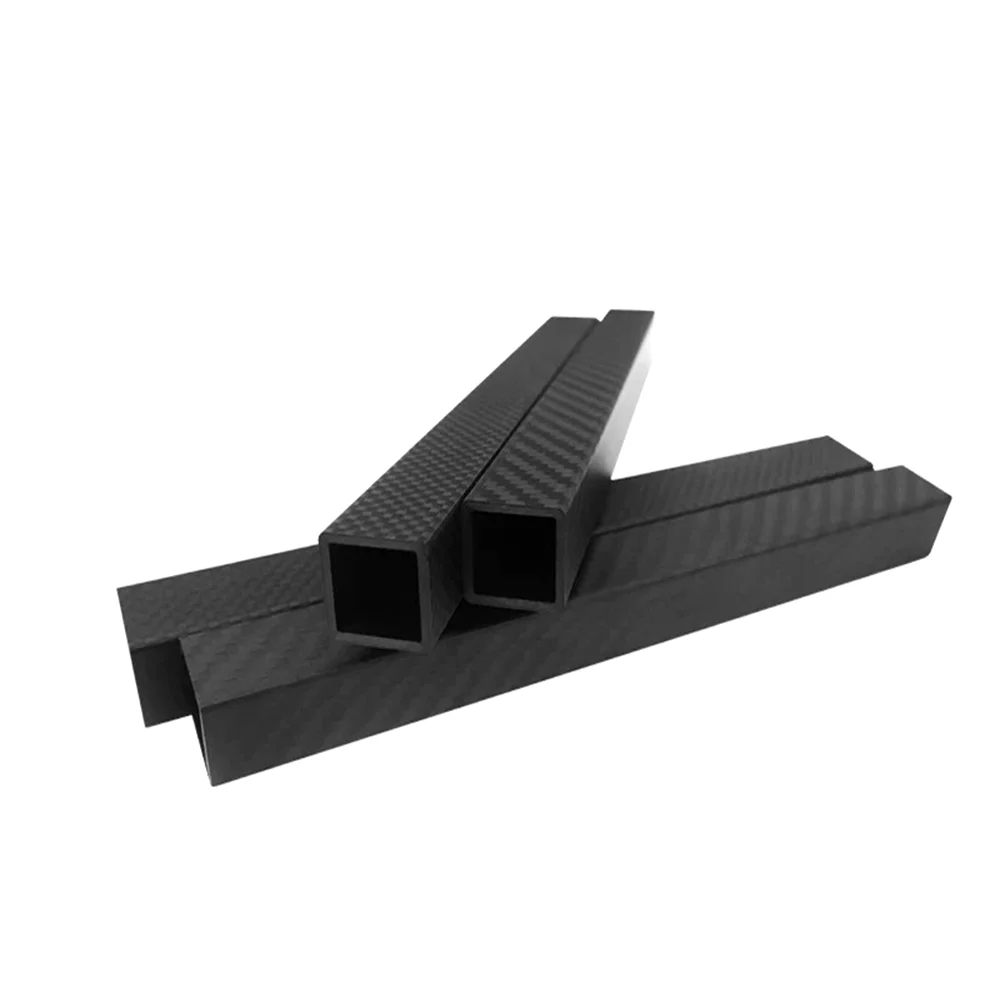
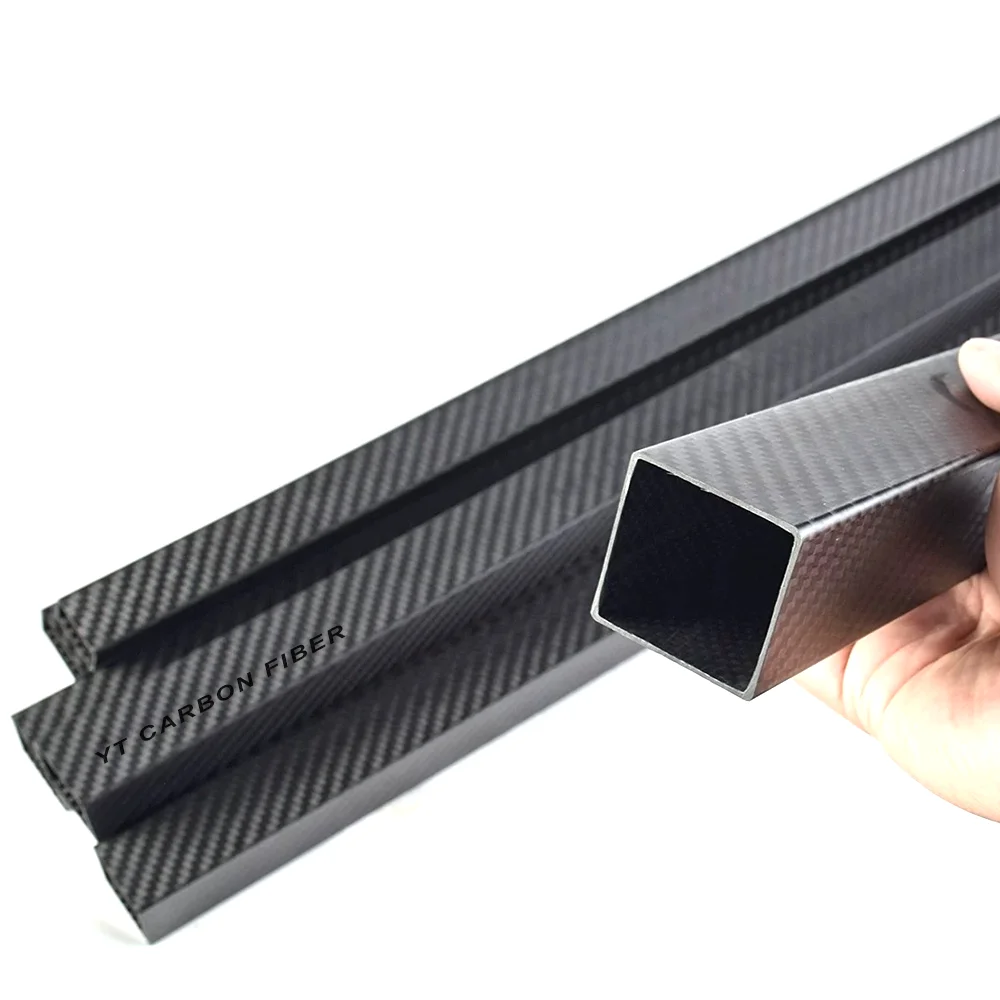
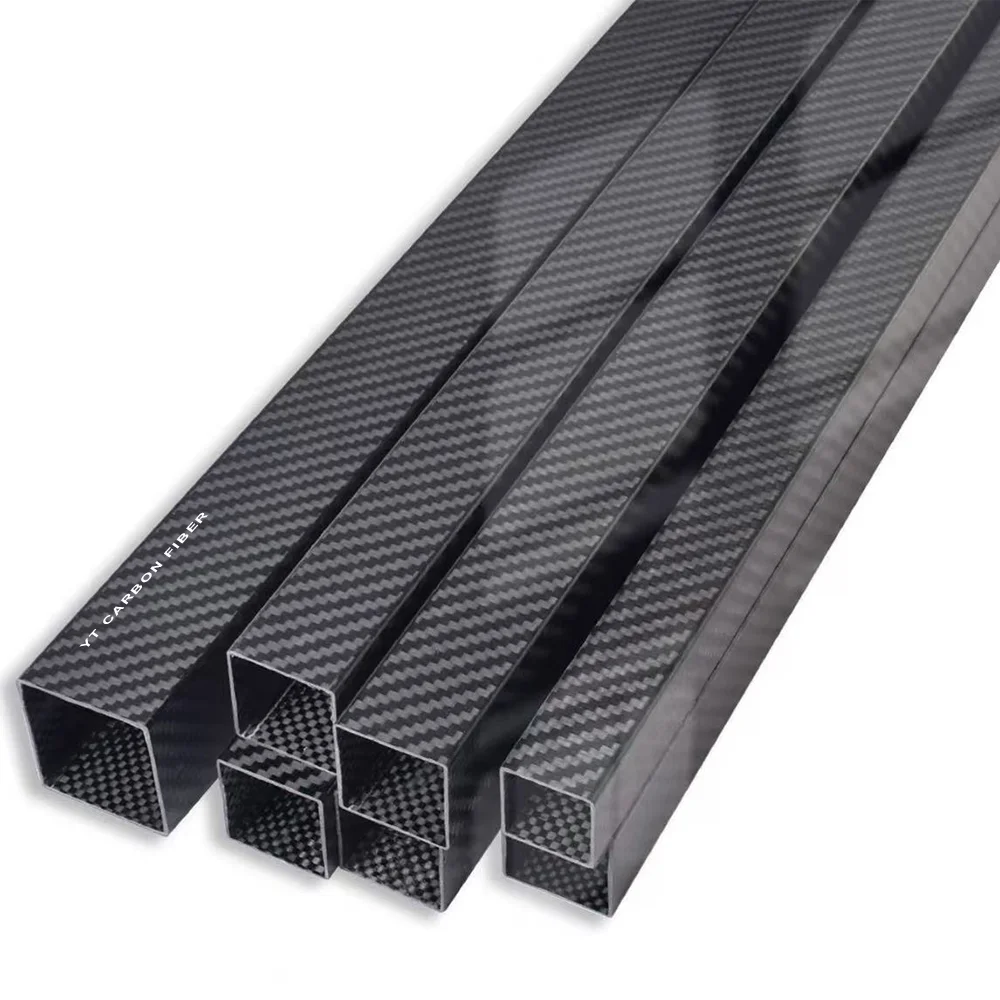
If you’re building a frame — machine guard, gantry, robot chassis, equipment rack — a carbon fiber square tube is the profile that makes assembly simple. The four flat surfaces mean standard L-brackets, T-plates, corner gussets, and bolted flanges all seat flush without custom machining. Try that with a round tube and you’re cutting saddle blocks or bonding adapters. For bolted structures where speed of assembly and rigidity of the joint matter more than torsional uniformity, square is the practical choice.
A square cross-section gives you equal bending stiffness in both the X and Y axes — unlike a rectangular tube which sacrifices one axis to maximize the other. That symmetry matters when your frame carries loads from multiple directions and you can’t predict which axis takes the bigger hit. The trade-off vs a round profile is torsion: corners create stress concentration under twist, so a square tube isn’t the right pick for rotating shafts or torque-transmitting members. For those, see our carbon fiber round tube. But for static and semi-static frames, square delivers simpler joinery and adequate stiffness at a lower hardware cost.
We manufacture these carbon fiber square tubes in our Shenzhen factory using both roll-wrapped and pultruded processes. Pultruded square tubes are available in single-piece lengths up to 8 meters — one of the longest capabilities among Chinese carbon fiber tube manufacturers. Corner radii are controlled at 1–3mm depending on wall thickness, keeping fiber continuity around the bend while reducing the stress risers that sharp 90° corners create. Every tube ships with dimensional inspection data covering side length, wall thickness, and straightness.
Specifications
| Specification | Details |
|---|---|
| Material | T300/T700/T800 carbon fiber |
| Cross-Section | Square (equal sides) |
| Side Length (OD) | 5mm – 120mm |
| Wall Thickness | 0.5mm – 8mm |
| Corner Radius | 1–3mm (wall thickness dependent) |
| Max Single-Piece Length | 8000mm (8 meters) |
| Construction | Roll-wrapped / Pultruded |
| Weave Options | 3K Twill / Plain / UD |
| Surface Finish | Matte / Glossy |
| Fiber Volume Fraction | 60–65% |
| Density | 1.55–1.60 g/cm³ |
| Tensile Strength (axial) | ≥ 800 MPa |
| Flexural Modulus | ≥ 120 GPa (0° layup) |
| Straightness Tolerance | ≤ 1mm per meter |
| Operating Temperature | -40°C to 120°C |
Applications
- Machine frames and gantries — Flat surfaces let you bolt L-brackets and T-plates directly to the tube wall. No custom saddle blocks, no adhesive bonding jigs. Faster assembly, stiffer joints, and standard hardware throughout
- Robot chassis and equipment racks — The symmetric cross-section carries equal bending load in both horizontal and vertical directions. Ideal for mobile platforms where the load axis shifts during operation
- Camera sliders and rail systems — Two parallel flat surfaces provide a natural mounting track for carriage plates and linear guides. The third flat surface is your camera platform — no additional machining
- Enclosure and housing frames — Panel mounting is straightforward when the frame members are flat on all sides. Sheet metal, composite panels, and polycarbonate covers all bolt up without custom brackets
- Structural columns and supports — When compressive and bending loads come from any direction in the horizontal plane, the equal-moment-of-inertia profile resists buckling symmetrically
Why Choose YTCarbon
- One plant, full control. We roll-wrap and pultrude our own carbon fiber square tubes from raw tow, then inspect each one in the same facility. No trading companies in the chain, no unknown quality. We exhibited at the 2025 World UAV Expo — see what a real carbon fiber factory puts on the table
- 8-meter single-piece length. One of the longest pultrusion capabilities among China carbon fiber tube factories. Build long-span gantries and structural members without splice joints — most competitors stop at 3 meters
- Controlled corner radii. We maintain 1–3mm corner radius depending on wall thickness, not sharp 90° cuts that create stress risers and fiber discontinuity. Your joints land on continuous fiber, not resin pockets
- Straightness ≤ 1mm/m. Precision mandrels and in-process laser alignment. Crooked tubes make crooked frames — we measure and correct before shipping
- Custom laminate for your frame. 0° plies for column stiffness, ±45° for shear at joints, 90° for crush resistance around bolt holes. We build the layup your load case demands, not a generic one-size stack
Certifications
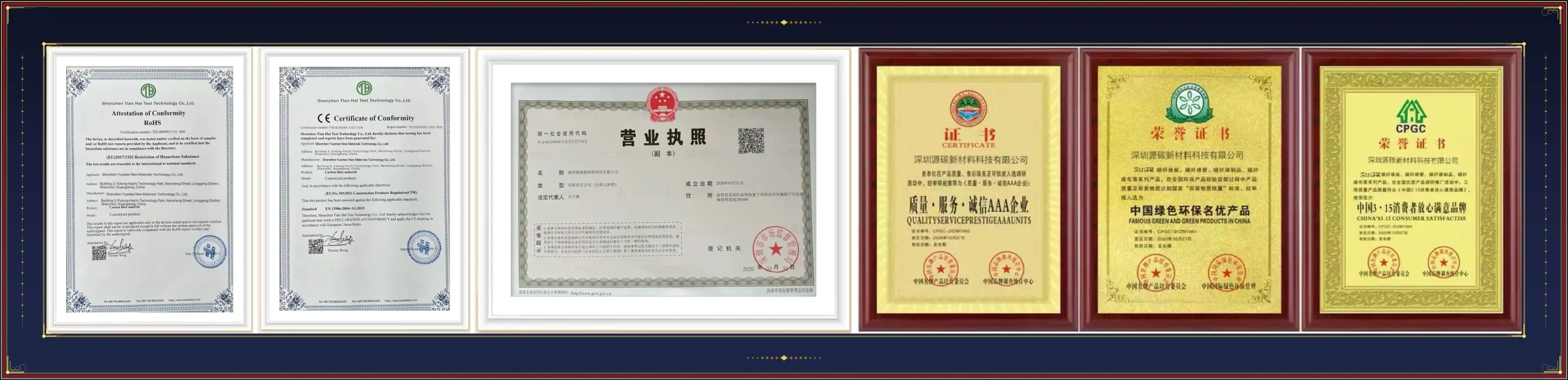
Every carbon fiber square tube we ship carries documented quality credentials. Our facility holds ISO 9001 certification for quality management, and our materials are RoHS and CE compliant — required if you’re selling into the EU or supplying customers who need traceable material documentation. Need a copy for your records? Just ask and we’ll send the PDF.
How We Manufacture Your Tube
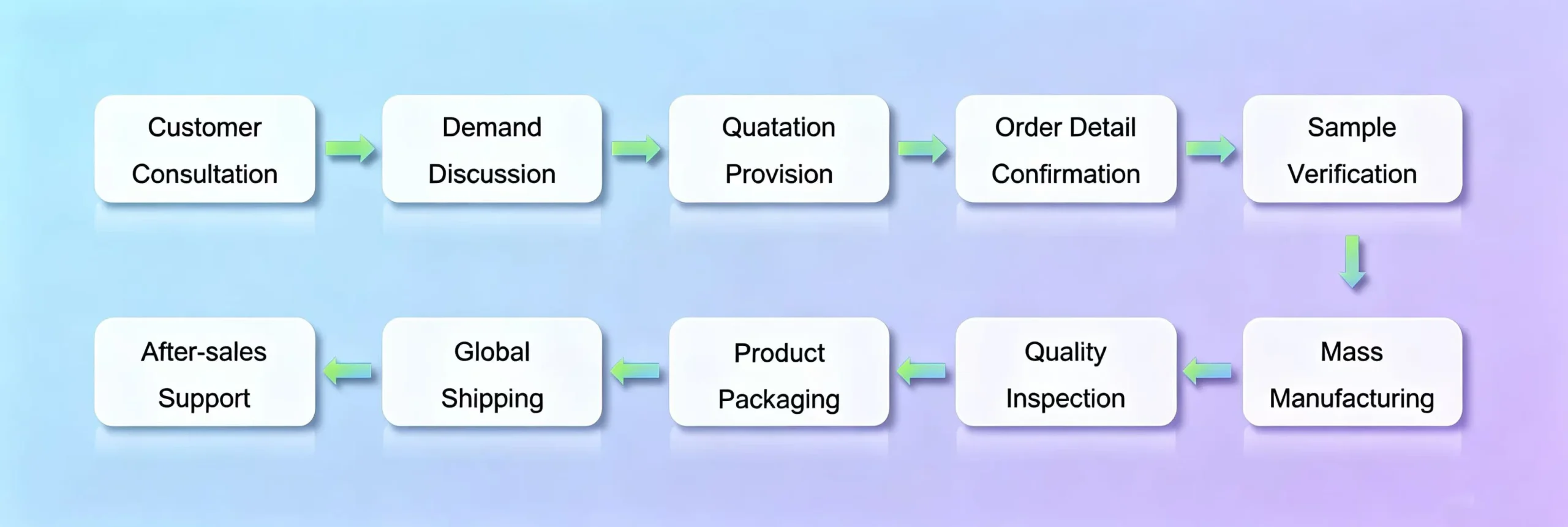
Raw T300/T700 carbon fiber tow enters our Shenzhen facility, gets impregnated with epoxy resin, then formed into square profiles using either roll-wrapping over precision-machined square mandrels or pultrusion through hardened-steel dies. The mandrel geometry and die profile control the corner radius — we keep it at 1–3mm so fibers wrap smoothly around corners instead of kinking. After curing, each tube is measured for side length, wall thickness uniformity across all four walls, corner radius consistency, and straightness deviation. Tubes that don’t meet spec are rejected before they leave the line. For custom orders, we adjust the laminate schedule and corner detail to match your joint design before production starts.
Frequently Asked Questions
+ Why use a carbon fiber square tube instead of a round tube for frames?
+ How do you join carbon fiber square tubes together?
+ What bending strength does a carbon fiber square tube have compared to aluminum?
+ Can I use a carbon fiber square tube for a structural frame?
+ What corner radius should a carbon fiber square tube have?
Need a Custom Carbon Fiber Square Tube?
Custom side length, wall thickness, corner radius, and laminate schedule. Factory direct from Shenzhen with dimensional inspection data on every order.