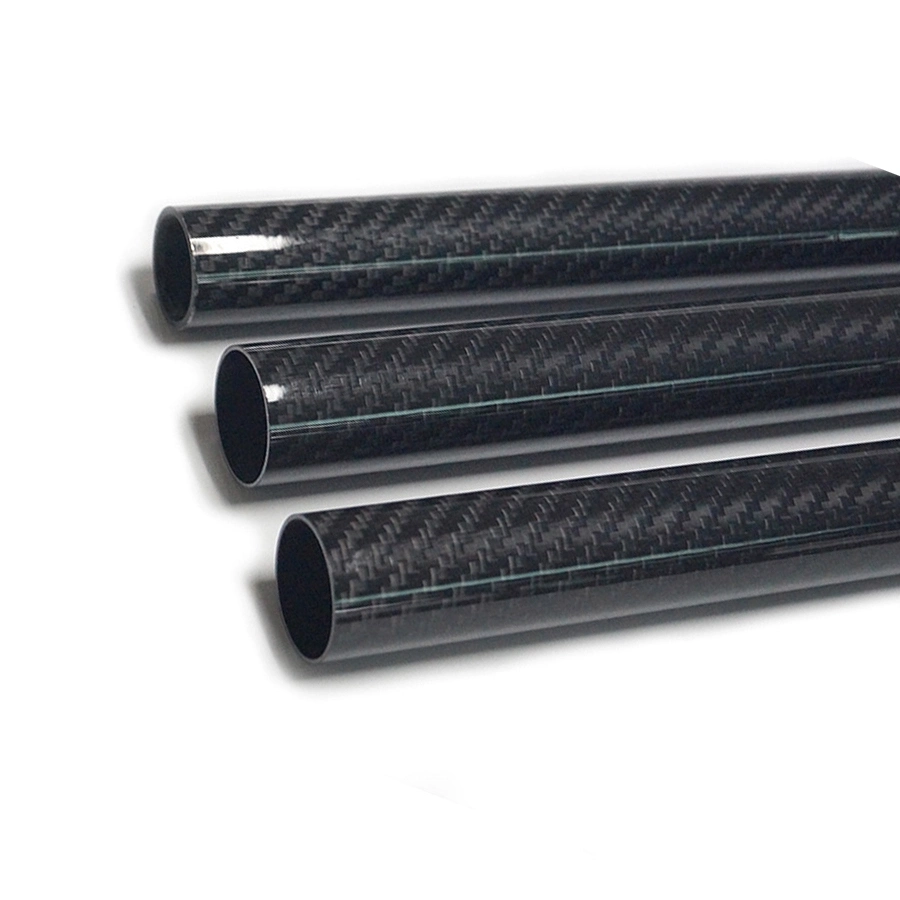
Product Details
The circular cross-section of a carbon fiber round tube gives it one mechanical advantage no other profile can match: stress distributes evenly around the entire perimeter under torsion and multi-directional bending. That means no weak axis, no stress concentration at corners, and no preferential buckling direction. For applications where the load doesn’t come from a single predictable direction — rotating shafts, cantilevered masts, UAV arms catching wind gusts from any angle — round is the most efficient shape per gram of material.
Compared to square and rectangular carbon fiber tubes, a round tube provides roughly 20% higher torsional stiffness at the same cross-sectional area, because every fiber is equidistant from the center. The trade-off is that flat surfaces are gone — you can’t rest a bolt head flush against a curved wall, and clamping requires saddle brackets instead of simple flat plates. If your design calls for bolted frame joints, see our carbon fiber square tube. If you need maximum bending efficiency in one direction, a rectangular tube may be lighter. But for the broadest range of loading conditions, round remains the default.
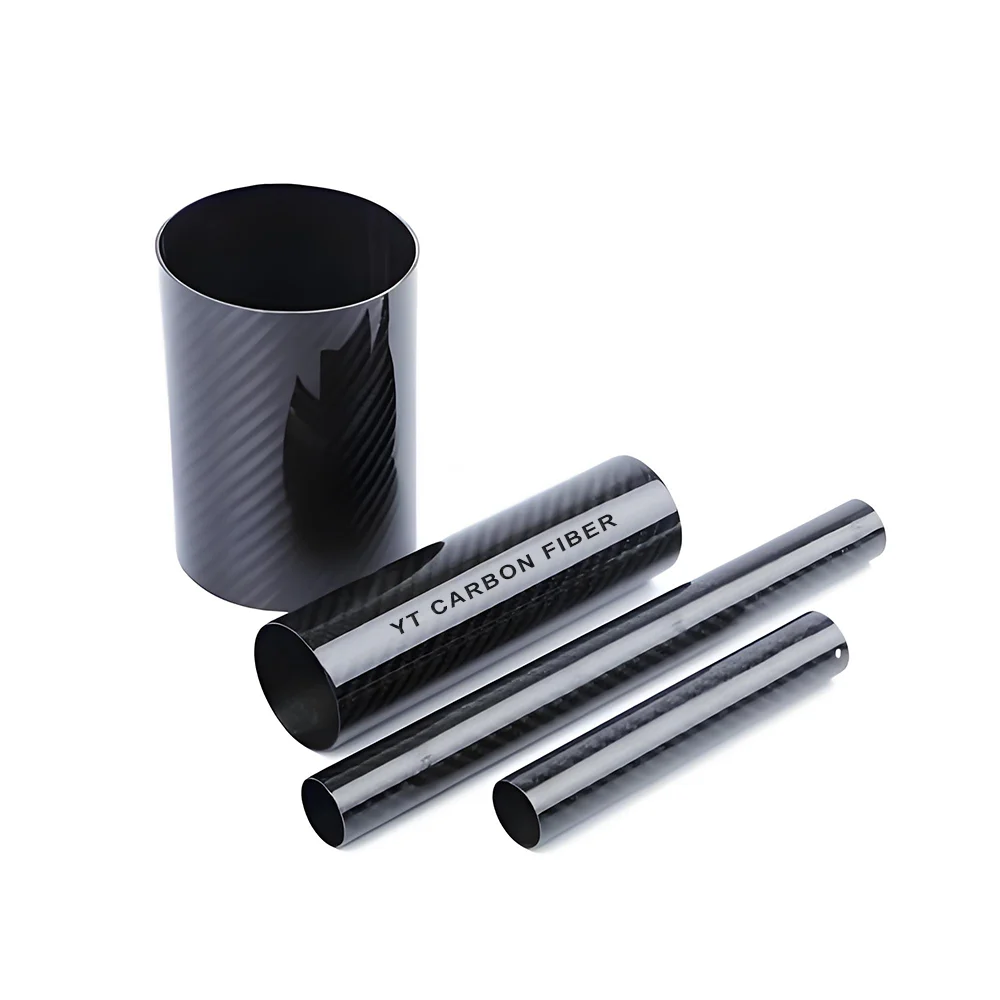
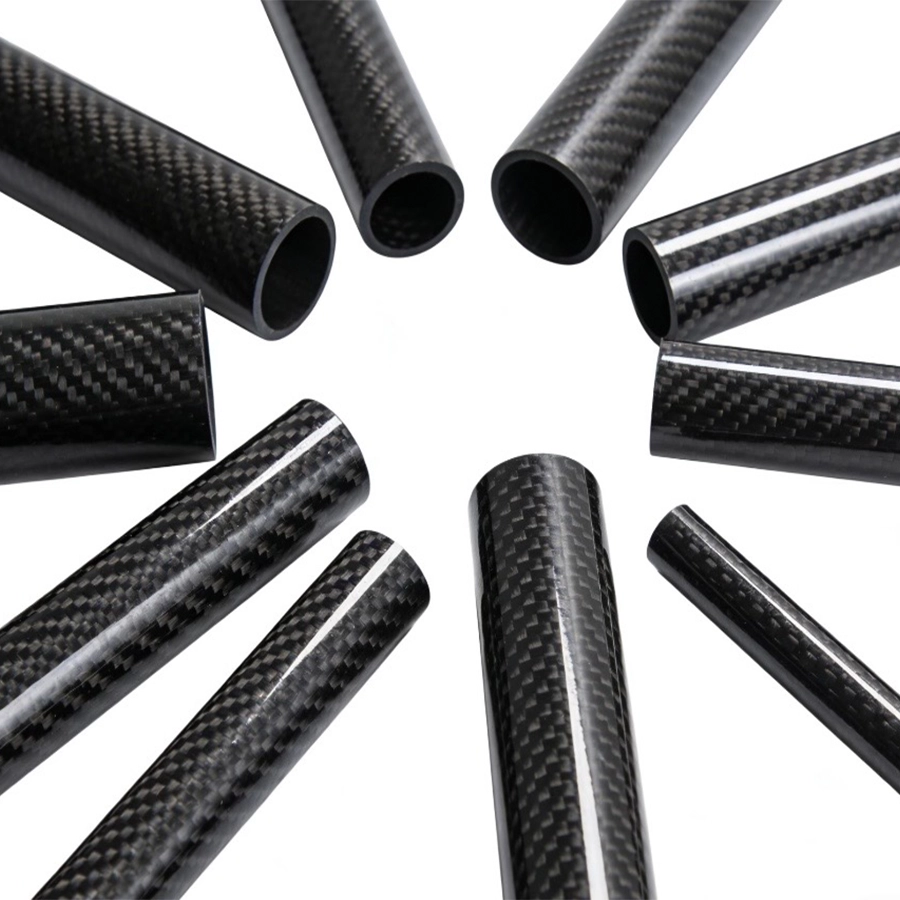
We manufacture these round carbon fiber tubes in our Shenzhen factory using both roll-wrapped and pultruded processes. Our pultrusion line produces single-piece lengths up to 4 meters — one of the longest capabilities among Chinese carbon fiber tube factories. Available inner diameters span 3mm to 200mm with wall thicknesses from 0.5mm to 10mm. Buying direct from a China carbon fiber tube factory means you skip trading company markups and get real production-line photos with every order update.
Specifications
| Specification | Details |
|---|---|
| Material | T300/T700/T800 carbon fiber |
| Cross-Section | Round (circular) |
| Inner Diameter | 3mm – 200mm |
| Wall Thickness | 0.5mm – 10mm |
| Max Single-Piece Length | 4000mm (4 meters) |
| Construction | Roll-wrapped / Pultruded |
| Weave Options | 3K Twill / Plain / UD |
| Surface Finish | Matte / Glossy |
| Fiber Volume Fraction | 60–65% |
| Density | 1.55–1.60 g/cm³ |
| Tensile Strength (axial) | ≥ 800 MPa |
| Torsional Modulus | ≥ 5 GPa (±45° layup) |
| Operating Temperature | -40°C to 120°C |
Applications
- Rotating shafts and spindles — The round profile’s even stress distribution makes it the only practical choice for torque transmission in RC drive shafts, printer rollers, and automation linkages.
- Cantilevered masts and booms — Wind and gravity load from any direction — antenna masts, camera jibs, UAV arms — all handled without a weak axis.
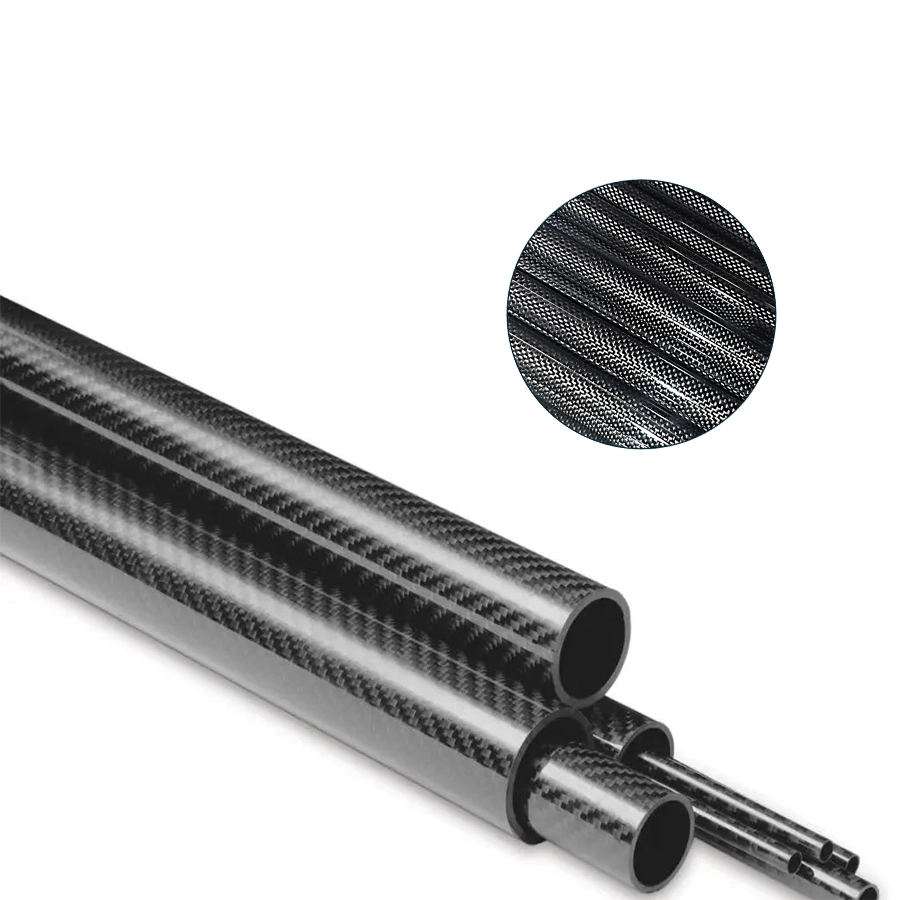
- Telescoping nested sections — Round tubes slide smoothly inside each other with minimal friction, making them the go-to geometry for extendable poles.
- Pressure vessels and fluid conduits — Hoop stress in a round tube acts uniformly, unlike square profiles where stress concentrates at corners.
- Bicycle frame tubing — Custom stays, seat posts, and handlebar extensions where round cross-sections have been the industry standard for decades.
Why Choose YTCarbon
- Single-piece lengths up to 4 meters. One of the longest pultrusion capabilities among Chinese carbon fiber tube factories, as showcased at the 2025 World UAV Expo.
- Roundness tolerance ≤ 0.1mm. Precision ground mandrels and CMM checks ensure critical telescoping fits and smooth bearing assembly.
- Custom laminate schedules. We adjust ply stacks specifically for your load case (e.g., ±45° for torsion, 0° for axial).
- Factory direct from Shenzhen. No trading company intermediaries, enabling direct communication and 15–30% cost savings.
- Batch-to-batch consistency. Stringent material control guarantees identical performance across every production run.
Certifications
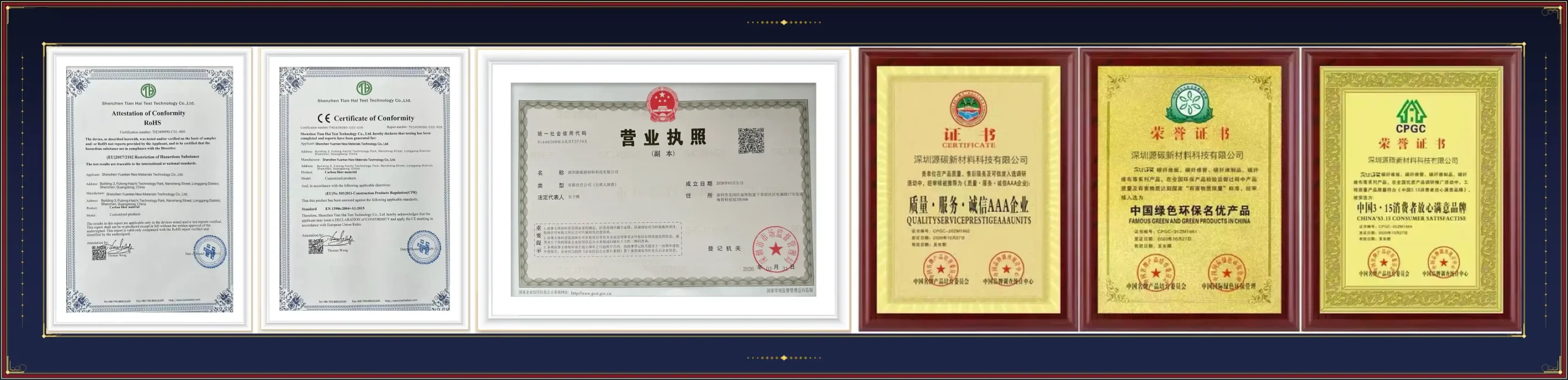
Every tube we ship carries documented quality credentials. Our facility holds ISO 9001 certification for quality management, and our carbon fiber materials are RoHS and CE compliant, ensuring seamless compliance for global markets.
How We Manufacture Your Tube
Raw T300/T700 carbon fiber tow enters our Shenzhen facility where we impregnate it with epoxy resin and form it via roll-wrapping or pultrusion. Following cure, every tube undergoes rigorous dimensional inspection for OD, ID, roundness, and wall thickness uniformity.