Product Details
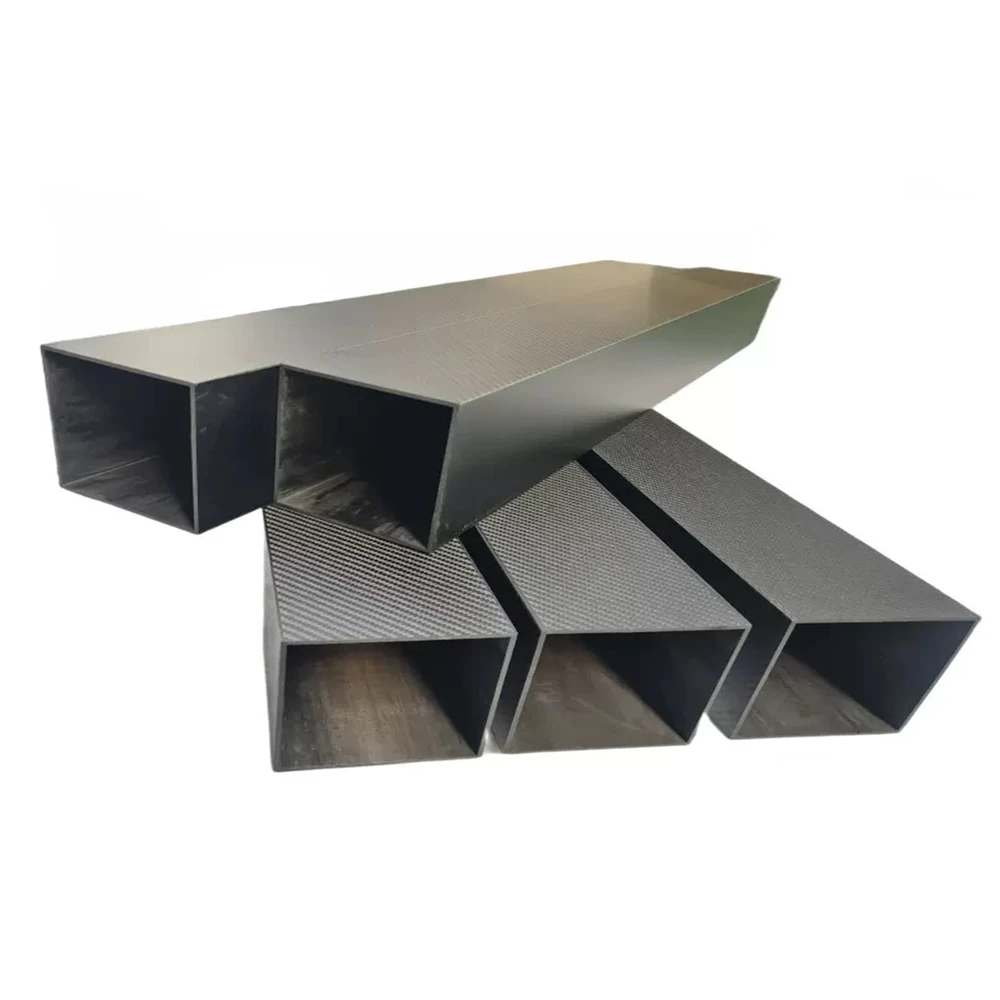
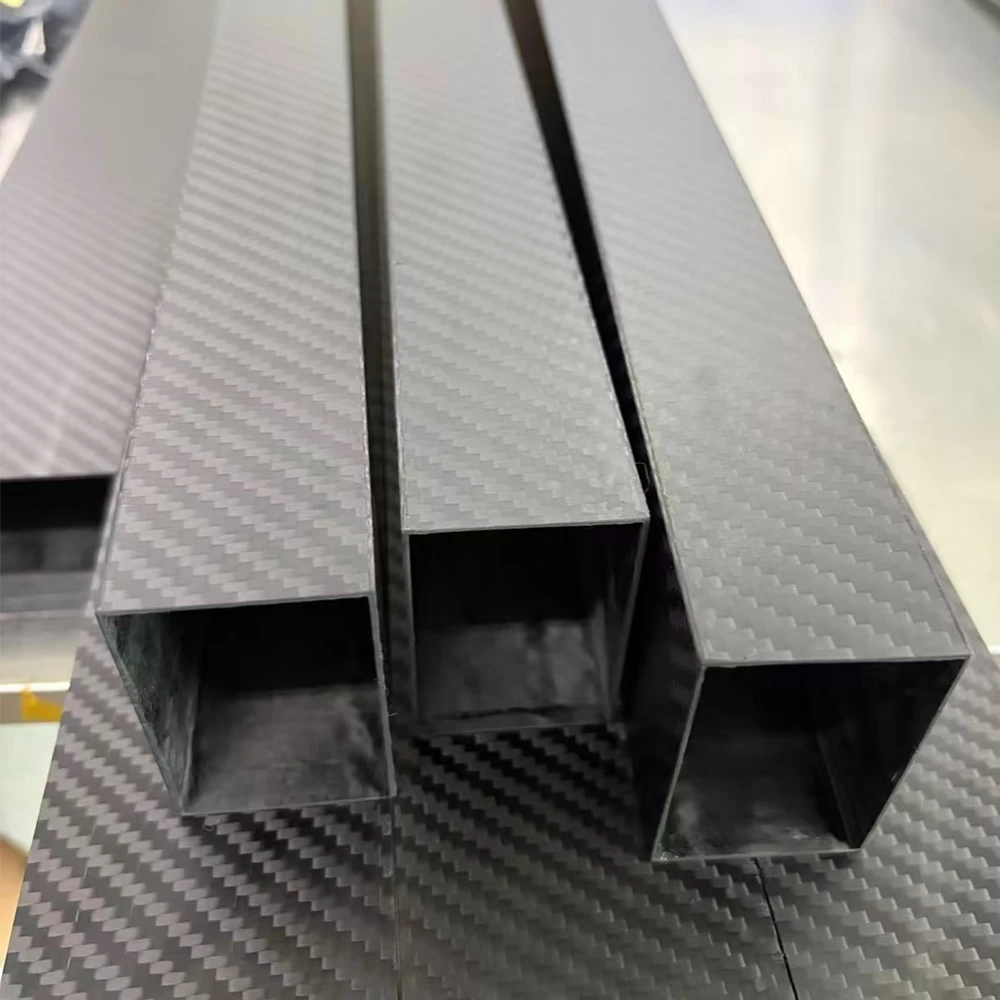
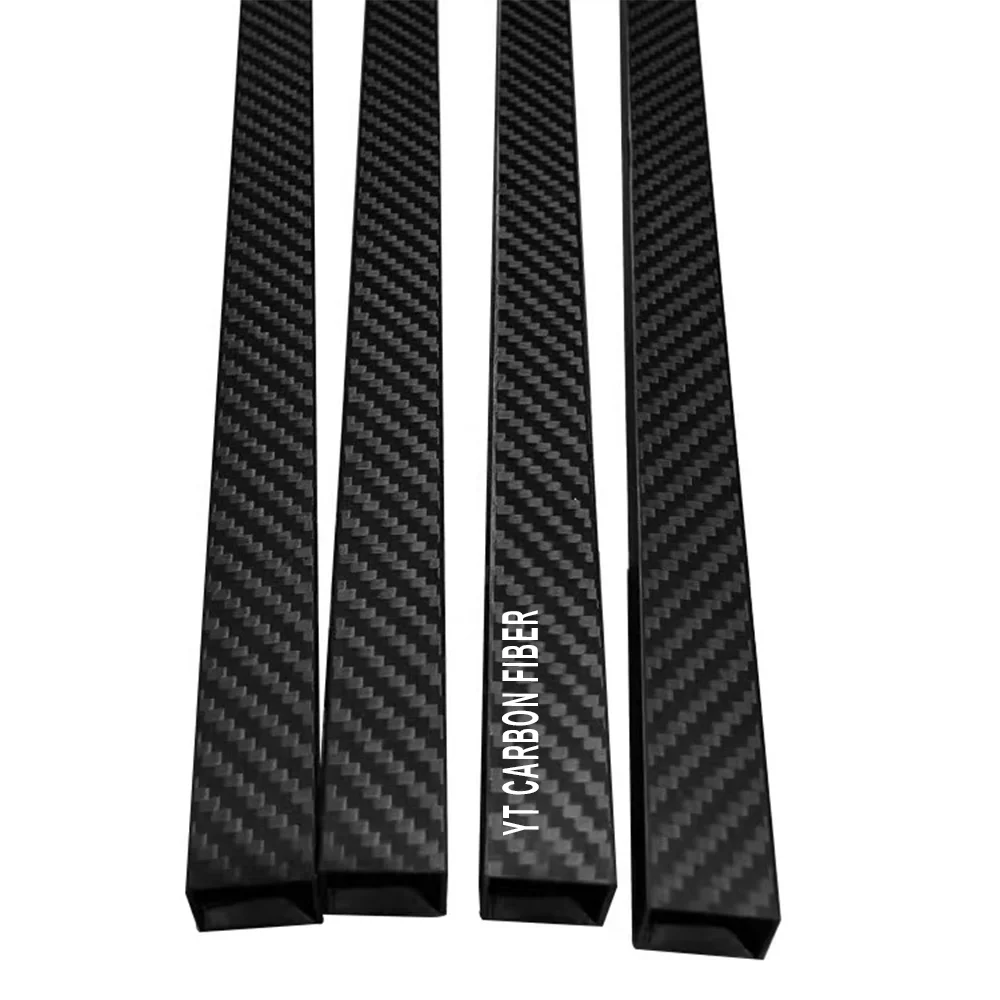
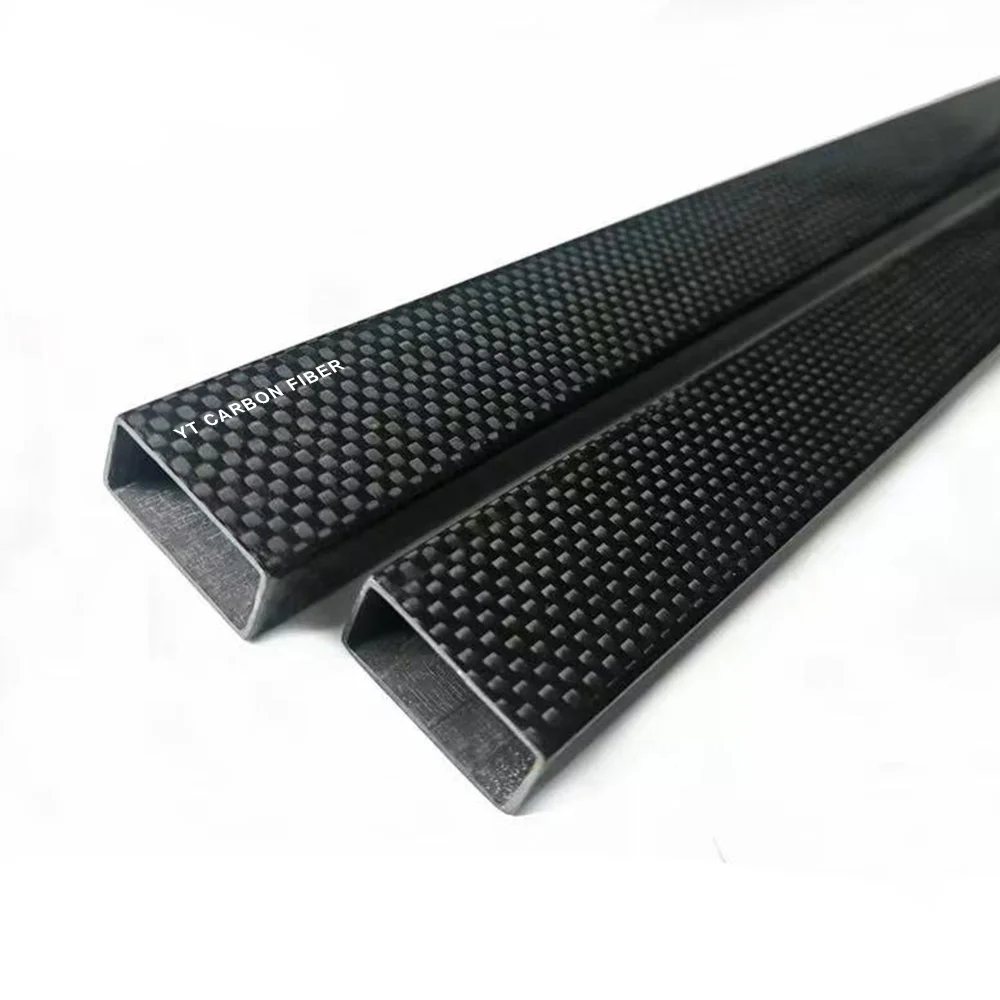
When your design loads come from one dominant direction, a carbon fiber rectangular tube is the most weight-efficient profile you can pick. The taller cross-section places more fiber farther from the neutral axis, and bending stiffness scales with the cube of that distance — so a 20mm × 40mm rectangular tube at the same wall thickness delivers roughly 3× the bending stiffness in the tall direction compared to a 20mm × 20mm square tube, while weighing almost the same. That’s the math that makes rectangular profiles the go-to choice for beams, rails, and spanning members where you know which way the load points.
Unlike a square tube which splits its moment of inertia equally between two axes, the rectangular profile concentrates stiffness where you need it and accepts lower performance on the other axis. If your beam only bends one way — a gantry rail carrying a moving head, a wing spar under lift, a shelf bracket under gravity — that’s not a compromise, that’s an optimization. For applications requiring equal stiffness in both axes, see our carbon fiber square tube. For torsion-dominated loads, a round tube handles twist more efficiently.
We produce these rectangular carbon fiber tubes in our Shenzhen facility with both roll-wrapped and pultruded construction. Pultruded tubes are available in single-piece lengths up to 4 meters — one of the longest capabilities among Chinese carbon fiber tube manufacturers. The asymmetric cross-section requires careful fiber placement: we orient the primary load-bearing plies along the 0° axis of the tall wall and add ±45° shear plies at the top and bottom flanges. Every tube ships with dimensional inspection data covering width, height, wall thickness, and bow deviation along the length.
Specifications
| Specification | Details |
|---|---|
| Material | T300/T700/T800 carbon fiber |
| Cross-Section | Rectangular (flat profile) |
| Width (OD) | 5mm – 150mm |
| Height (OD) | 8mm – 200mm |
| Wall Thickness | 0.5mm – 8mm |
| Corner Radius | 1–3mm (wall thickness dependent) |
| Max Single-Piece Length | 4000mm (4 meters) |
| Construction | Roll-wrapped / Pultruded |
| Weave Options | 3K Twill / Plain / UD |
| Surface Finish | Matte / Glossy |
| Fiber Volume Fraction | 60–65% |
| Density | 1.55–1.60 g/cm³ |
| Flexural Modulus (strong axis) | ≥ 130 GPa (0° layup) |
| Deflection (1m span, 10kg center) | < 1.5mm (40×20×2mm tube) |
| Bow Deviation | ≤ 1mm per meter |
| Operating Temperature | -40°C to 120°C |
Applications
- Gantry rails and linear guides — The tall profile resists bending under a moving carriage head. Flat bottom face mounts directly to the machine base. Stiffness is concentrated exactly where the span demands it
- Wing spars and structural beams — Aerodynamic loads push in one primary direction. A rectangular carbon fiber tube places maximum fiber at the top and bottom flanges where bending stress peaks, minimizing weight for a given deflection target
- Shelf brackets and cantilever supports — Gravity always points down. The tall cross-section fights sag with maximum efficiency per gram. Mount hardware directly to the flat vertical face
- Robot arm links (planar motion) — When a robot arm swings in a single plane, bending dominates in one direction and torsion is minimal. The rectangular profile delivers the stiffness you need without wasting fiber on the weak axis
- Solar panel frame rails — Long spans carrying uniform downward load from wind and snow. The flat top and bottom surfaces make panel clamping simple, and the tall profile keeps deflection within tracker tolerance
Why Choose YTCarbon
- One plant, full control. We roll-wrap and pultrude our own rectangular carbon fiber tubes from raw tow, then inspect each one in the same Shenzhen facility. No trading companies, no unknown quality. We exhibited at the 2025 World UAV Expo — see what a real carbon fiber factory puts on the table
- 4-meter single-piece length. One of the longest pultrusion capabilities among China carbon fiber tube factories. Span long distances without splice joints — most competitors cap at 3 meters
- Asymmetric layup engineering. We don’t use a one-size laminate. The tall walls get 0° plies for bending; the top and bottom flanges get ±45° for shear resistance. The result is a tube that’s stiff where it needs to be, not just stiff everywhere
- Bow deviation ≤ 1mm/m. Rectangular tubes are more sensitive to bow than round or square because the tall profile amplifies any curvature. We laser-measure every tube and reject before it ships
- Deflection data on request. Tell us your span, load, and safety factor — we’ll calculate the expected deflection and recommend the lightest section that meets your spec. No guesswork
Certifications
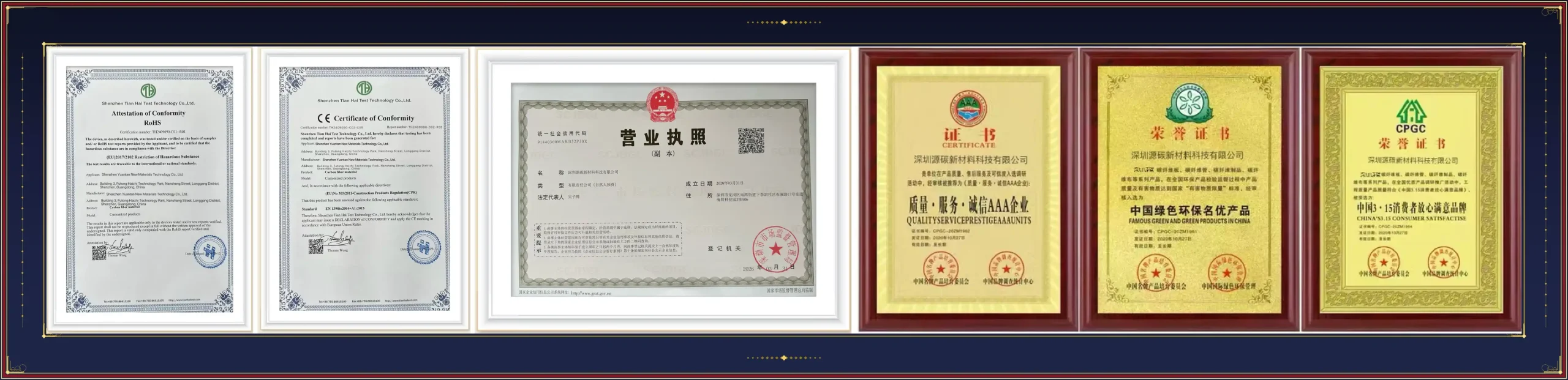
Every carbon fiber rectangular tube we ship carries documented quality credentials. Our facility holds ISO 9001 certification for quality management, and our materials are RoHS and CE compliant — required if you’re selling into the EU or supplying customers who need traceable material documentation. Need a copy for your records? Just ask and we’ll send the PDF.
How We Manufacture Your Tube
Raw T300/T700 carbon fiber tow enters our Shenzhen facility, gets impregnated with epoxy resin, then formed into rectangular profiles by either roll-wrapping over precision-machined rectangular mandrels or pultrusion through hardened-steel dies. The key difference vs square or round tubes is the layup: because the cross-section is asymmetric, we orient the primary load-bearing 0° plies along the tall walls and add ±45° shear plies at the top and bottom flanges. This isn’t a generic wrap — it’s a directionally engineered laminate matched to the way the tube will be loaded. After curing, each tube is measured for width, height, wall thickness on all four walls, corner radius, and bow deviation along its full length. Data is recorded per tube, not per batch.

Frequently Asked Questions
+ When should I choose a carbon fiber rectangular tube over a square tube?
+ How much deflection will a carbon fiber rectangular tube have under load?
+ Can a carbon fiber rectangular tube replace an aluminum extrusion in my design?
+ What aspect ratio should a carbon fiber rectangular tube have?
+ How do you prevent bow in long carbon fiber rectangular tubes?
Need a Custom Carbon Fiber Rectangular Tube?
Custom width, height, wall thickness, and directional laminate schedule. Factory direct from Shenzhen with deflection calculations and dimensional data on every order.