FPV Drone Frame Size Guide: 5 to 18 Inch
Choosing the right FPV drone frame size is one of the most critical decisions you will make. The frame dimensions under your motors fundamentally determine flight agility, payload capacity, resonance behavior, and total airtime. Here is a complete engineering breakdown from 5-inch racing quads to massive 18-inch industrial platforms.
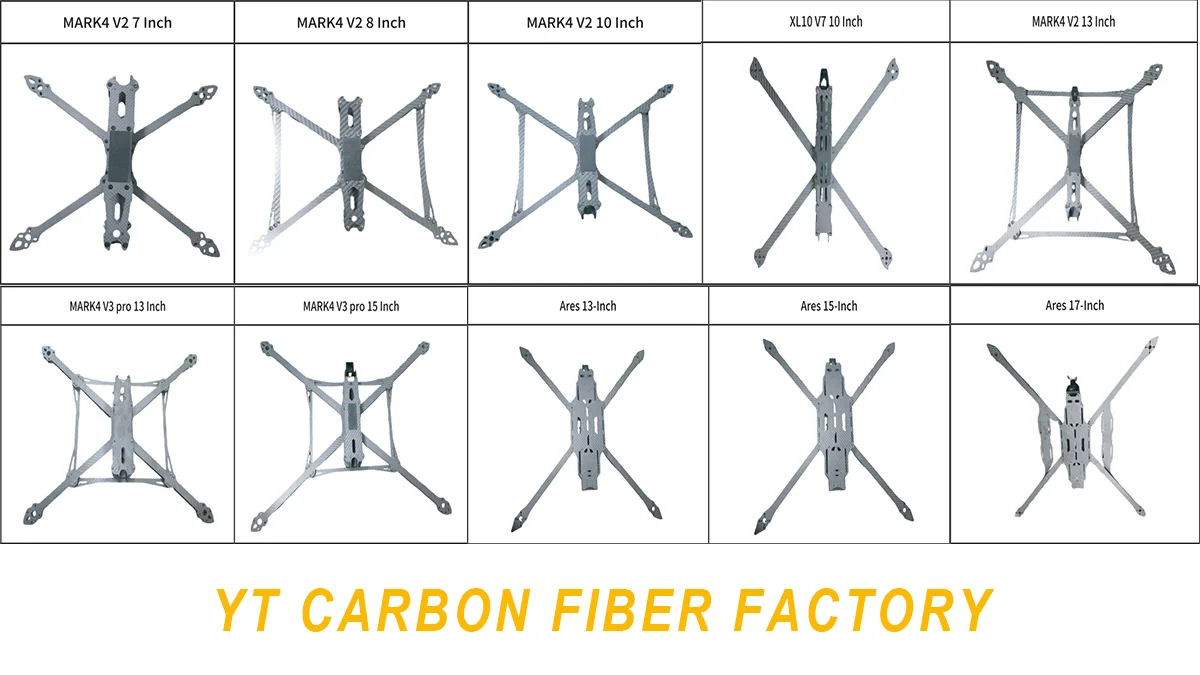
Comprehensive size spectrum of carbon fiber FPV drone frames from racing to commercial heavy-lift
Small Frames (5–7 Inch) — Racing & Freestyle
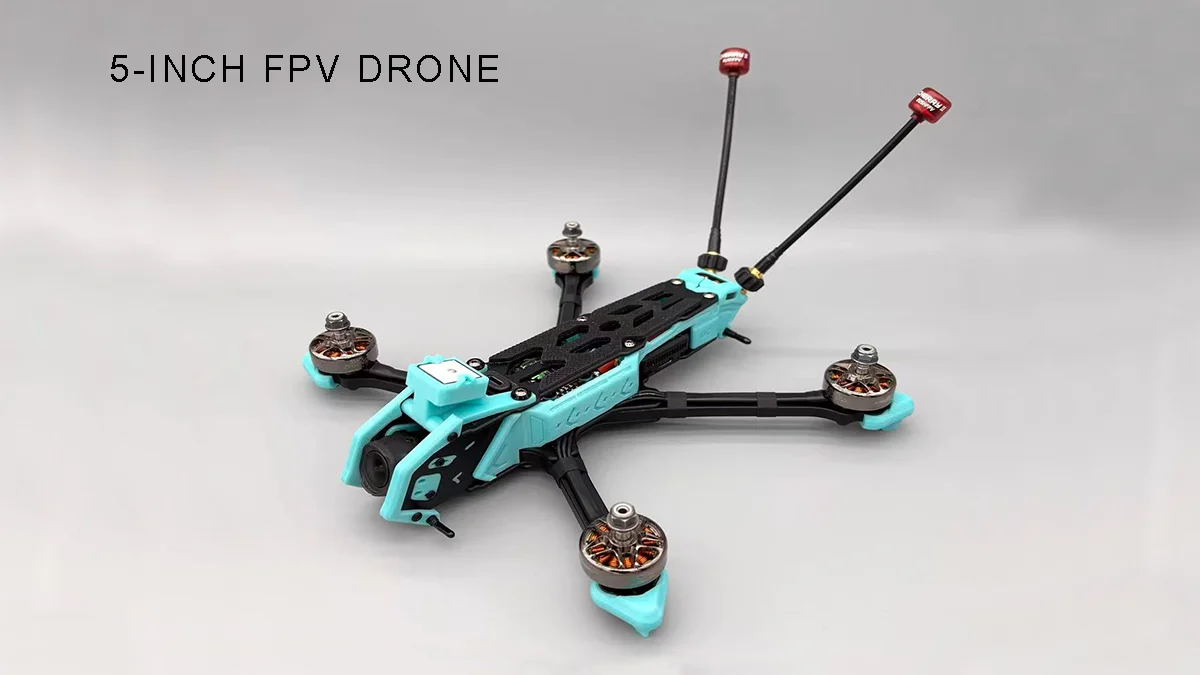
When pilots enter competitive flying, they usually begin with the iconic 5-inch class. Specifically, a 5-inch frame delivers an optimal balance between agile handling, structural durability, and modular replacement parts. Motor wheelbases generally range from 210mm to 230mm, creating an airframe that weaves through tight obstacle courses while remaining exceptionally stable at full throttle.
Furthermore, pilots demanding longer airtime without sacrificing high-speed responsiveness routinely adopt the 7-inch variant for cinematic mountain exploration. These extended airframes incorporate 2.5mm central decks alongside 5.0mm to 6.0mm arms. Consequently, the chassis withstands high-speed crashes and dampens unwanted motor flutter.
In addition, this compact category offers the most mature parts ecosystem in the hobby. Standardized mounting holes (20×20mm and 30.5×30.5mm) allow you to configure flight controllers, 6S ESCs, and HD video transmitters easily.
Medium Frames (8–10 Inch) — Cinematic & Long Range
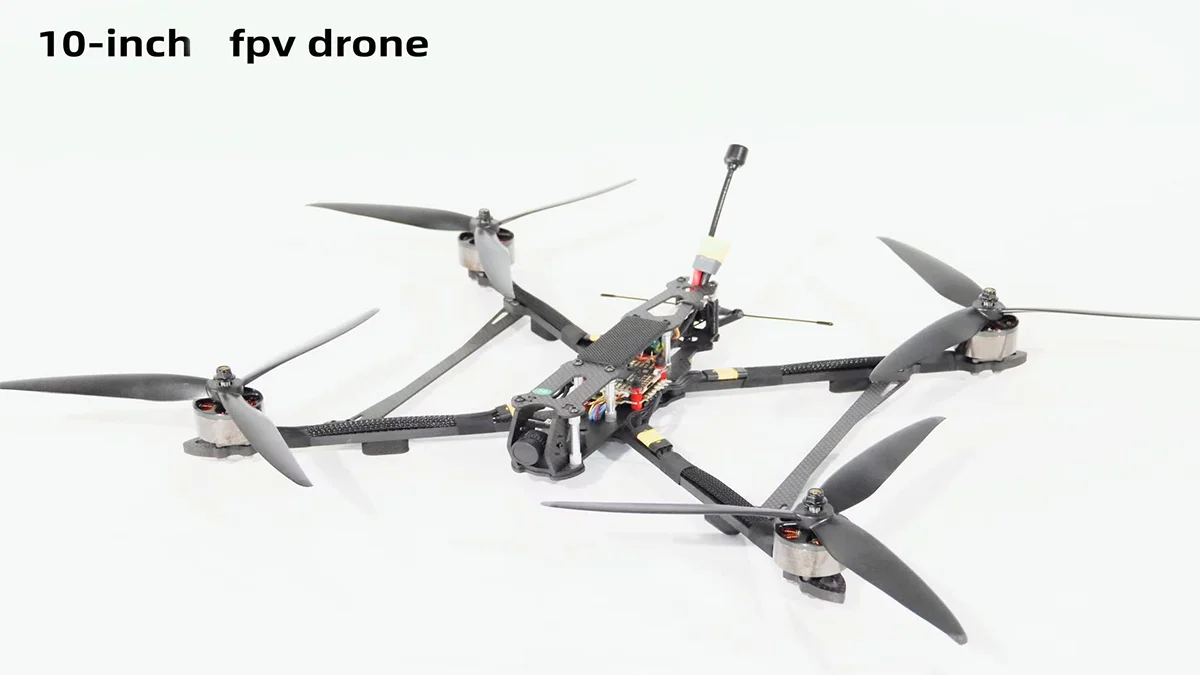
Stepping up to 8–10 inch frames introduces payload capability and aerodynamical efficiency that smaller quads cannot deliver. Specifically, these medium platforms serve as reliable tools for commercial filmmakers carrying heavy cinema action cameras or 3-axis motorized gimbals.
Meanwhile, larger propellers generate higher thrust per watt of electrical draw. For long-distance surveillance or mapping missions, an efficient 10-inch platform cruising on high-density lithium-ion packs easily reaches 30+ minutes of stable airtime. Therefore, maintaining structural rigidity across larger motor spans becomes paramount.
To eliminate harmonic vibrations under heavier payloads, we manufacture these medium frames with 3.0mm to 4.0mm quasi-isotropic carbon fiber plates. This stiffness prevents gyro noise and guarantees smooth cinematic footage even in coastal winds.
Large Frames (13–18 Inch) — Heavy Lift & Industrial
At the upper end of the spectrum, frames ranging from 13 to 18 inches represent heavy-duty commercial equipment. These workhorses carry multispectral agricultural sensors, high-altitude LiDAR systems, search-and-rescue thermal pods, and emergency delivery boxes exceeding 5 kilograms.
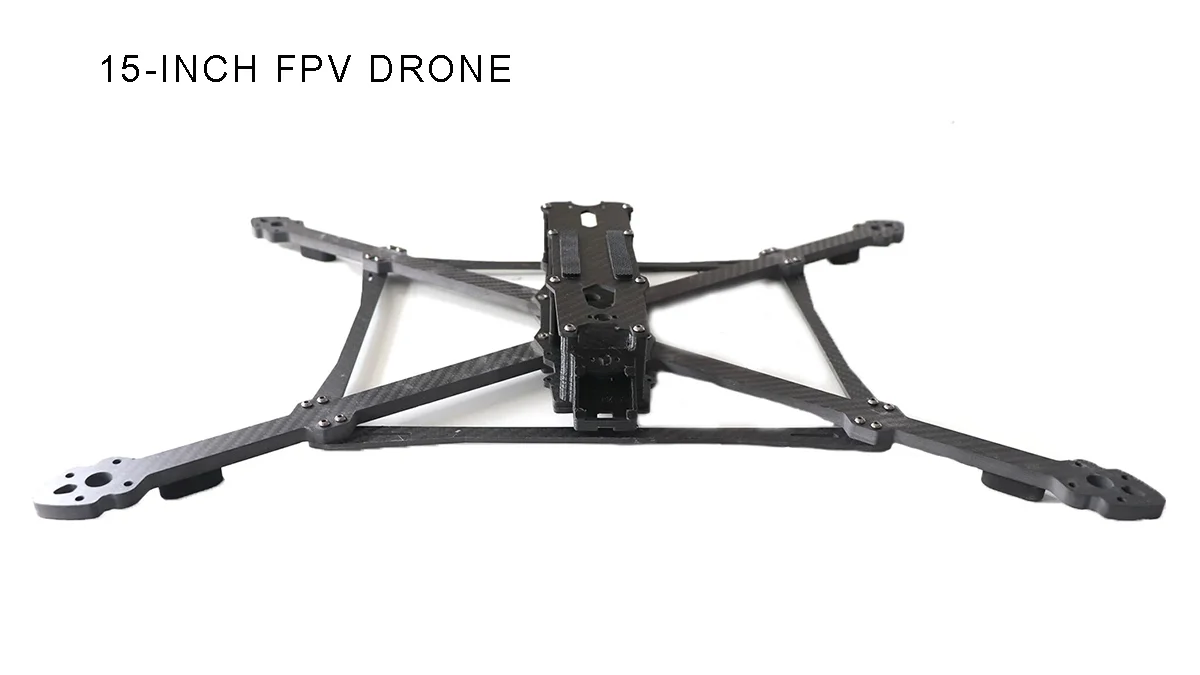
Because high-torque motors spin oversized carbon blades at lower RPMs, mechanical bending moments increase substantially. Consequently, these airframes require 4.0mm to 6.0mm carbon fiber plates or heavy-wall roll-wrapped carbon tubes clamped by CNC aluminum mounts. Without this structural support, chassis flex could cause motor misalignment and flight controller desync.
Moreover, industrial operators benefit from redundant battery bays and chamfered edges that protect delicate wiring. When engineered properly, these large platforms deliver consistent stability through hundreds of demanding industrial cycles.
Frame Size Selection Quick Reference
| Frame Size | Primary Application | Typical Weight | Plate / Arm Thickness | Flight Time |
|---|---|---|---|---|
| 5 Inch | Racing, Freestyle | 250–450g | 2.0mm plates / 5.0mm arms | 3–7 min |
| 7 Inch | Long-Range Freestyle | 400–650g | 2.0–3.0mm plates / 6.0mm arms | 5–12 min |
| 8 Inch | Cinematic, Surveying | 600–900g | 3.0mm plates / 6.0mm arms | 10–20 min |
| 10 Inch | Long Range, Mapping | 800–1200g | 3.0–4.0mm plates / 6.0–8.0mm arms | 15–30 min |
| 13 Inch | Heavy Lift, Delivery | 1.5–2.5kg | 4.0mm plates / structural tubes | 15–35 min |
| 15 Inch | Industrial, Agricultural | 2.0–4.0kg | 4.0–5.0mm plates | 20–40 min |
| 17–18 Inch | Ultra Heavy Lift, LiDAR | 3.0–6.0kg+ | 5.0–6.0mm plates / 25–30mm tubes | 25–50 min |
Frequently Asked Questions
Frame Sizing & Flight Characteristics
Custom Manufacturing & CNC
Need Custom Carbon Fiber Drone Frames?
From 5-inch racing kits to 18-inch industrial platforms. Precision CNC chamfered edges, Toray T700 layups, and custom hardware assemblies. Get a factory quote within 24 hours.