Carbon Fiber Tubes: Aerospace and Robotics Applications

When engineers push the boundaries of what’s possible in aerospace and robotics, they consistently encounter the same fundamental challenge: how to build structures that are simultaneously lightweight, incredibly stiff, and dimensionally stable under extreme conditions. For decades, aluminum and steel dominated these conversations. Today, carbon fiber tubes have emerged as the material of choice for mission-critical applications where every gram matters and failure is not an option.

The unique combination of high specific modulus, thermal stability, and corrosion resistance makes carbon fiber tubes particularly valuable in environments ranging from the vacuum of orbit to the humid interiors of collaborative robot workcells. Understanding how to select, specify, and integrate these components can mean the difference between a successful deployment and a costly failure.

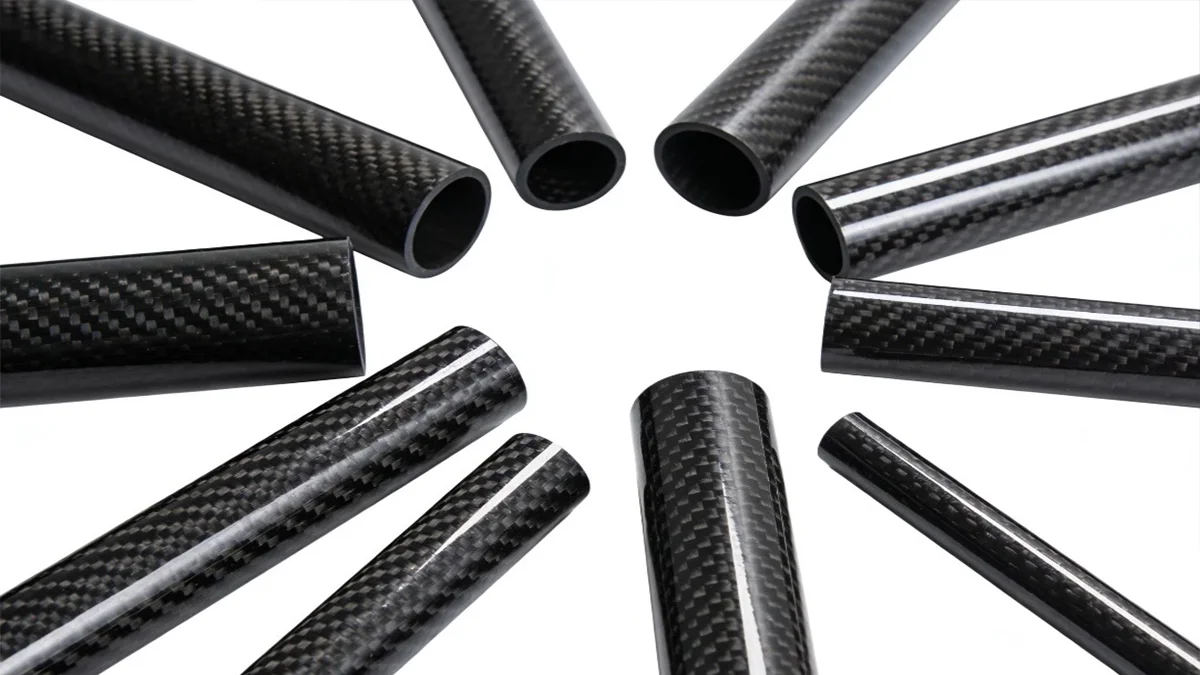
carbon fiber tubes aerospace robotics applications

Why Carbon Fiber Tubes?

The appeal of carbon fiber tubes in demanding applications comes down to a handful of mechanical properties that are difficult to match with conventional materials. The specific stiffness—the ratio of stiffness to density—of carbon fiber composites routinely exceeds aluminum by a factor of three and steel by a factor of ten. This means structural tubes can be designed to bear equivalent loads while shedding substantial weight, a critical factor in both aerospace systems where launch costs dominate economics and in robotics where reduced mass translates directly to faster cycle times and lower actuator requirements.

Beyond stiffness, carbon fiber tubes offer superior fatigue resistance compared to metals. In aerospace applications where components undergo thousands of thermal cycles during a service life, metal fatigue has historically limited design life. Carbon fiber composites, properly designed, demonstrate essentially no fatigue degradation over comparable periods, making them ideal for satellites expected to operate for fifteen years or more.

Thermal expansion presents another advantage. Carbon fiber tubes exhibit near-zero axial thermal expansion coefficient when manufactured with appropriate fiber orientations, meaning dimensions remain stable across wide temperature ranges. A satellite structural member that must maintain precise alignment through cycles from -150°C in eclipse to +120°C in direct sunlight benefits enormously from this property.

Corrosion resistance completes the picture. Unlike aluminum, which requires protective coatings that can degrade, or steel, which rusts in humid environments, carbon fiber tubes resist corrosion inherently. This simplifies logistics, extends service intervals, and reduces lifecycle costs in robotic applications where equipment operates in factory environments with cutting fluids, coolants, and varying humidity levels.

Aerospace Applications

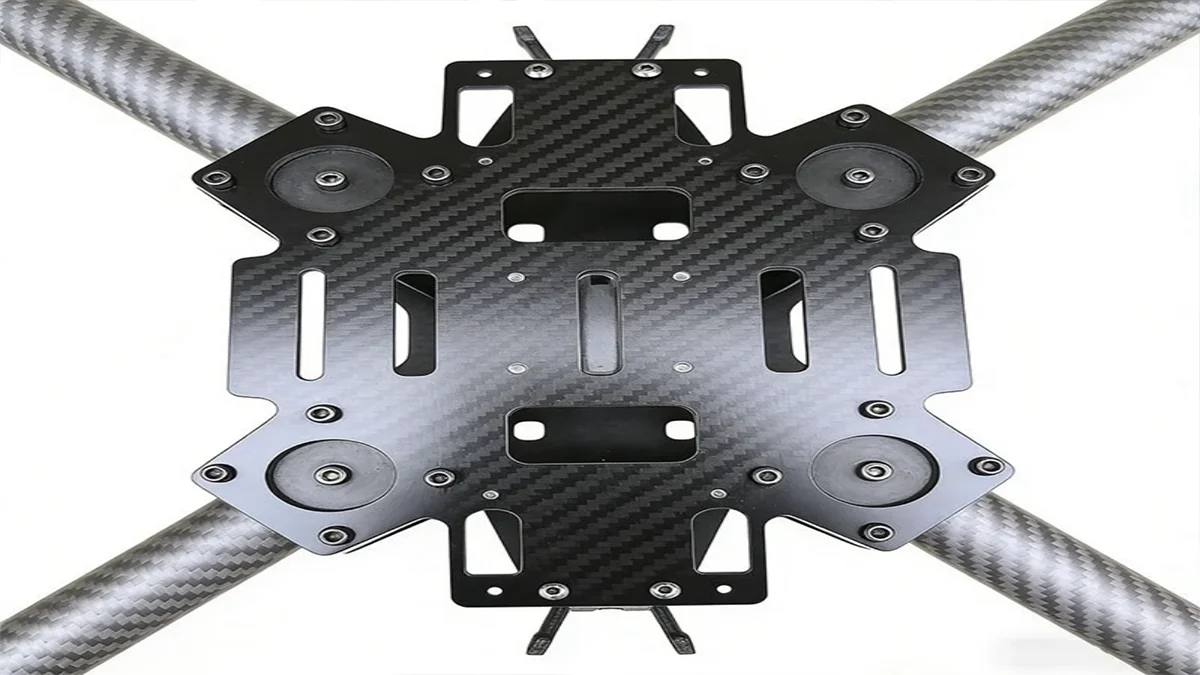
carbon fiber tube aerospace satellite antenna structure

The aerospace industry has embraced carbon fiber composite tubes across numerous subsystems, from primary structure to specialized deployable mechanisms. The combination of lightweight and dimensional stability addresses challenges unique to the space environment where every kilogram launched costs thousands of dollars and thermal extremes challenge material performance.

Satellite antenna boom structures represent a prime example. These slender tubes extend solar panels and communication antennas away from the satellite bus, requiring high stiffness to maintain pointing accuracy while minimizing mass. Carbon fiber tubes with specialized fiber architectures—typically unidirectional layers oriented to optimize bending stiffness—deliver the performance required. The dimensional stability ensures that antenna pointing accuracy, measured in milliradians, remains consistent throughout the thermal cycling of orbit.

Unmanned aerial vehicle (UAV) airframe structures increasingly rely on carbon fiber tubes for primary load-bearing members. The main spar tubes in medium-altitude long-endurance (MALE) UAVs carry wing bending loads while contributing to the overall torsional rigidity required for stable flight. Weight savings in these primary structures compound throughout the aircraft: a kilogram saved in the wing structure allows either a kilogram more payload or reduced fuel consumption, both valuable in battery-electric or hybrid-electric propulsion systems that dominate current UAV development.

Interior aircraft structures present another application area. From seat track tubes in commercial aircraft to ventilation ducting in business jets, carbon fiber composite tubes replace aluminum where weight savings justify the cost premium. Airlines operating fleets of hundreds of aircraft recognize that even modest weight reductions per aircraft multiply across thousands of flights annually into significant fuel savings.

Robotics Applications

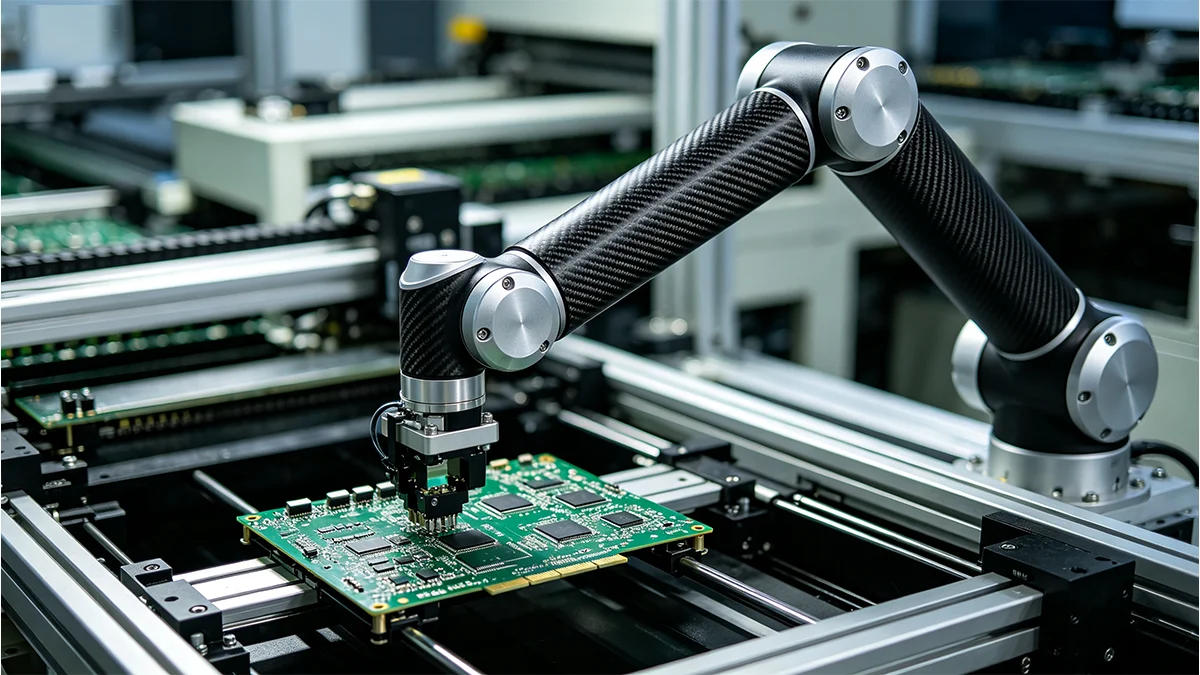
carbon fiber tube robotic arm joint

Industrial and collaborative robots benefit equally from carbon fiber tube properties, though the driving factors differ from aerospace applications. In robotics, reduced mass translates directly to improved performance: lighter robot arms achieve faster cycle times, require smaller and less expensive actuators, and impose lower loads on bearings and foundations. For collaborative robots designed to work safely alongside humans, reducing mass improves the inherent safety profile by decreasing kinetic energy during potential collisions.

Serial robot arm linkages represent the most common robotic application for carbon fiber tubes. The arm segments—the links connecting successive joints—experience primarily bending and torsion loads during operation. Carbon fiber tubes with appropriate wall thickness provide the required stiffness while weighing a fraction of aluminum alternatives. Robot manufacturers select tube geometries based on the balance between stiffness requirements, which drive wall thickness, and weight considerations, which argue for thinner walls. Finite element analysis during design optimizes this balance for each specific payload and reach requirement.

Collaborative robot (cobot) manufacturers have adopted carbon fiber tubes extensively as they pursue the combination of lightweight construction and high stiffness that enables safe human-robot collaboration. The lower inertia of carbon fiber arm segments allows faster stopping in emergency situations, a critical safety consideration when robots operate in close proximity to human workers. Additionally, the natural frequency of carbon fiber tubes can be engineered to avoid resonance with drive system vibrations, reducing oscillation and improving path accuracy during rapid movements.

Underwater remotely operated vehicle (ROV) frames showcase carbon fiber tube advantages in a challenging environment. The combination of lightweight construction—reducing buoyant ballast requirements—and corrosion resistance against seawater makes carbon fiber the preferred material for professional ROV frames. Unlike aluminum, which suffers galvanic corrosion in seawater, or steel, which corrodes aggressively, carbon fiber maintains mechanical properties indefinitely in subsea conditions.

Tube Geometry and Performance

Selecting the appropriate carbon fiber tube geometry requires understanding how diameter, wall thickness, and cross-section shape influence mechanical performance. The choice impacts stiffness, weight, buckling resistance, and ultimately the cost of the finished component.

Circular tubes dominate most applications due to their efficient distribution of material for bending and torsion loads. The moment of inertia for a circular tube increases with the fourth power of diameter, meaning doubling tube diameter increases bending stiffness by a factor of sixteen while only doubling material volume. This scaling favor makes larger diameter tubes with thin walls an efficient choice when packaging constraints allow.

Square and rectangular carbon fiber tubes serve applications where the tube must integrate with planar surfaces or where torsional stiffness is particularly important. The flat faces of square tubes simplify attachment using bolted flanges or bonding surfaces, reducing assembly complexity. However, square tubes carry torsional loads less efficiently than circular tubes of equivalent weight, so this geometry choice must be justified by the specific load case.

The following table summarizes key geometric considerations for tube selection:

Parameter Effect on Stiffness Effect on Weight Typical Application
Increased Diameter Significant increase (∝ D⁴) Moderate increase Spar tubes, antenna booms
Increased Wall Thickness Moderate increase Proportional increase High-load links, pressurized tubes
Circular Cross-Section Optimal for bending/torsion Material efficient General robotics, aerospace
Square/Rectangular Lower torsional efficiency Similar weight at equal bending stiffness Flange attachments, frames

Manufacturing Precision Matters

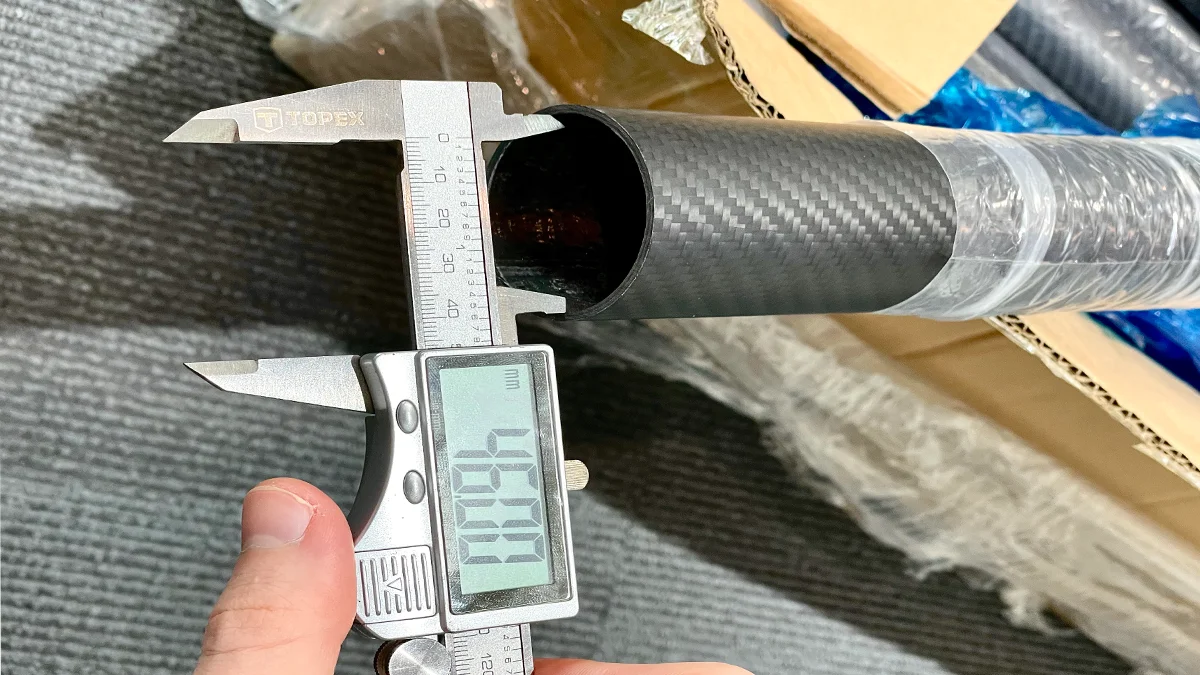
carbon fiber tube precision manufacturing CNC measurement

The performance advantages of carbon fiber tubes can only be realized when manufacturing maintains the tight tolerances required for aerospace and robotics integration. Precision in three key areas—straightness, concentricity, and wall thickness uniformity—distinguishes aerospace-grade tubes from commodity products.

Straightness tolerances for aerospace carbon fiber tubes typically range from 0.5mm to 1mm per meter of length. A tube deployed as a satellite antenna boom must maintain alignment within fractions of a millimeter across its entire span. Achieving this precision requires specialized curing fixtures, controlled processing parameters, and post-machining straightening operations. Robots face similarly demanding requirements: any curvature in an arm link translates directly to positioning error at the end effector.

Concentricity—the alignment between outer and inner diameters—affects how loads transfer through bolted or bonded joints. Poor concentricity forces joint hardware to accommodate eccentricity, introducing stress concentrations that compromise joint integrity. Aerospace-grade tubes maintain concentricity within 0.1mm throughout their length, achieved through precision-machined mandrels during layup and careful control of cure parameters.

Wall thickness uniformity ensures consistent mechanical properties along the tube length. Variations exceeding ±5% of nominal wall thickness create weak points prone to failure under load. Professional manufacturers implement statistical process control during production, measuring wall thickness at multiple points along each tube and maintaining process capability indices (Cpk) above 1.33 for critical dimensions.

CNC machining of end fittings, flange faces, and bearing seats completes the precision manufacturing chain. The transition between tube and machined features must maintain tight dimensional control to ensure proper fit-up during assembly. Surface preparation for bonding or coating also requires attention to detail: contamination, improper surface roughness, or inconsistent primer application compromises long-term durability.

Future Outlook

The demand for carbon fiber tubes in aerospace and robotics applications continues to accelerate, driven by several converging trends. Commercial space expansion, particularly low-earth-orbit constellations requiring hundreds of satellites, creates sustained demand for lightweight structural components. Each satellite in a constellation benefits from mass reduction that compounds across the fleet, making carbon fiber structural tubes an economic choice despite higher unit costs.

Humanoid robots and advanced mobile manipulators represent an emerging application area. These systems require lightweight, high-stiffness structures to achieve the combination of strength and agility that enables human-scale operation. Carbon fiber tubes offer the specific performance envelope these applications require, though ongoing development focuses on reducing costs for high-volume production.

Manufacturing precision will continue improving as industry adopts in-process monitoring technologies and closed-loop control systems. The integration of ultrasound, optical, and coordinate measuring technologies during production enables real-time quality assurance rather than post-process inspection, driving both consistency and throughput.

Sustainability considerations are beginning to influence material selection decisions. Carbon fiber composite recycling technologies, while still developing, offer pathways to reduce lifecycle environmental impact. Aerospace manufacturers already implementing recycling programs for manufacturing waste anticipate closed-loop systems within the decade, potentially improving the environmental profile of carbon fiber tube applications.

Conclusion

Carbon fiber tubes have established themselves as essential components in aerospace and robotics engineering, delivering unique combinations of lightweight construction, high stiffness, and dimensional stability that conventional materials cannot match. From satellite antenna booms operating in the thermal extremes of orbit to robot arm links cycling thousands of times per day in factory environments, these composite structures enable performance levels previously unattainable.

Successful implementation requires attention to tube geometry selection, manufacturing precision, and integration details. Engineers who understand how fiber architecture, wall thickness, and cross-section geometry influence performance can specify carbon fiber tubes that optimize the balance between competing requirements. Working with experienced manufacturers who maintain rigorous quality systems ensures that delivered components meet the demanding tolerances these applications require.

Need precision carbon fiber tubes for your next project? Contact YTCarbon for custom specifications tailored to aerospace and robotics requirements.