Buying Carbon Fiber Products from China:
Quality & Shipping Guide
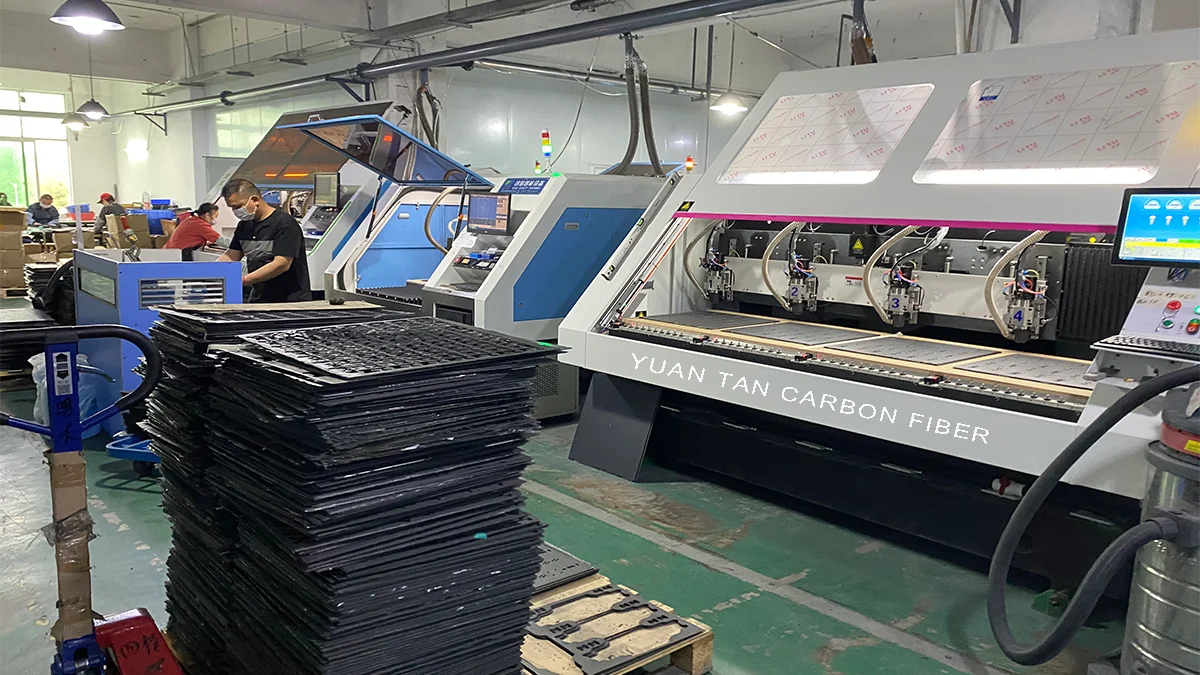
China is the world’s largest manufacturer of carbon fiber products, producing everything from raw CF fabric to precision-machined finished components. For international buyers—whether you’re an engineering firm sourcing structural panels, a drone manufacturer ordering custom frames, or a trading company supplying automotive parts—purchasing from Chinese factories offers compelling cost advantages without sacrificing quality. But the gap between a great deal and a costly mistake comes down to one thing: knowing exactly what to verify before you commit.
This guide walks you through the entire process of sourcing carbon fiber from China—from evaluating suppliers and verifying material quality to choosing the right shipping method and navigating customs. Whether you’re placing your first trial order or scaling up to container shipments, this checklist will help you avoid the pitfalls that catch inexperienced buyers off guard.
Why Source Carbon Fiber Products from China?
China’s CF industry has matured dramatically over the past decade. Domestic manufacturers like Zhongfu Shenying and Jiangsu Hengshen now produce T700, T800, and even T1000-grade precursor, closing the gap with Toray and Mitsubishi. This means Chinese fabricators have access to world-class raw materials at prices 30-50% lower than equivalent products sourced from Japan or Europe. For buyers, that translates directly into competitive pricing on finished goods—CF sheets, tubes, rods, and CNC-machined parts.
Beyond cost, China offers manufacturing flexibility that’s hard to find elsewhere. Need a custom sheet size of 400mm × 600mm with a specific layup schedule? A CF tube with an unusual inner diameter and 0°/90° ply orientation? Most Chinese factories can accommodate custom specifications with minimum order quantities as low as 5-10 pieces—a threshold that would be impossible with Western manufacturers who typically require hundreds of units per run.
The combination of competitive pricing, material availability, and manufacturing agility makes China the default sourcing destination for CF products across industries including aerospace, automotive, UAV/drone, robotics, sporting goods, and medical devices. The key is knowing how to separate the reliable suppliers from the ones who cut corners.
Quality Checklist: What to Verify Before Ordering
Before you place an order with any Chinese CF supplier, run through this checklist systematically. Skipping even one item can result in receiving material that doesn’t meet your engineering requirements—or worse, fails catastrophically in application.
1. Material Certification. Request a Material Test Report (MTR) or Certificate of Analysis (CoA) for every batch. This document should specify the carbon fiber grade (e.g., T700, T800), tensile strength, tensile modulus, and elongation at break. Legitimate suppliers will provide this without hesitation.
2. Resin System Specification. CF composites are only as good as the resin matrix binding them. Verify the resin type (epoxy is standard), glass transition temperature (Tg), and fiber volume fraction (typically 60-65% for quality sheets). Cheap suppliers sometimes use inferior polyester or vinyl ester resins that compromise mechanical performance.
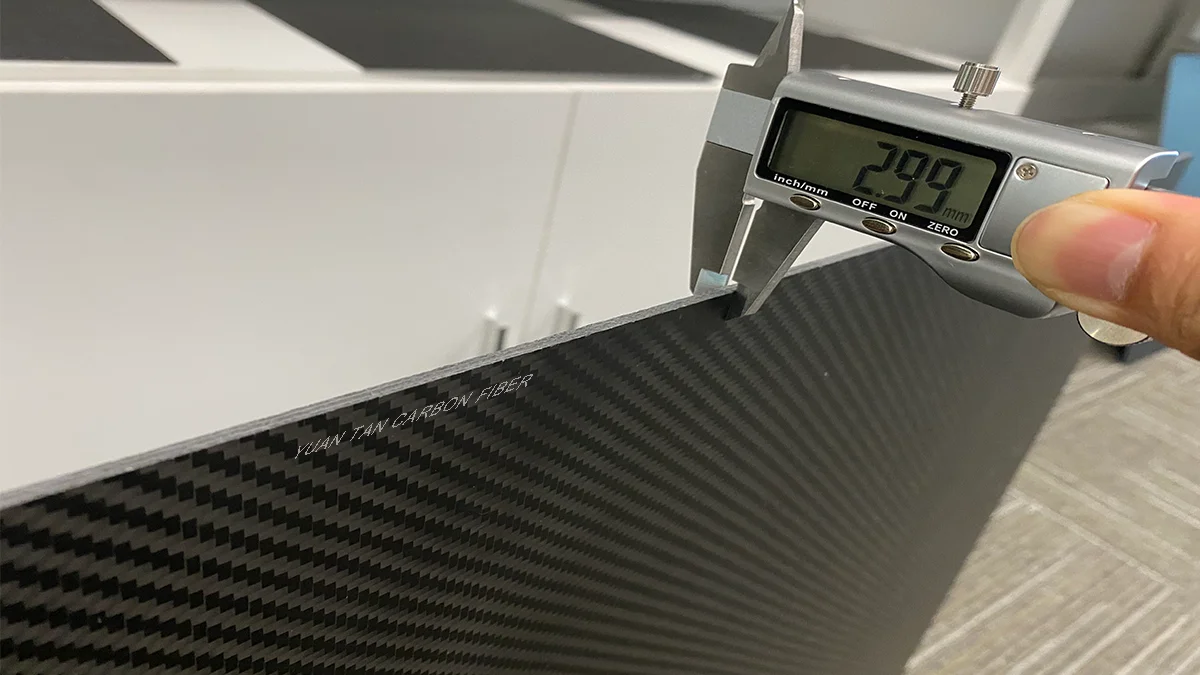
3. Dimensional Tolerance. Confirm tolerance expectations in writing. For CF sheets, thickness tolerance should be ±0.1mm for standard products. For tubes, check inner diameter, outer diameter, and wall thickness tolerances. Ask for actual measurement data from their quality control process.
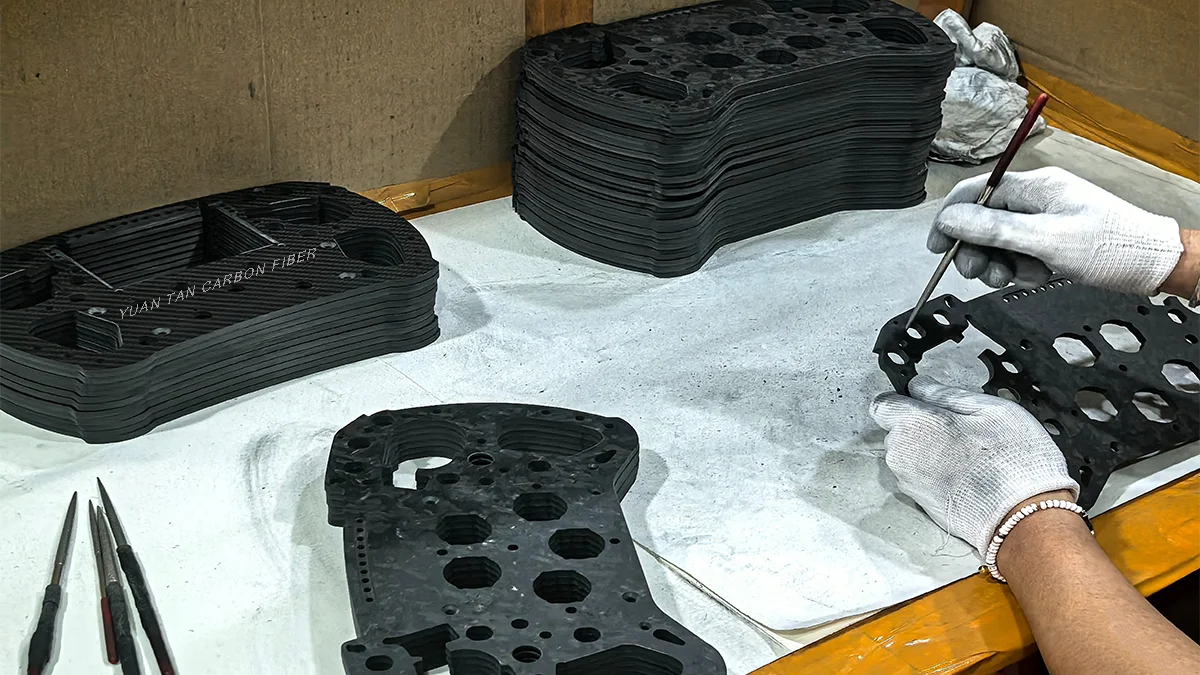
4. Surface Finish Quality. Specify whether you need gloss, matte, or textured finish, and what’s acceptable in terms of surface defects. Pinholes, fiber print-through, and dry spots are common quality issues. Request close-up photos of actual production samples.
5. Factory Audit & Certifications. Look for ISO 9001:2015 certification at minimum. A video factory tour or third-party audit report (SGS, TÜV, Intertek) adds another layer of confidence.
Sample & Trial Order Strategy
Never commit to a large production order without first validating material quality through samples. This sounds obvious, but it’s the single most common mistake buyers make when sourcing CF from China—lured by aggressive pricing into skipping the validation step. A properly executed sample process protects both parties and sets clear expectations for production runs.
Start by requesting 2-3 sample pieces in your exact specification. Most reputable suppliers will provide samples at cost (material + labor + shipping), typically $50-200 depending on complexity. When you receive samples, perform dimensional measurement with calipers, visual inspection under good lighting, and—if your application demands it—mechanical testing (flexural strength, interlaminar shear). Compare the results against the supplier’s datasheet claims.
Once samples pass validation, place a trial order of 10-50 pieces before scaling up. This trial run reveals production consistency—whether the factory can replicate sample quality at scale. Pay close attention to batch-to-batch variation in color, thickness, and surface finish. Inconsistent trial results are a red flag that process control is inadequate, regardless of how good their samples looked.
Document everything. Photograph samples, record measurements, and keep all correspondence. This paper trail becomes invaluable if quality disputes arise during production orders.
Shipping Methods & Logistics
Choosing the right shipping method for carbon fiber products from China depends on three factors: order volume, urgency, and budget. CF sheets and tubes are lightweight relative to their volume, which makes dimensional weight (not actual weight) the primary cost driver for air shipments.
Express Courier (DHL, FedEx, UPS) is ideal for samples and small orders under 100kg. Transit time is 3-7 business days with full tracking and door-to-door delivery. Expect to pay $8-15/kg for express shipments from China to North America or Europe.
Air Freight becomes cost-effective for orders between 100-500kg. Transit time runs 5-10 business days at $4-8/kg. You’ll need a freight forwarder to coordinate pickup, customs declaration, and last-mile delivery.
Sea Freight is the economical choice for bulk orders exceeding 500kg. A 20-foot container from Shanghai to Los Angeles costs roughly $2,000-4,000, with transit times of 25-35 days. LCL (Less than Container Load) is available for orders that don’t fill a full container. Regardless of method, ensure your supplier uses proper packaging—CF sheets should be stacked with protective film, wrapped in foam, and crated in plywood cases.
Shipping Method Comparison
| Method | Best For | Weight Range | Transit Time | Cost |
|---|---|---|---|---|
| Express | Samples, small orders | Under 100kg | 3-7 days | $8-15/kg |
| Air Freight | Mid-volume, urgent | 100-500kg | 5-10 days | $4-8/kg |
| Sea (LCL) | Medium bulk | 500-2000kg | 25-35 days | $40-80/CBM |
| Sea (FCL) | Large bulk | 2000kg+ | 25-35 days | $2-4K/container |
Customs, Duties & Import Considerations
Importing CF products from China requires proper tariff classification. Carbon fiber sheets and laminates typically fall under HS code 6815.10, while tubes may be classified under 6815.10 or 7616.99 depending on composition. Confirm the correct HS code with your customs broker—misclassification can result in delays or incorrect duty rates.
Duty rates vary by country. In the United States, most CF products face a general duty rate of 3.3-5%, though Section 301 tariffs may apply additional surcharges. EU importers generally face 4-6.5% duty. Always verify current rates with your local customs authority.
Required documentation typically includes:
- Commercial Invoice — product description, quantity, unit price, total value, Incoterms
- Packing List — detailed weight and dimension per package
- Bill of Lading / Airway Bill — shipping document from carrier
- Certificate of Origin — issued by supplier or Chamber of Commerce
- MSDS — may be required for customs clearance
Frequently Asked Questions
How can I verify a Chinese carbon fiber supplier is legitimate?
Check their business license (available on Alibaba or China’s National Enterprise Credit Information Publicity System), verify ISO certifications through the issuing body, request a video factory tour, and order samples before committing. Third-party audit services like SGS or TÜV can conduct on-site inspections for $500-1,500.
What is the typical MOQ for carbon fiber products?
For standard CF sheets and tubes, most Chinese suppliers accept MOQs of 5-20 pieces. Custom CNC-machined parts typically require 10-50 pieces. Many suppliers will negotiate lower MOQs for first orders.
How long does delivery take from China?
Production lead time is 7-15 business days for standard products, 15-25 days for custom items. Add shipping transit: 3-7 days for express, 5-10 days for air freight, or 25-35 days for sea freight. Total turnaround: 2-4 weeks by air, 5-8 weeks by sea.
What payment methods do Chinese suppliers accept?
Most accept T/T (bank wire transfer) with 30% deposit and 70% balance before shipment. For smaller orders, PayPal or Alibaba Trade Assurance provide buyer protection. Letters of Credit are common for orders above $10,000.
Ready to Source Carbon Fiber from China?
YTCarbon provides full material certifications, sample programs, and flexible shipping options for international buyers. From standard sheets and tubes to custom CNC-machined parts, we deliver quality you can verify—every order, every batch.