
Product Details
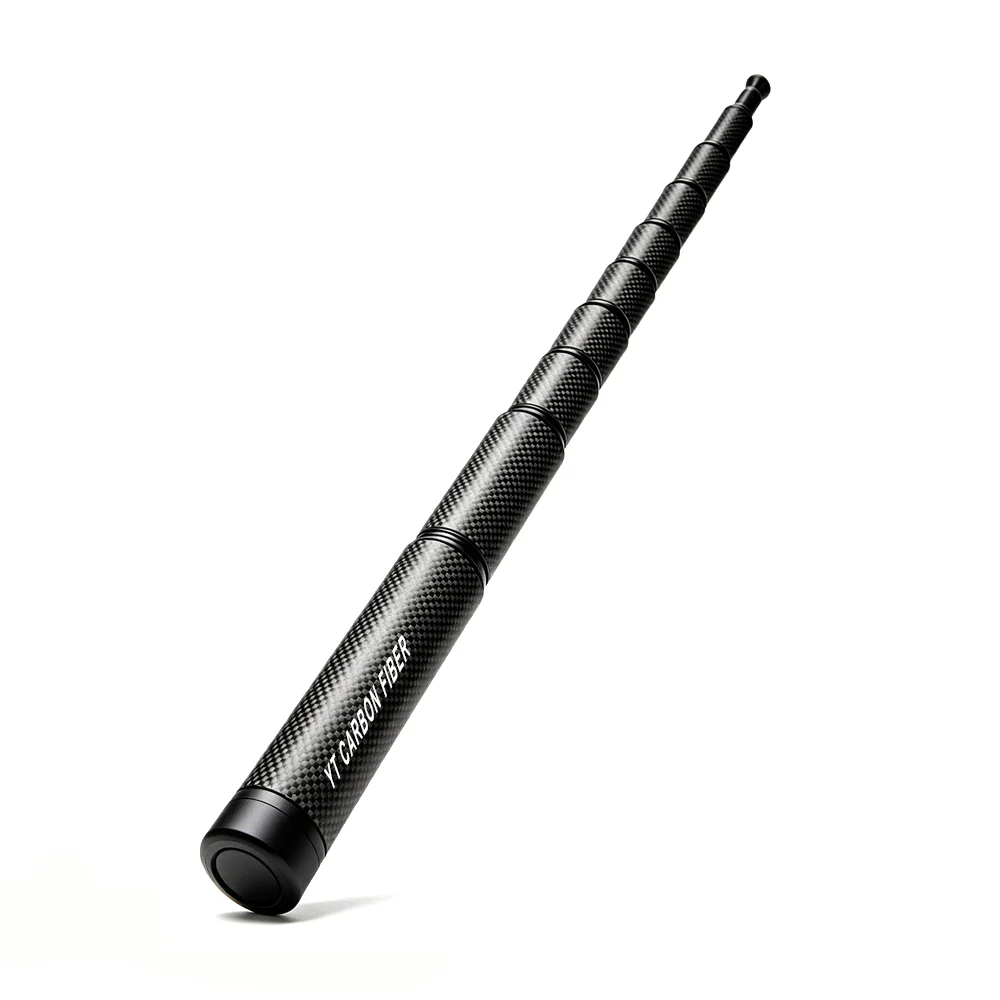
A telescopic carbon fiber pole is only as good as its section fit. Too loose and the extended pole wobbles like a fishing rod in a windstorm — unacceptable for camera mounts, window cleaning, or inspection equipment. Too tight and the sections jam mid-extension, leaving you fighting the pole instead of using it. The engineering challenge is hitting the OD/ID tolerance window that gives you smooth sliding with minimal radial play, across every section pair, over the full length. That’s a tolerance game most carbon fiber tube factories don’t want to play — but we’ve been doing it for years.
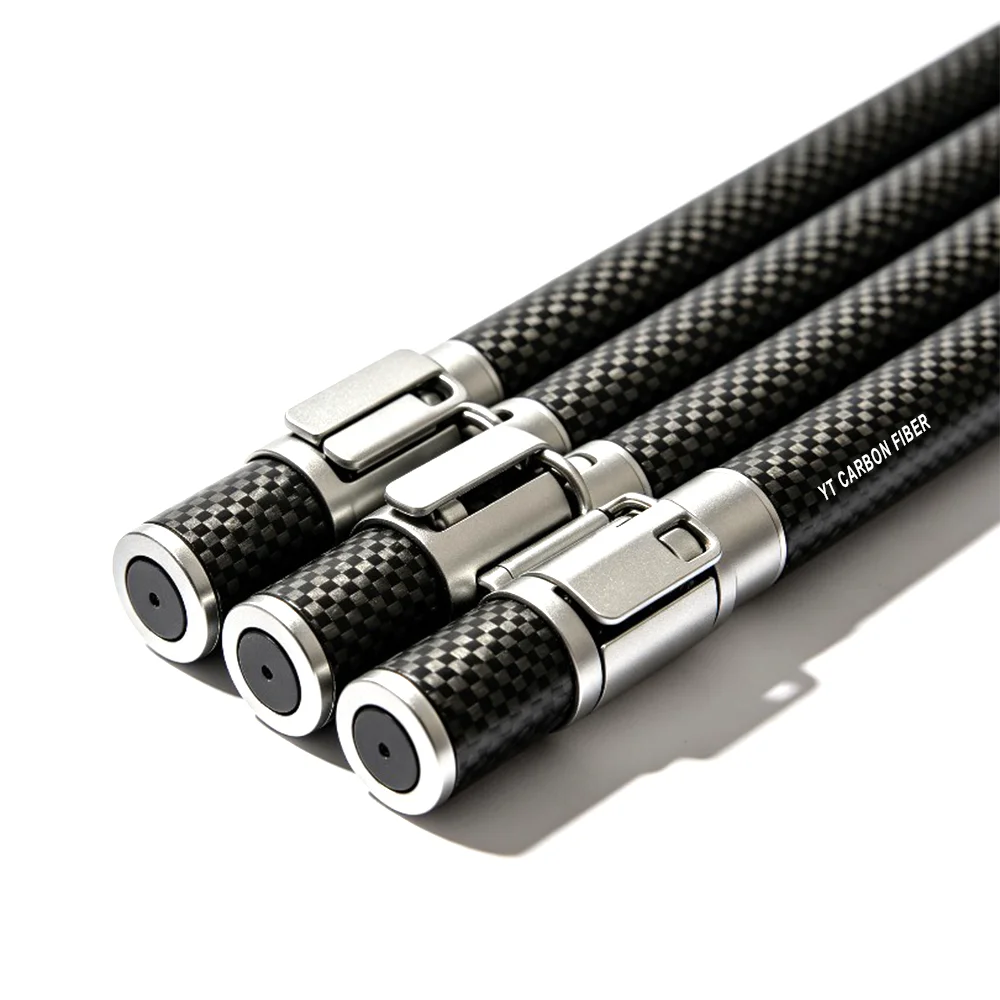
The lock mechanism is the other half of the equation. We offer three options: twist-lock (rotate the section 90° to engage an internal collet), flip-lock (a lever cam that tightens a split collar around the inner section), and external clamp-lock (a thumbscrew-driven band clamp). Each has trade-offs — twist-lock is fastest but can loosen under vibration, flip-lock holds tight but adds bulk at each joint, clamp-lock is the most secure but slowest to adjust. For most applications, we recommend flip-lock for sections under 30mm OD and clamp-lock for larger diameters where the extra clamping force matters.
Our telescoping poles are built in our Shenzhen factory using roll-wrapped round tubes for the tightest OD tolerance (±0.05mm standard, ±0.02mm ground), which is critical for nested section fit. The largest bottom section can go up to 60mm OD, and we typically step down by 4–6mm per section to maintain wall thickness throughout the stack. Sections are roll-wrapped or pultruded depending on your budget and performance requirements. Every pole is fully extended and cycled 20 times at the factory before shipping — if a section jams or a lock slips, we catch it here, not in your hands.
Specifications
| Specification | Details |
|---|---|
| Material | T300/T700 carbon fiber |
| Section Count | 2 – 8 sections |
| Bottom Section OD | 20mm – 60mm |
| Top Section OD | 6mm – 30mm |
| Step-Down Per Section | 4mm – 6mm OD |
| Collapsed Length | From 30cm |
| Max Extended Length | Up to 12 meters |
| Locking Mechanism | Twist-lock / Flip-lock / Clamp-lock |
| Section Clearance | 0.1mm – 0.3mm radial |
| Construction | Roll-wrapped (tight tolerance) / Pultruded (budget) |
| OD Tolerance | ±0.05mm (roll-wrapped) / ±0.1mm (pultruded) |
| Surface Finish | Matte (anti-slip grip) / Glossy |
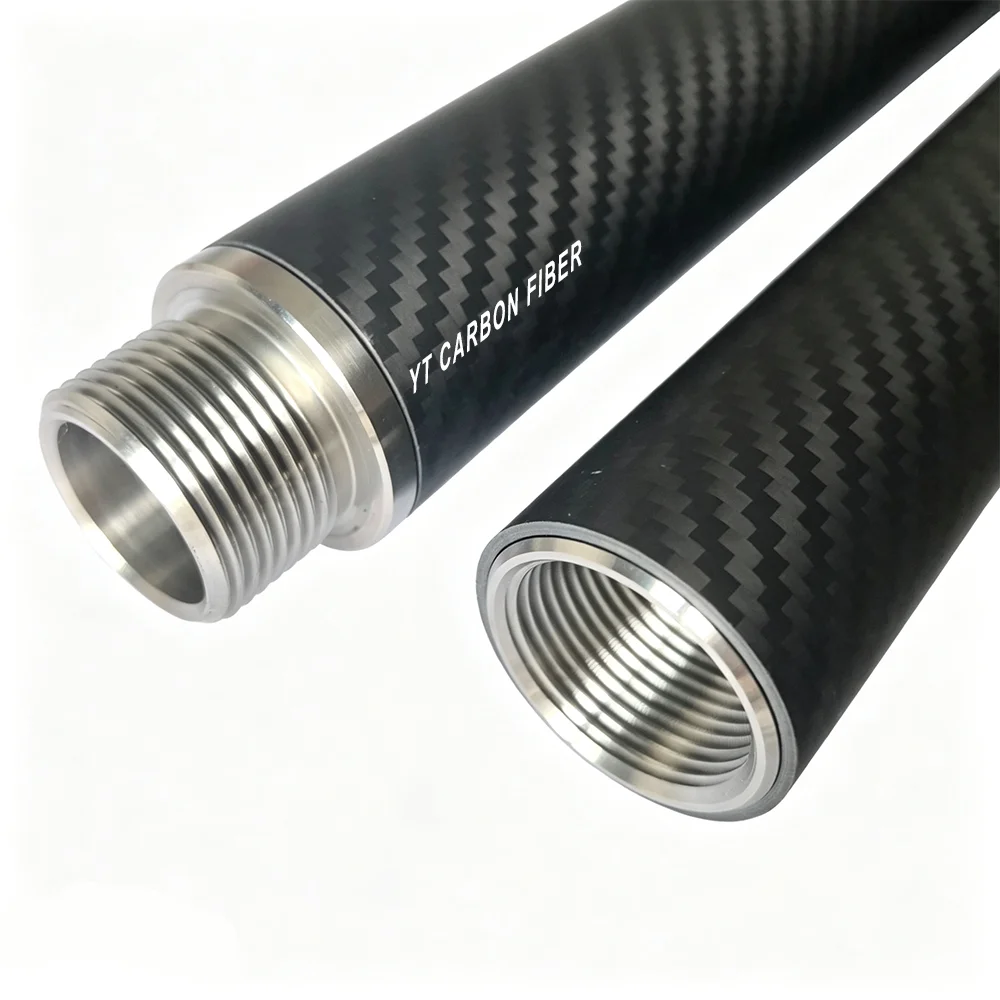
| End Fittings | Threaded / Quick-connect / Custom |
| Operating Temperature | -40°C to 120°C |
Applications
- Window cleaning and building maintenance — Extend to 8–12m, lock each section, scrub or squeegee at height without a ladder. Carbon fiber’s low weight means one person can handle a 10m pole all day
- Camera and lighting booms — Extend and position cameras, lights, or microphones overhead or at distance. The stiff carbon fiber sections resist sag better than aluminum or fiberglass at the same weight
- Inspection and survey poles — Mount thermal cameras, UV sensors, or laser rangefinders on the top section. Push the pole into confined spaces or up to overhead infrastructure without scaffolding
- Flag and banner poles — Lightweight, corrosion-free, and rigid in wind. The telescoping design lets you raise and lower flags without climbing or halyards
- Rescue and reach tools — Emergency services use telescopic CF poles to extend reach into water, over edges, or into collapsed structures. Lightweight enough for rapid deployment, strong enough to pull load
Why Choose YTCarbon
- One plant, full control. We roll-wrap, pultrude, machine end fittings, and assemble every telescoping pole in the same Shenzhen facility. No sourcing sections from different suppliers and hoping they fit. We exhibited at the 2025 World UAV Expo — see what a real carbon fiber factory puts on the table
- 0.1mm radial clearance control. The difference between a smooth pole and a jammy pole is a tenth of a millimeter. We grind mandrels to ±0.02mm and measure every section’s OD at three points. If the clearance is outside spec, the section gets remade
- 20-cycle factory test. Every pole is fully extended, locked, loaded, unlocked, and collapsed — 20 times before it ships. Locks that slip and sections that jam get caught at our bench, not yours
- Three lock options, one supplier. Twist-lock for speed, flip-lock for security, clamp-lock for heavy load. We machine the lock hardware in-house from 6061 aluminum and fit it to your section dimensions. No generic off-the-shelf locks that don’t quite fit
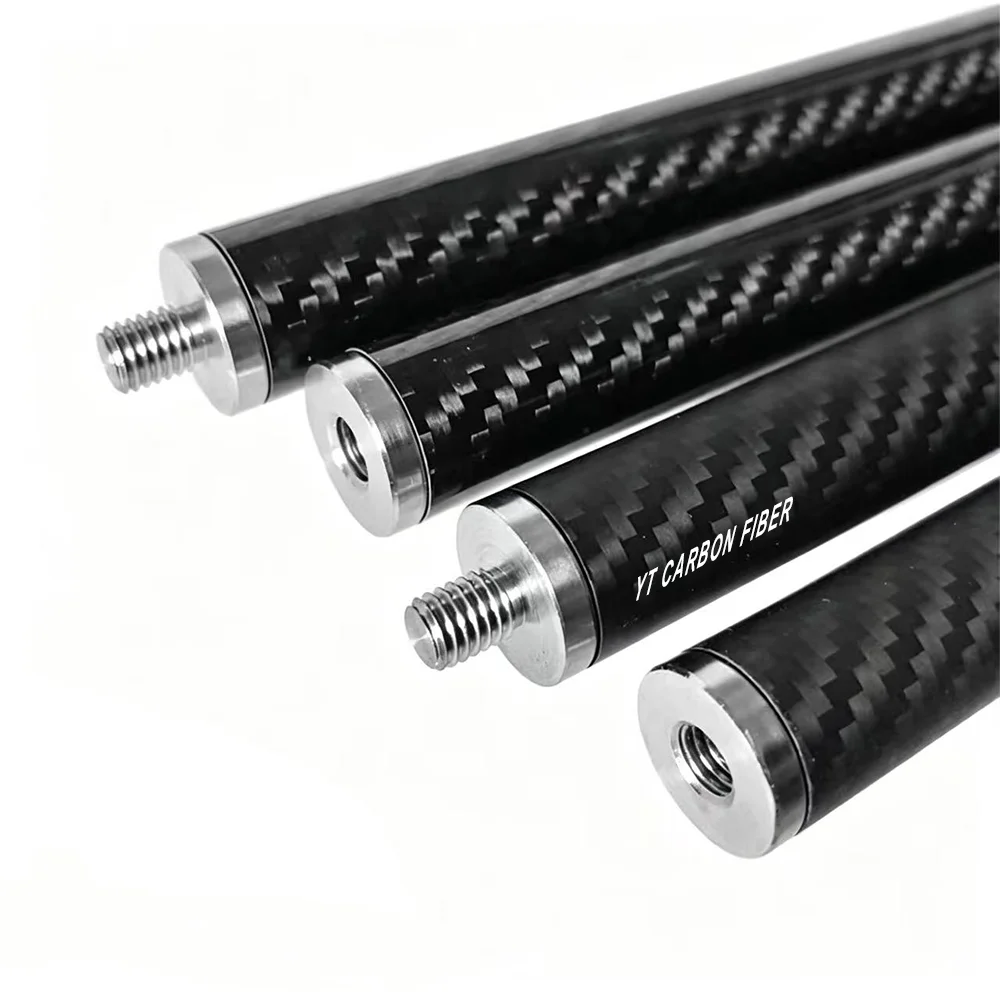
- Custom end fittings. Threaded inserts, quick-connect pins, camera mount threads (1/4″-20 or 3/8″-16), or custom interfaces. We bond metal inserts into the top and bottom sections with structural epoxy for a permanent, wobble-free connection
Certifications
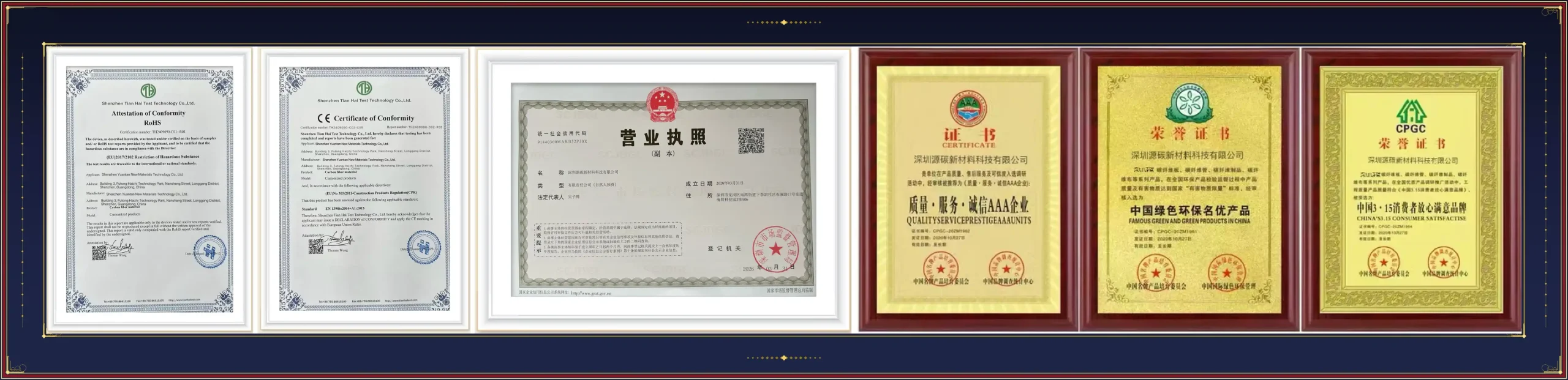
Every telescopic carbon fiber pole we ship carries documented quality credentials. Our facility holds ISO 9001 certification for quality management, and our materials are RoHS and CE compliant — required if you’re selling into the EU or supplying customers who need traceable material documentation. Need a copy for your records? Just ask and we’ll send the PDF.
How We Manufacture Your Pole
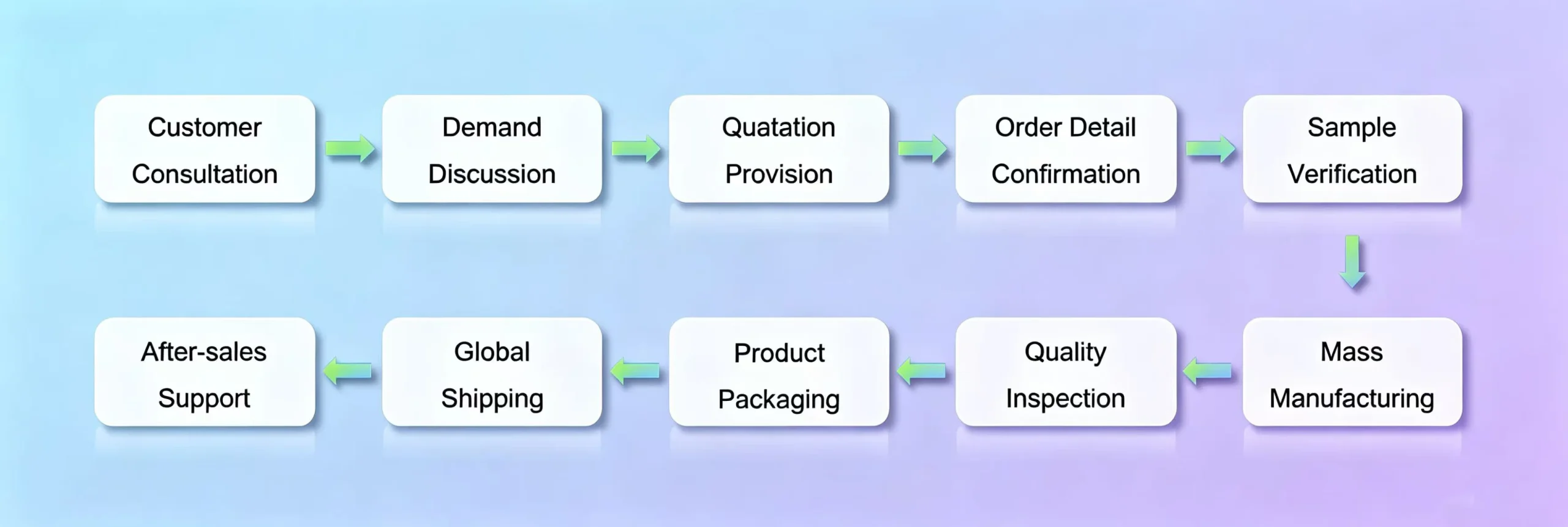
Building a telescoping pole is not the same as building a single tube — every section must fit inside the next with the right clearance, and the lock hardware must align with the section geometry. We start by designing the section stack: bottom OD, step-down per section, wall thickness, and collapsed vs extended length. Then we select or grind mandrels for each section’s ID, and adjust the wrap thickness to hit the target OD within ±0.05mm. After curing and demolding, each section is measured for OD at three points and sorted into matched sets — a tight section pairs with a tight hole, a loose section with a loose hole. Lock hardware is CNC-machined from 6061 aluminum and bonded into position with structural epoxy. The completed pole goes through a 20-cycle extend-lock-unlock-collapse test, and we check that every lock holds under a 5kg axial pull at full extension before it leaves the line.
Frequently Asked Questions
+ How do you prevent wobble?
+ Which lock type is best?
+ How long can a telescopic carbon fiber pole extend?
+ Can you add a camera mount or custom fitting to the top section?
+ How much weight can a telescopic carbon fiber pole support at full extension?
Need a Custom Telescopic Carbon Fiber Pole?
Tell us your collapsed length, extended length, section count, and tip load. We’ll design the section stack, select the lock type, and deliver a tested pole from our Shenzhen factory.