
How to Choose Carbon Fiber Sheet Thickness
Picking the right carbon fiber sheet thickness can make or break your project. Choose too thin, and your part may flex or fail under load. Go too thick, and you’ll spend more than necessary while adding unnecessary weight. This guide walks you through everything from paper-thin sheets to thick structural panels, with real-world examples to help you decide with confidence.
Understanding Carbon Fiber Sheet Thickness Options
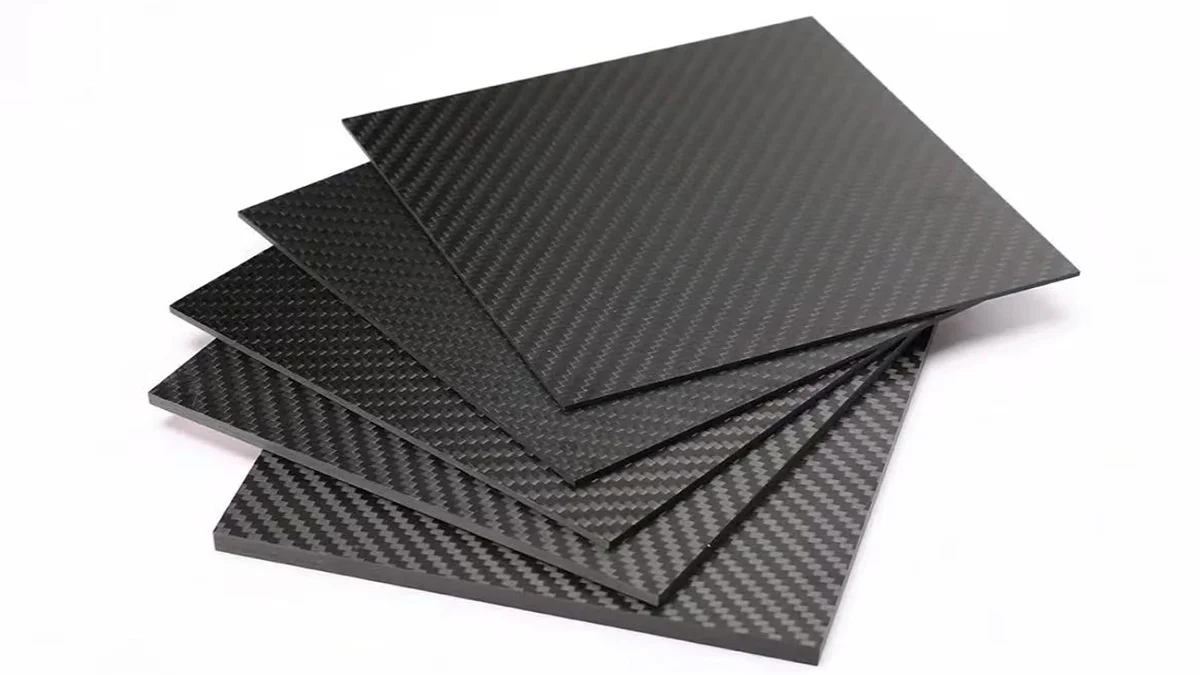
Carbon fiber sheets come in an impressively wide range of thicknesses. Whether you need something nearly translucent or a panel sturdy enough for heavy industrial use, there’s a carbon fiber product built for your application. The trick is matching the thickness to your specific performance requirements.
When manufacturers produce these materials, they typically build thickness by laminating multiple layers of carbon fiber fabric with resin. Each layer adds roughly 0.2mm to 0.3mm of thickness, though this varies based on the fabric weight and manufacturing process. This layering approach gives you incredible flexibility in selecting exactly the stiffness and weight characteristics your project demands.
Common Carbon Fiber Sheet Thicknesses
Before diving into specific applications, let’s look at the standard thickness range you’ll encounter when shopping for carbon fiber sheets:
| Thickness Range | Typical Layers | Common Applications | Weight Consideration |
|---|---|---|---|
| 0.2mm – 0.5mm | 1–2 layers | Surface veneer, decorative overlays | Extremely lightweight |
| 0.5mm – 1mm | 2–4 layers | Phone cases, laptop covers, RC parts | Very lightweight |
| 1mm – 2mm | 4–8 layers | Small drone frames, jewelry, templates | Lightweight |
| 2mm – 4mm | 8–16 layers | Drone frames, automotive panels | Moderate weight |
| 4mm – 6mm | 16–24 layers | Robotics parts, industrial fixtures | Medium weight |
| 6mm – 12mm | 24–48 layers | Structural supports, base plates | Heavy |
| 12mm – 50mm | 48+ layers | Molds, large structural components | Very heavy |
Thin Carbon Fiber Sheets (0.2mm – 2mm): When Lightweight Matters Most
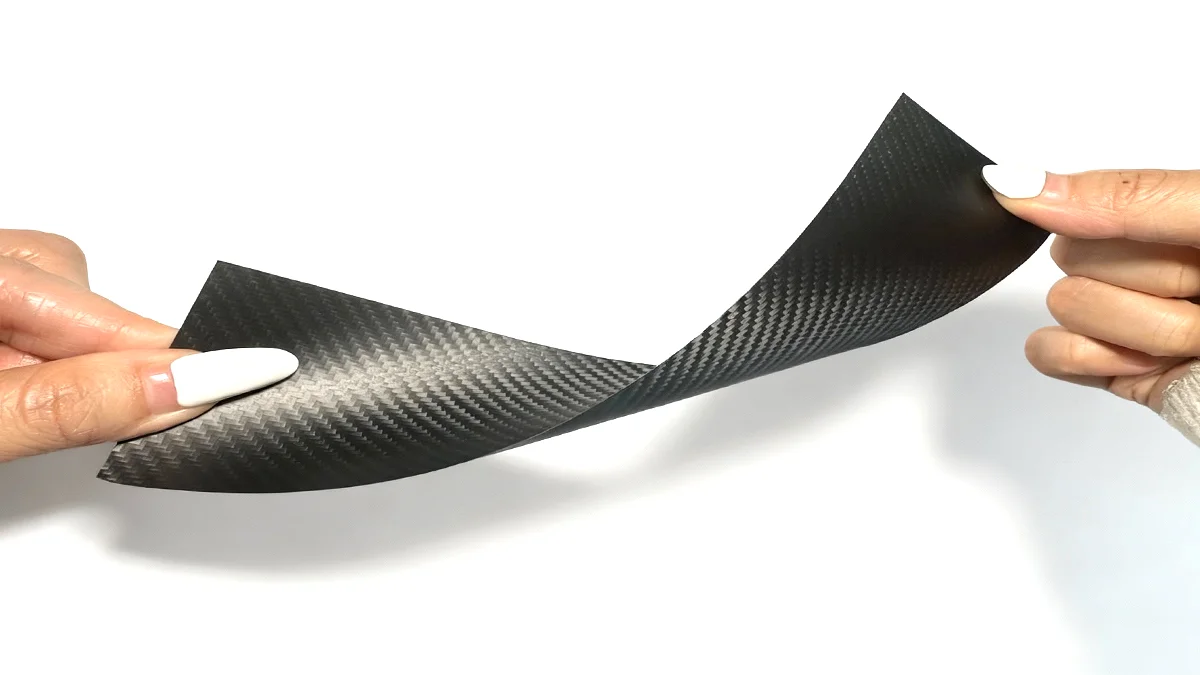
If weight savings are your top priority, thin carbon fiber sheets open up possibilities that heavier materials simply can’t match. These sheets are surprisingly strong given their minimal thickness, making them ideal for applications where every gram counts.
One of the most popular uses for thin carbon fiber sheet thickness options is as decorative veneer. Manufacturers and hobbyists alike apply these sheets over existing surfaces to add the distinctive carbon fiber look without the structural commitment. You see this constantly in automotive interiors, premium electronics, and high-end consumer products.
In the world of small drones and remote-controlled aircraft, thin sheets around 0.5mm to 1.5mm provide an excellent balance. They offer enough rigidity to maintain airframe shape while keeping the overall craft light enough for decent flight performance. Many racing quadcopters use carbon fiber plates in this thickness range for their arms and center frames.
Electronic device cases represent another growing application. Laptop manufacturers, phone case makers, and portable speaker companies use ultra-thin carbon fiber to add perceived value and a premium feel without significantly increasing weight. The material’s natural stiffness also provides decent protection against minor impacts and flexing.
Medium Carbon Fiber Sheets (2mm – 6mm): The Versatile Middle Ground
Medium thickness carbon fiber sheets strike a sweet spot that works for countless applications. These sheets offer meaningful structural capability without the weight penalty of thicker materials. This range handles real-world loads while remaining practical for most projects.
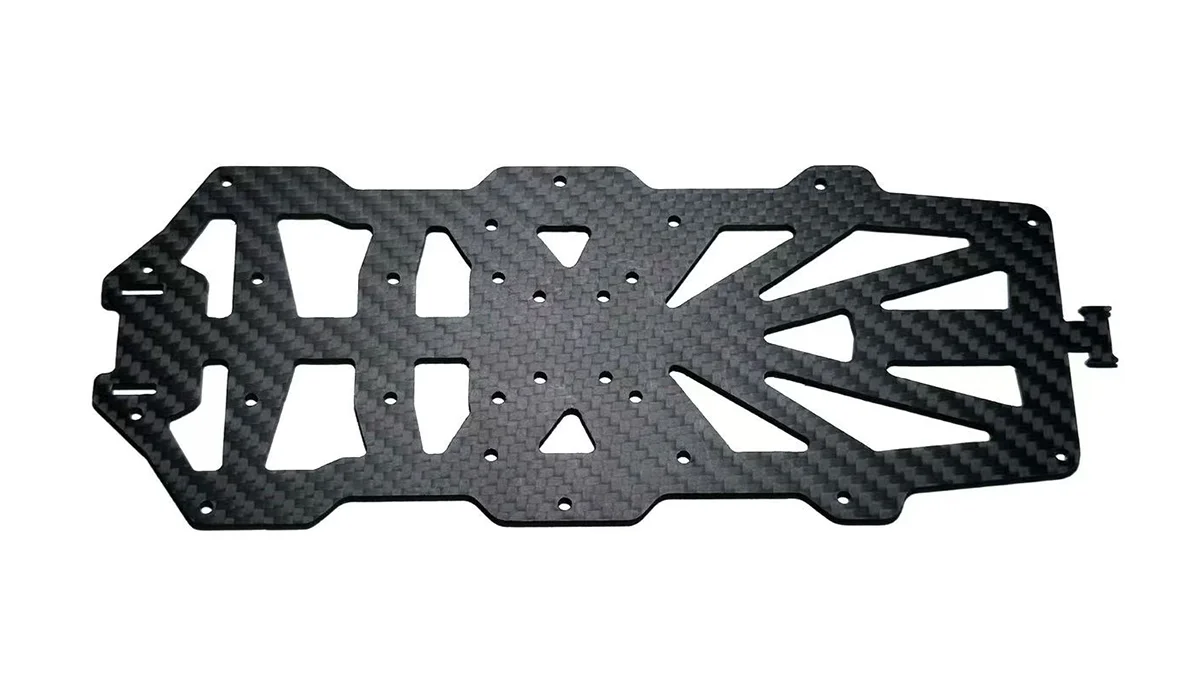
Drone builders consistently gravitate toward this range. A typical FPV racing quadcopter might use 3mm carbon fiber for the main plate and 2mm for arm construction. This combination provides sufficient stiffness for responsive flight characteristics while surviving the inevitable crashes that come with learning and racing. The material’s vibration-damping properties also help protect sensitive electronics.
Automotive applications frequently use medium-thickness carbon fiber sheets for interior trim pieces, trunk linings, and engine bay covers. These applications benefit from the material’s combination of light weight, good stiffness, and attractive appearance. The thickness provides enough rigidity to prevent sagging or flexing under normal use while remaining thin enough for clean installations.
Industrial settings leverage medium carbon fiber sheets for jigs, fixtures, and custom machine components. The material’s dimensional stability, chemical resistance, and light weight make it excellent for production equipment that needs to maintain precision over time. Tooling made from carbon fiber won’t corrode like metal and weighs a fraction of equivalent steel parts.
Thick Carbon Fiber Sheets (6mm – 50mm): Structural Applications
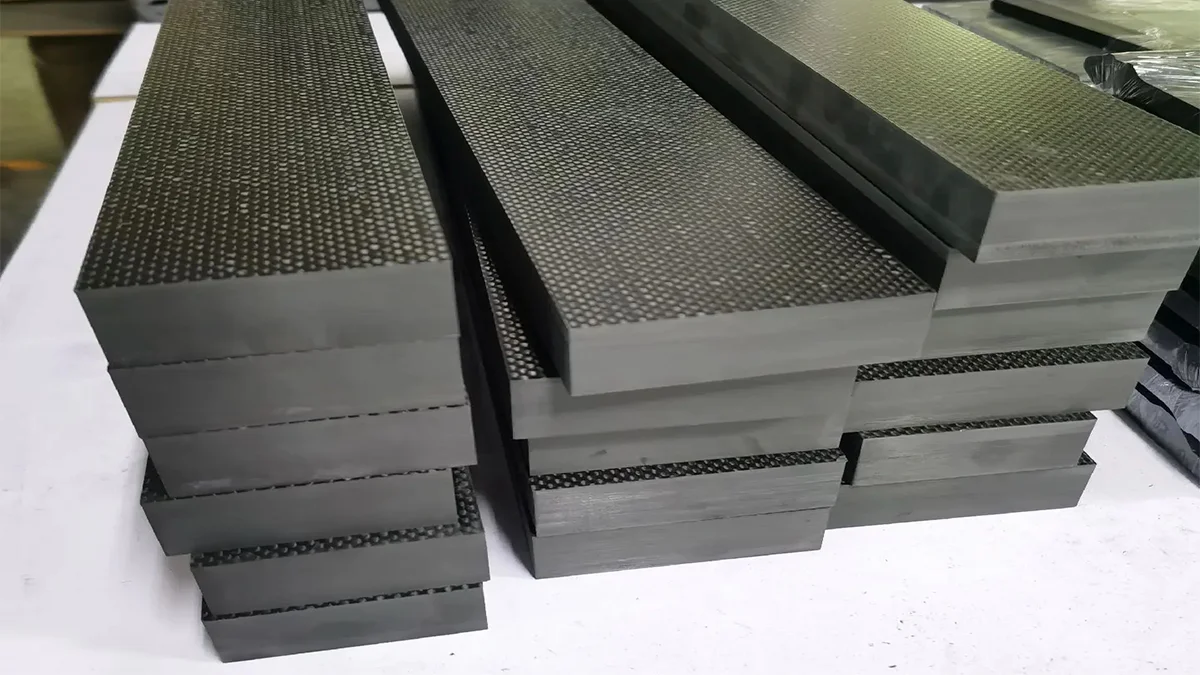
When your project demands serious load-bearing capacity, thick carbon fiber sheets deliver. These panels approach the strength-to-weight ratios that make carbon fiber famous for aerospace applications, though at a scale accessible for commercial and industrial projects.
Structural supports and framework components frequently use carbon fiber sheet thickness in the 10mm to 20mm range. Bridge components, architectural features, and medical equipment frames benefit from carbon fiber’s exceptional stiffness. These parts can replace steel or aluminum while weighing 60-80% less, which translates to easier installation, lower shipping costs, and reduced foundation requirements.
Mold-making represents a perfect application for thick carbon fiber panels. The material’s thermal stability means it holds dimensions through heating and cooling cycles. Carbon fiber molds last significantly longer than traditional materials and release parts cleanly. Sheet thicknesses of 12mm and above provide the mass and stability needed for production tooling.
Heavy equipment and robotics often incorporate thick carbon fiber sheets for arm segments, base plates, and protective barriers. The material absorbs impact energy better than metals in many scenarios, reducing damage from collisions. Its fatigue resistance also means these parts last longer under repeated loading cycles compared to aluminum alternatives.
How Load, Span, and Stiffness Affect Your Thickness Choice
Understanding the relationship between thickness and performance helps you make informed decisions. Three factors drive your thickness requirements: the load you’ll apply, the span between supports, and the acceptable deflection for your application.
Load calculations form the foundation of thickness selection. Heavier loads require thicker sheets or smaller spans. A carbon fiber panel supporting 50 kilograms needs considerably more thickness than one carrying 5 kilograms, assuming the same support conditions. Engineers often use the concept of “moment of inertia” to quantify how thickness affects load-carrying capacity.
Span dramatically influences thickness requirements. A sheet supported at both ends will deflect more under the same load if the supports are farther apart. Doubling the span typically requires roughly eight times the thickness to maintain equivalent deflection. This relationship explains why long cantilevered components need substantial thickness or internal reinforcement.
Stiffness requirements vary by application. Some parts need to flex slightly to function properly, while others must remain perfectly rigid. A drone arm should flex somewhat to absorb landing impacts, while a precision measurement fixture must not deflect at all under load. Your acceptable deflection threshold directly affects which carbon fiber sheet thickness you need.
For quick estimations, engineers often use simplified formulas. Bending stress relates to thickness cubed, meaning a 3mm sheet has roughly 27 times the strength of a 1mm sheet (3³ = 27). This exponential relationship explains why small increases in thickness provide substantial performance improvements.
Practical Tips for Choosing the Right Thickness
With all this technical information in mind, here are actionable recommendations for your next carbon fiber project:
Add safety margins when uncertain. If your calculations suggest 4mm thickness, consider 5mm or 6mm to account for material variations, unexpected loads, and manufacturing tolerances. Carbon fiber sheets aren’t always perfectly uniform, and real-world conditions rarely match your assumptions exactly.
Account for CNC machining losses. If you’ll be cutting, drilling, or milling your carbon fiber sheets, remember that your finished part will be slightly thinner than the raw material. Plan for at least 0.5mm to 1mm of additional thickness to ensure your final dimensions meet requirements after machining.
Consider layered construction. Sometimes combining multiple thinner sheets provides advantages over a single thick sheet. Layered construction can achieve specific stiffness profiles, allows for strategic fiber orientations in each layer, and often machines more cleanly than thick monolithic panels.
Consult with suppliers when possible. Experienced carbon fiber manufacturers can review your application and recommend appropriate thicknesses based on similar past projects. They understand how real-world factors like edge finish, hole placement, and fastening methods affect performance.
Test with prototypes when feasible. For critical applications, building a prototype with conservative thickness and testing it under expected conditions provides confidence before full production. This approach identifies problems early when corrections cost less. Prototyping also reveals handling and assembly challenges that calculations might miss.
Making Your Final Decision
Selecting the right carbon fiber sheet thickness ultimately comes down to balancing performance requirements against cost and weight constraints. There’s no universal “best” thickness—only the right choice for your specific situation.
Start by clearly defining what success looks like for your project. What loads must the part support? How much deflection is acceptable? What are the consequences of failure? With these parameters established, you can systematically evaluate thickness options and select the one that best meets your criteria.
Remember that carbon fiber’s strength-to-weight advantage only helps if you select the appropriate thickness. Too little material and you risk failure. Too much and you waste money and add unnecessary weight. Taking time to calculate and understand your requirements pays dividends in the final product.
Whether you’re building your first carbon fiber project or you’re a seasoned engineer working on complex structural components, understanding thickness selection fundamentals helps you work more effectively with this remarkable material. The knowledge in this guide applies across industries and applications, giving you a foundation for making smart material choices.
Need Help Selecting the Right Thickness?
Our engineering team specializes in carbon fiber applications across drones, automotive, robotics, and industrial uses. Contact YTCarbon for expert guidance.