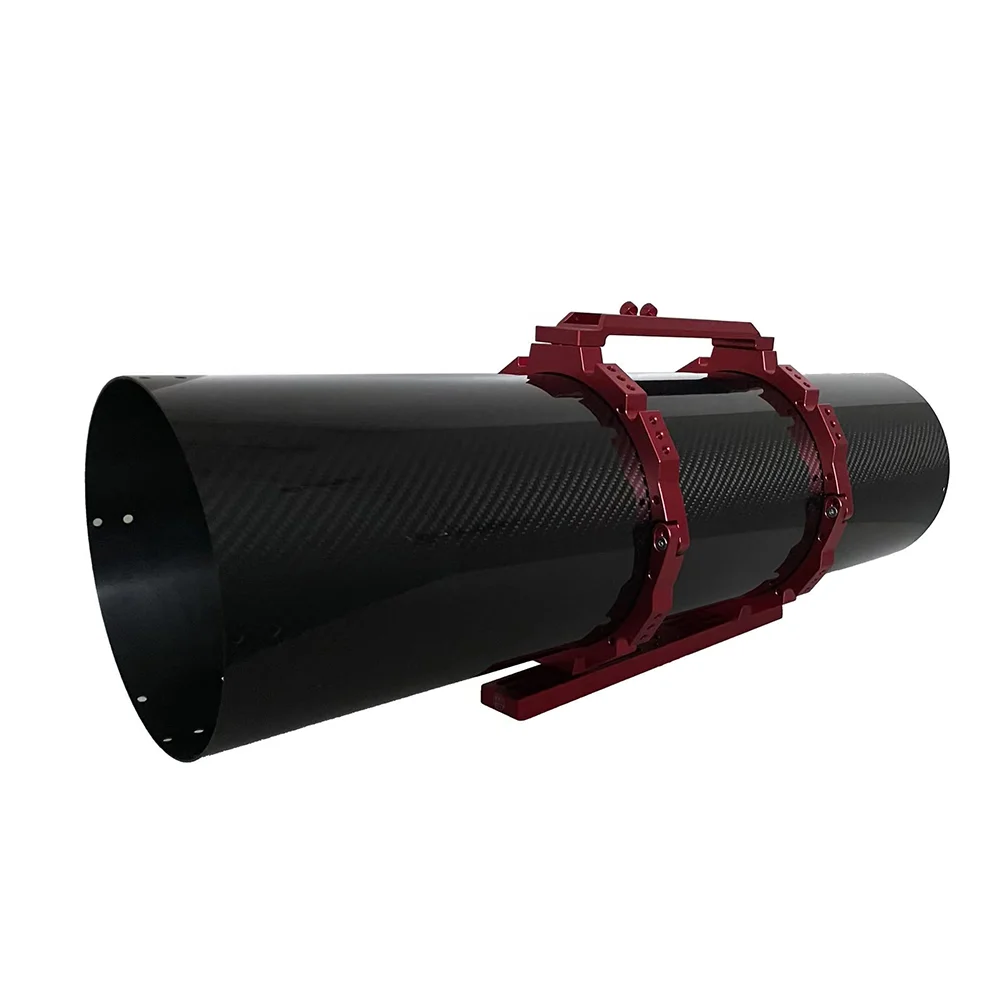
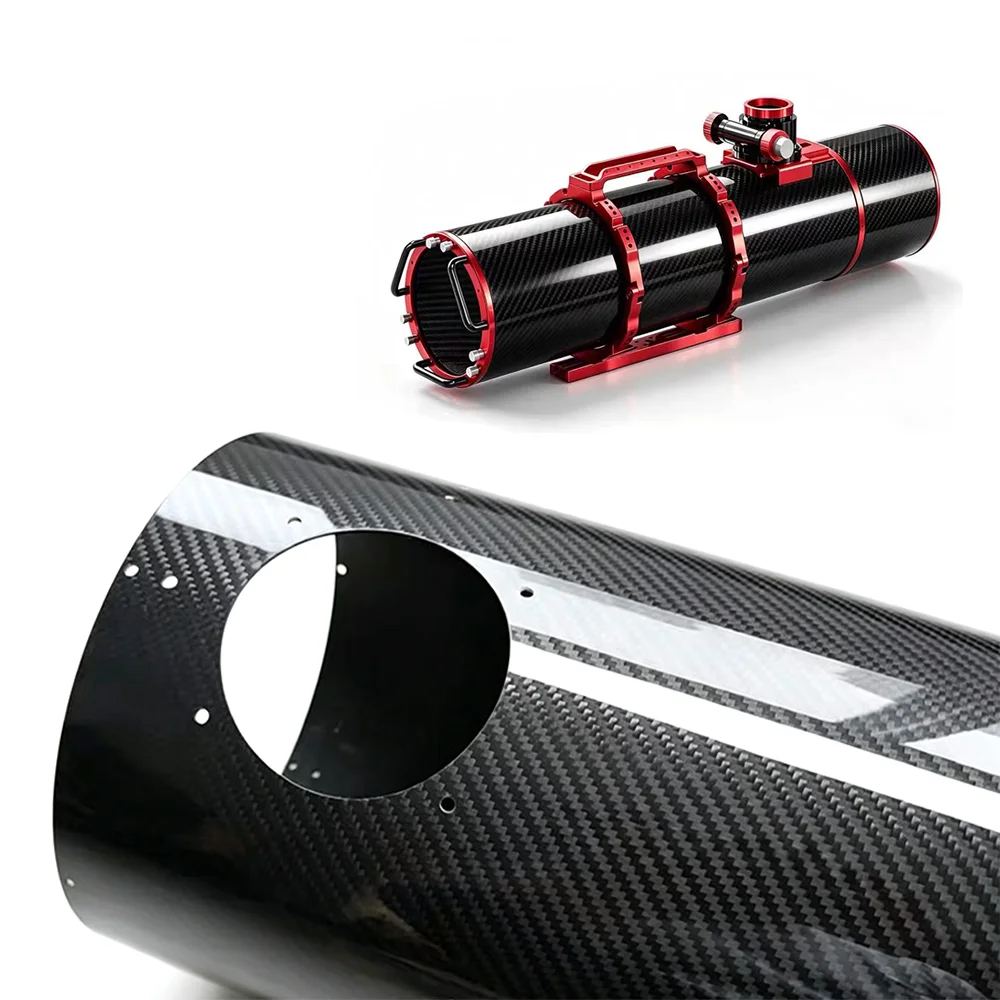
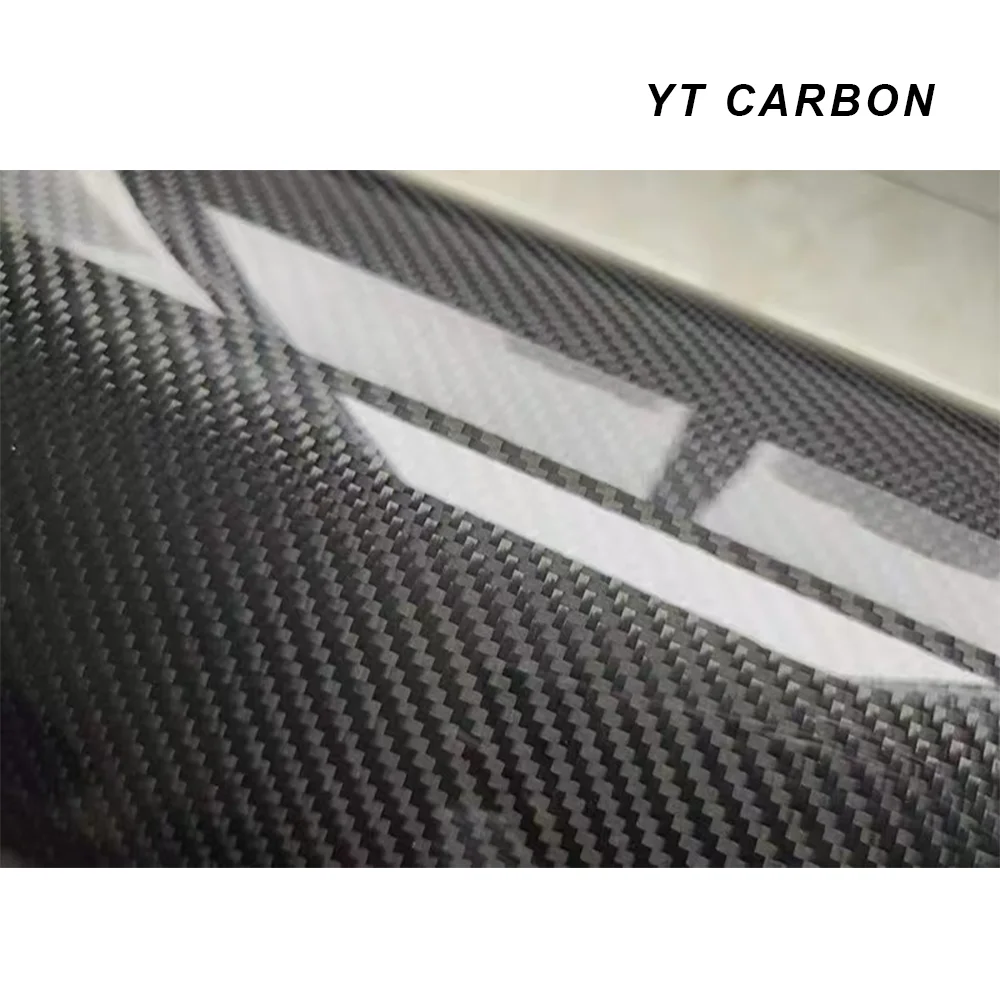
Product Details
Near-Zero Thermal Expansion for Focus Stability
First and foremost, the single most critical property of a telescope tube material is its coefficient of thermal expansion (CTE). Specifically, carbon fiber composite has a CTE of less than 2 × 10⁻⁶ /°C along the fiber axis — roughly 10 times lower than aluminum (23 × 10⁻⁶ /°C). Consequently, this means a carbon fiber telescope tube maintains its exact focal length and tube dimensions across ambient temperature drops, completely eliminating the focus drift that plagues metal tubes during nighttime cooling. Therefore, for astrophotographers running long exposures, this translates directly to sharp stars from dusk to dawn without constant refocusing.
Lightweight Rigidity for Mount Performance
Furthermore, carbon fiber telescope tubes weigh approximately one-third of equivalent aluminum tubes while delivering significantly higher specific stiffness. Additionally, this weight reduction directly improves mount performance — lighter optical tube assemblies (OTAs) mean smaller, less expensive mounts can comfortably handle larger apertures. Moreover, reduced tube weight translates to faster slewing, better tracking accuracy, and reduced mechanical wear on mount gears over years of field operation. For portable observational setups, the weight savings make transportation and field assembly considerably easier.
Vibration Damping for Sharper Images
In addition, carbon fiber composites inherently damp mechanical vibrations far better than traditional metals. When wind gusts hit a telescope tube or a mount settles after a rapid slew, carbon fiber absorbs the oscillation energy much more quickly — settling time is typically 2–3× faster than aluminum. Consequently, the optical image stabilizes faster, allowing astrophotographers to resume image capture sooner and visual observers to enjoy rock-steady views at high magnifications.
Specifications
| Parameter | Specification |
|---|---|
| Product Type | Carbon Fiber Telescope Tube (Precision OTA Blank / Finished Tube) |
| Inner Diameter | 20mm – 150mm |
| Outer Diameter | 25mm – 160mm |
| Wall Thickness | 1mm – 5mm |
| Maximum Length | 4000mm (roll-wrapped) |
| Carbon Fiber Grade | T300 / T700 / T800 |
| Surface Finish | Matte (anti-reflective) or Glossy |
| Weave Pattern | 3K Twill / Plain / UD |
| Manufacturing Process | Precision Roll-wrapped |
| CTE (Along Fiber Axis) | < 2 × 10⁻⁶ /°C |
| Vibration Damping | 2–3× faster settling time than aluminum |
| Customization | Full dimensional, layup schedule, and interior finish customization |
Applications
OTA Tubes & Trusses
- Newtonian and refractor OTA tubes — First, carbon fiber main tubes where near-zero CTE keeps focal distance perfectly constant through rapid nighttime temperature drops
- Cassegrain and compound telescope tubes — Additionally, rigid dimensional stability maintains precise optical collimation between primary and secondary mirrors
- Truss tube pole assemblies — Furthermore, lightweight carbon fiber truss poles for Dobsonian and large-aperture reflectors, making large scopes truly portable
Imaging & Observatories
- Astrophotography OTA assemblies — Meanwhile, vibration-damping tube structures for long-exposure imaging rigs, ensuring faster settling after high-speed mount slews
- Travel and grab-and-go scopes — In addition, breakdown tube sections with precision joiner sleeves for portable telescopes that pack directly into a backpack
- Observatory instrument housings — Finally, custom carbon fiber housings for spectrographs, filter wheels, and scientific CCD camera assemblies
Why Choose YTCarbon
- Verified CTE performance. First, every production batch undergoes CTE verification to confirm thermal expansion stays below 2 × 10⁻⁶ /°C — fully documented for optical certainty
- Anti-reflective matte finish. Second, our factory matte interior option absorbs over 95% of visible light, suppressing stray internal reflections without aftermarket flocking
- Roll-wrapped multi-angle construction. Third, customizable fiber orientations (0°/±45°/90°) resist lateral bending from any direction to support heavy mirror cells and focusers
- Factory-direct manufacturer. In addition, every tube is produced directly in our Shenzhen facility — no trading company intermediaries, offering direct engineering support
- Lengths up to 4 meters. Furthermore, precision-fit joiner sleeves seamlessly connect multiple sections for long telescope assemblies while maintaining optical straightness
- ISO 9001 certified quality. Finally, 100% dimensional verification, concentricity measurement, and surface inspection on every batch with full traceability
Certifications
First of all, every telescope tube we ship carries documented quality credentials. Specifically, our facility operates under ISO 9001 quality management systems, and our carbon fiber materials are RoHS and CE compliant — required for the EU market and customers who need traceable material documentation. Moreover, for telescope builds that demand certified thermal stability, we provide comprehensive material test reports including CTE data with your order. Finally, need a copy for your records? Just ask and we will send the PDF.
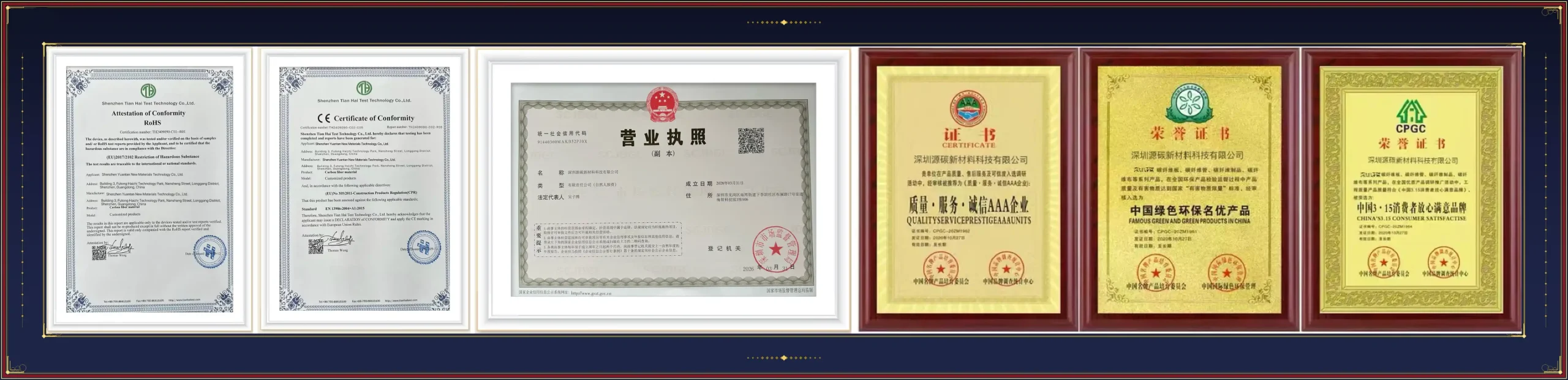
ISO 9001 · RoHS · CE Certified
How We Manufacture Your Carbon Fiber Telescope Tube
To begin with, carbon fiber telescope tube production follows a high-precision roll-wrapping process with stringent quality controls over fiber orientation, resin content, and wall concentricity. Namely, optical alignment demands zero lateral distortion and predictable thermal response. Here is how we ensure every tube meets optical telescope standards:
- Mandrel Preparation — Precision-ground steel mandrels matching target inner diameter, mirror-polished for concentric demolding
- Prepreg Cutting — Aerospace-grade prepreg cut to calculated dimensions based on tube diameter and layup schedule (0°/±45°/90°)
- Roll Wrapping — Tension-controlled multi-pass wrapping optimizing fiber angles for maximum axial stiffness and vibration damping
- Vacuum Bagging & Curing — High-temperature oven cure under uniform pressure to eliminate resin voids and ensure full crosslinking
- Demolding & Surface Finishing — Pneumatic demolding followed by precision centerless grinding and anti-reflective clear coating
- Matte Interior Treatment — Factory-applied non-reflective matte finish to inner tube wall to suppress stray light scatter
- Quality Inspection & CTE QA — Laser dimensional verification of ID/OD, concentricity check, straightness test, and batch CTE verification

Carbon Fiber Telescope Tube Production Process
Frequently Asked Questions
Thermal & Material Performance
+ How does thermal expansion affect telescope performance?
+ Should I choose matte or glossy finish for my telescope tube?
+ How does carbon fiber compare to aluminum for telescope tubes?
Sizing & Customization
+ What diameter telescope tube do I need?
+ Can I join tube sections for a longer telescope?
+ What is the minimum order quantity for telescope tubes?
Ready to Order Carbon Fiber Telescope Tubes?
Get a custom quote today. Our team responds within 24 hours.