Why FPV Drone Builders Choose Carbon Fiber Frames
When performance matters more than anything else, competitive pilots and cinematographers consistently reach for carbon fiber drone frames. Here is how carbon composites outperform traditional aluminum across stiffness, vibration damping, and weight.
The Physics Behind the Hype: Why Carbon Fiber Dominates FPV
When you pilot an FPV drone, you become part of a tight feedback loop. Your radio sticks command inputs, the aircraft responds, and you adjust instantly. Furthermore, every vibration and structural flex in that chain affects handling. Carbon fiber offers an extraordinary stiffness-to-weight ratio, standing up to 4 times stiffer than aluminum at a fraction of the mass.
Specifically, a properly engineered carbon fiber FPV frame delivers razor-sharp control response because stiff arms prevent energy loss through frame twisting. In addition, vibrations dampen rapidly, yielding stable, wobble-free HD camera footage.
Therefore, for competitive FPV racing frames where pilots thread gates at 100+ mph, structural rigidity is essential for survival.
Carbon Fiber vs. Aluminum: The Real Comparison
While aluminum still appears in budget builds, performance metrics explain why serious builders have moved on. A typical 5-inch carbon fiber FPV frame kit weighs 90–110 grams, whereas an equivalent aluminum setup easily exceeds 200 grams. On a 600-gram racing quad, that mass reduction is massive.
However, composites are not invincible. Severe crashes can induce delamination — where laminate layers separate — or outright cracking. Aluminum tends to bend instead of snapping, which occasionally allows manual field straightening.
Consequently, experienced pilots understand this trade-off and carry spare parts.
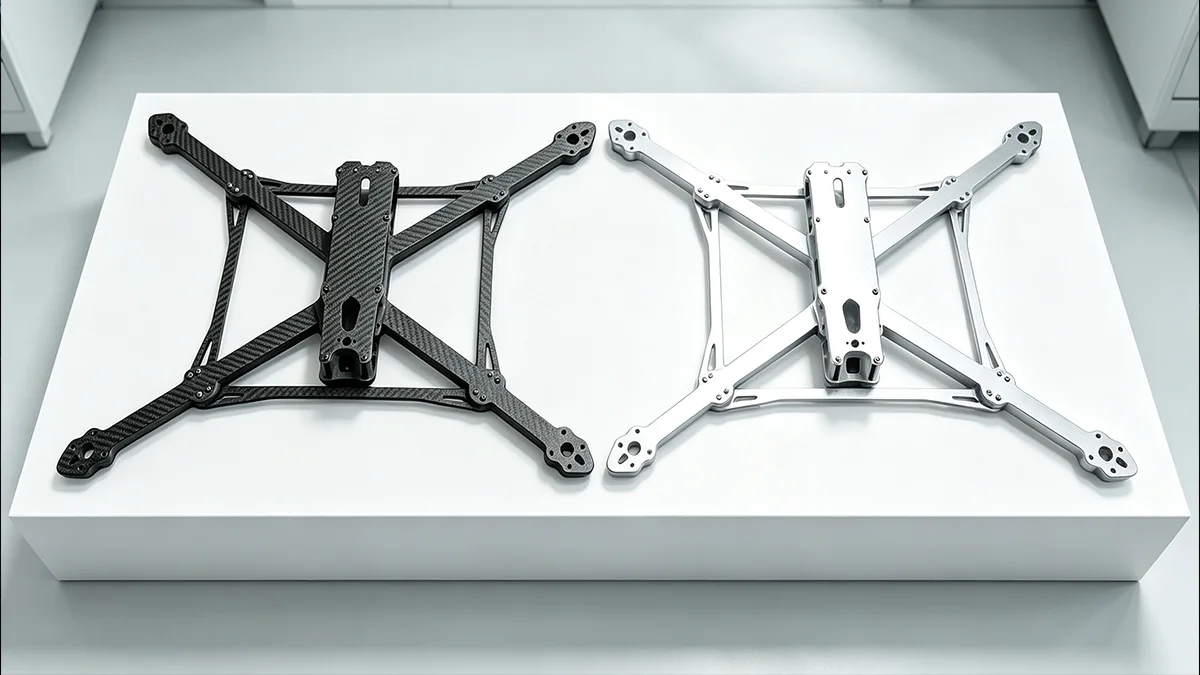
Material Specification Comparison
| Specification | Carbon Fiber | Aluminum Alloy |
|---|---|---|
| Weight (5″ frame) | 80–120g | 180–250g |
| Stiffness | 70–150 GPa | 70 GPa |
| Durability Type | Fatigue-resistant | Bends, doesn’t crack |
| Impact Behavior | Can shatter on hard crashes | Dents and bends |
| Vibration Damping | Excellent | Poor (transfers vibration) |
Choosing the Right Size: From 5-Inch Racing to 18-Inch Heavy Lift
Frame dimensions dictate operational capabilities. Specifically, the 5-inch class rules racing and freestyle due to its optimal agility-to-power balance. Meanwhile, 7-inch builds have exploded for long-range cruising, letting pilots cover 10–20km on a single pack.
Furthermore, platforms scaling above 10 inches enter professional territory: cinematography, agriculture, and industrial infrastructure inspection. These massive airframes require thicker plates and robust multi-axis layups.
Therefore, matching your frame size to your intended payload prevents structural failure and optimizes power consumption.
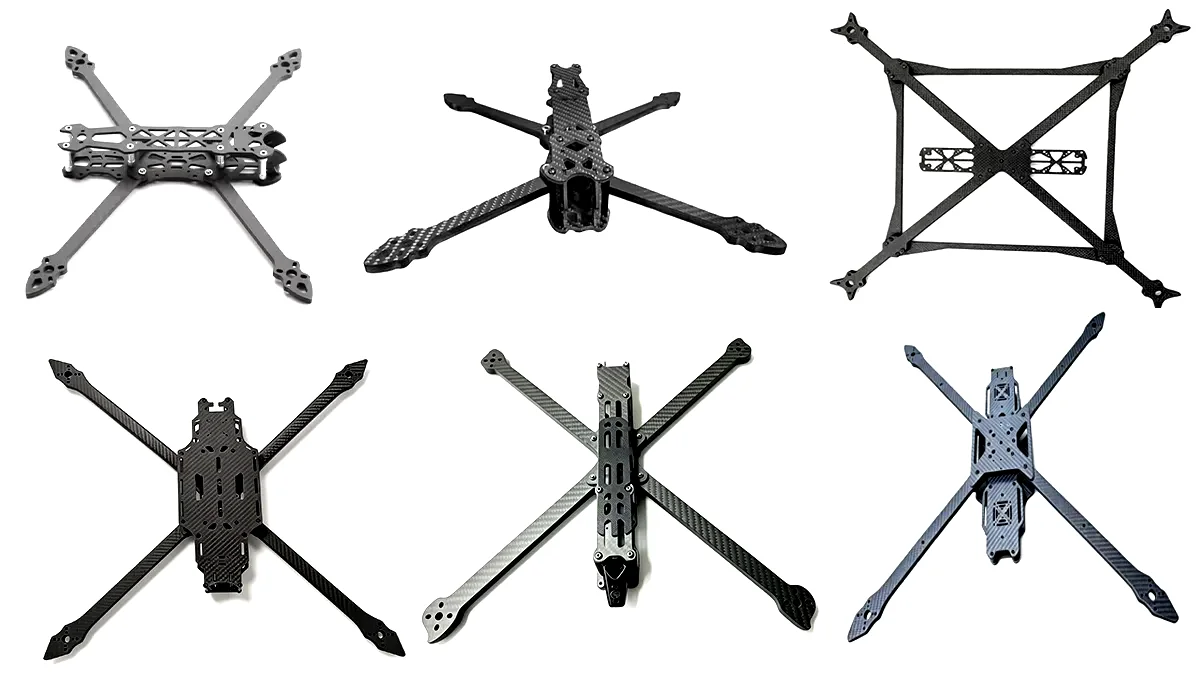
Frame Size Application Matrix
| Frame Size | Typical Use Case | Arm Thickness | Motor Size | Flight Time |
|---|---|---|---|---|
| 5 Inch | Racing, freestyle | 3–4mm | 2206–2306 | 3–5 min |
| 7 Inch | Long-range, cinematic | 4mm | 2207–2307 | 5–8 min |
| 10 Inch | Cinematic, light payload | 4–5mm | 2212–2814 | 10–15 min |
| 13 Inch | Professional aerial photography | 5mm | 2812–3510 | 15–25 min |
| 15 Inch | Agricultural, heavy payload | 5–6mm | 3510–4110 | 20–35 min |
| 17–18 Inch | Industrial, mapping, heavy lift | 6mm+ | 4114–4215 | 25–45 min |
What Makes a Quality Carbon Fiber Frame
Not all carbon fiber drone frames are created equal. Two frames might look identical in photos while performing entirely differently in flight. Industry-standard 3K twill weave utilizes 3,000 filaments per tow to balance tensile strength with workability.
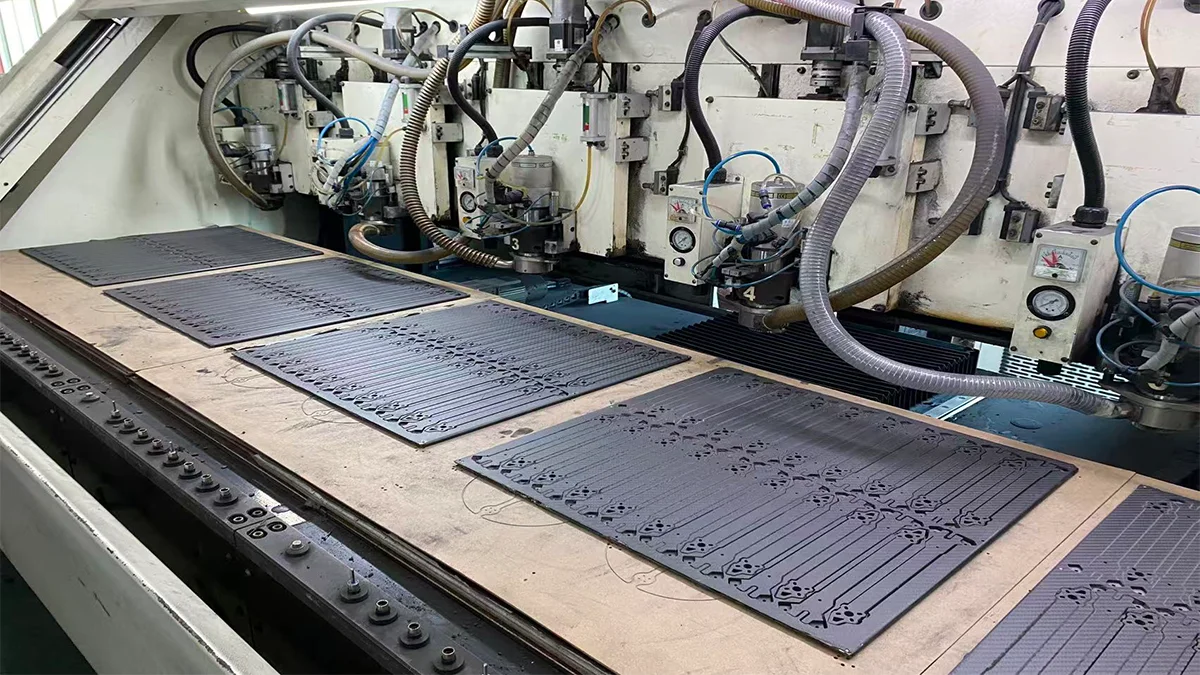
Furthermore, CNC machining precision separates premium kits from budget alternatives. Motor mounting holes require exact alignment—deviations exceeding 0.1mm cause motors to tilt, introducing destructive flight vibrations.
Consequently, professional carbon fiber FPV frame kits are CNC machined with tolerances of ±0.05mm or tighter to guarantee vibration-free handling.
Frequently Asked Questions
Performance & Durability
Specifications & Repairs
Building Your Next FPV Project?
YT Carbon specializes in carbon fiber drone frames from 5-inch to 18-inch sizes, using aerospace-grade 3K twill carbon fiber with precision CNC machining. Get a factory quote within 24 hours.