
Carbon Fiber vs Fiberglass: Which to Choose?
When engineers evaluate composite materials for a new project, the debate often comes down to carbon fiber vs fiberglass. Both are fiber-reinforced polymers valued for their high strength-to-weight ratios, corrosion resistance, and design flexibility—but they differ dramatically in stiffness, cost, weight, and suitability for specific applications. Choosing the wrong material isn’t just a budget issue; it can compromise performance, safety, and product longevity.
This guide provides a data-driven comparison across every metric that matters—mechanical properties, weight, thermal behavior, electrical characteristics, cost, and real-world application performance. Whether you’re designing a drone frame that needs maximum rigidity, a marine hull that demands impact tolerance, or a structural panel where budget drives decisions, you’ll have a clear answer by the end.
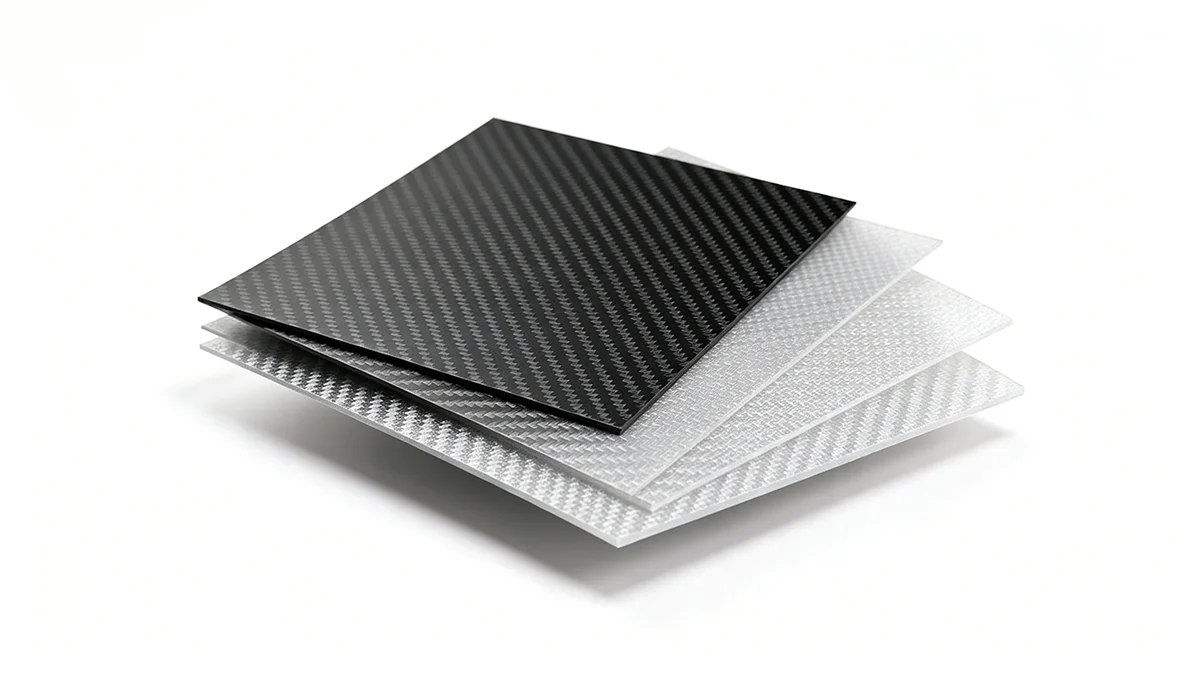
Strength, Stiffness & Weight
The fundamental difference between these two composites lies in fiber chemistry—and that chemistry dictates everything downstream. CF consists of carbon atoms bonded in a crystalline alignment along the fiber axis, creating extraordinarily strong covalent bonds. Fiberglass is made from molten silica glass drawn into filaments, yielding an amorphous structure that’s tough but less rigid.
In practical terms, CF composites deliver a tensile strength of 3,500-7,000 MPa and an elastic modulus of 230-600 GPa depending on grade (T700, T800, M55J). Glass fiber composites typically achieve 500-1,500 MPa tensile strength with a modulus of 35-85 GPa. The stiffness gap is even more pronounced—CF is roughly 4-5 times stiffer than its glass counterpart at the composite level. This is why CF sheets and tubes feel rock-solid under load, while glass-reinforced components exhibit noticeable flex.
Weight is where CF truly shines. With a density of approximately 1.55-1.60 g/cm³ versus 1.90-2.10 g/cm³ for glass composites, the weight savings are 20-25% for the same volume. When you factor in that CF can achieve equivalent structural performance with less material (thinner walls, fewer plies), the savings compound further—often reaching 40-50% lighter for the same stiffness target. For aerospace, UAV, and motorsport applications where every gram counts, this advantage is decisive.
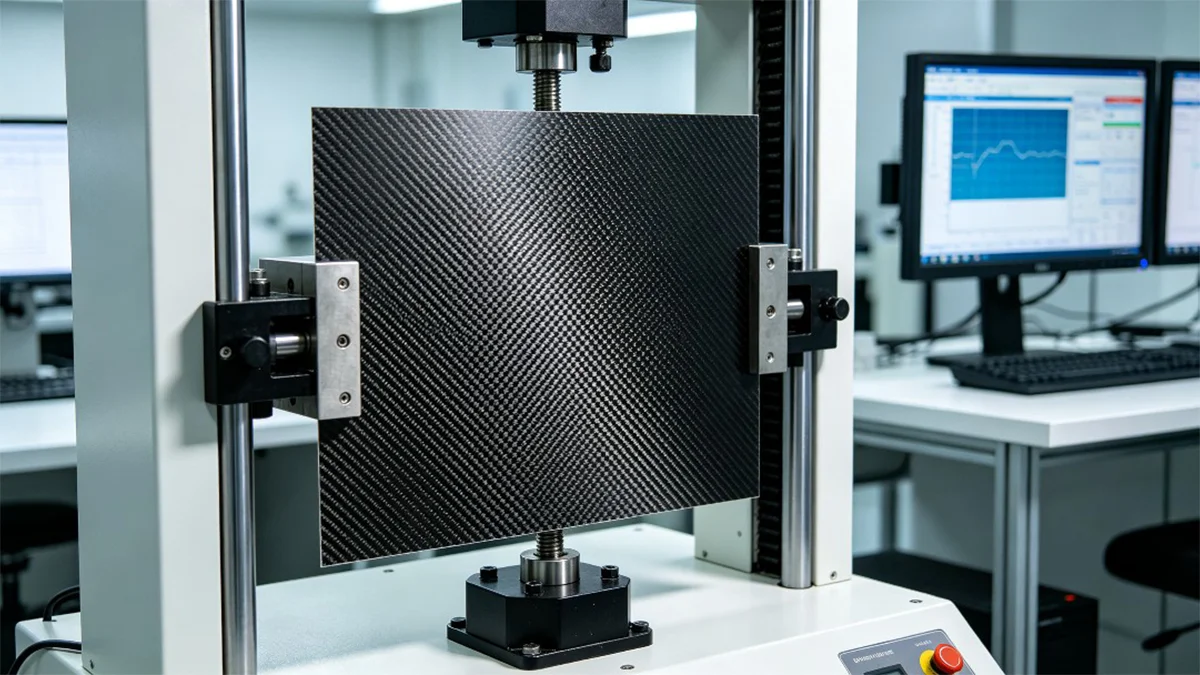
Cost, Durability & Electrical Properties
If CF is the performance champion, glass fiber is the value king. Raw CF costs $15-40/kg for standard T700 grade and up to $200+/kg for high-modulus aerospace grades. Glass fiber roving costs just $1-4/kg. At the finished composite level, a CF sheet runs 8-15 times the price of an equivalent fiberglass panel. For high-volume products where cost per unit drives profitability—boat hulls, storage tanks, building panels—glass-reinforced polymer remains the only economically viable option.
But cost isn’t everything. Impact resistance and damage tolerance favor fiberglass. CF is brittle—when it fails, it fails suddenly with minimal warning. Glass composites absorb impact energy progressively, often showing visible damage before structural failure. This makes them the preferred choice for applications subject to repeated impacts: boat hulls hitting waves, protective equipment, and industrial housings. The brittleness of CF also means repairs are more difficult—damaged areas typically require full replacement rather than patching.
One often-overlooked distinction is electrical conductivity. CF conducts electricity (resistivity ~1.5 × 10⁻³ Ω·cm), which can cause galvanic corrosion when in direct contact with aluminum or steel. Insulating barrier layers become mandatory in mixed-material assemblies. Glass-reinforced composites are excellent insulators (resistivity ~10¹⁴ Ω·cm), making them the natural choice for electrical enclosures, antenna housings, and any application where dielectric properties matter.
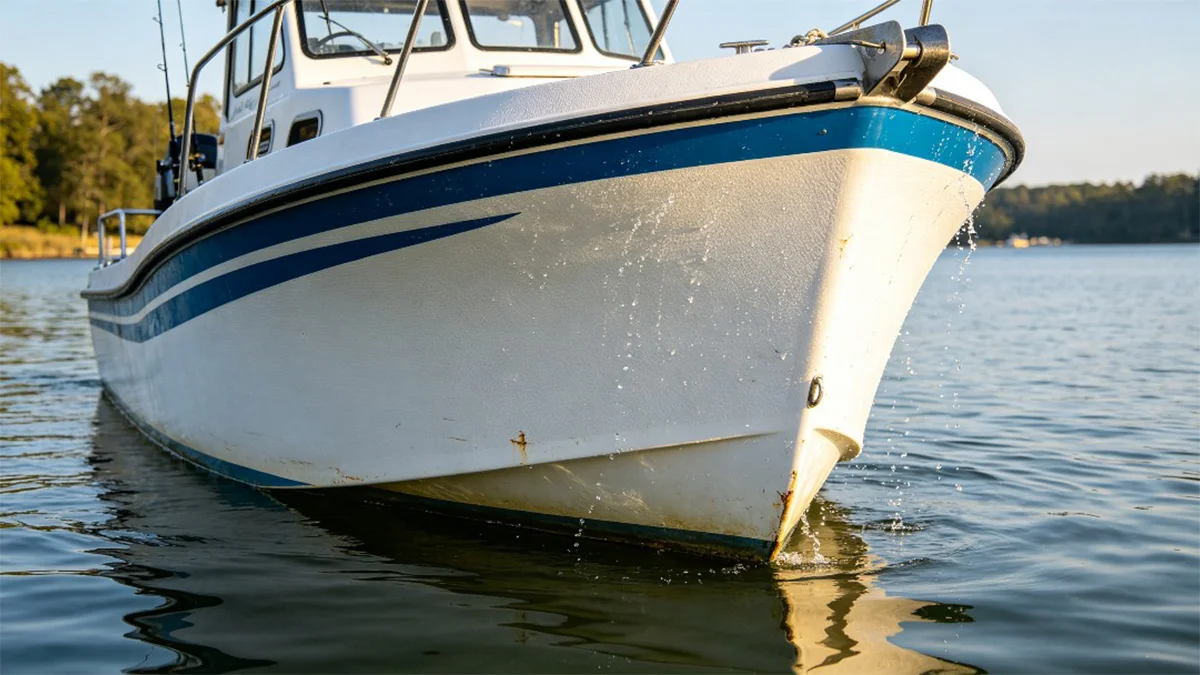
When to Choose Which Material
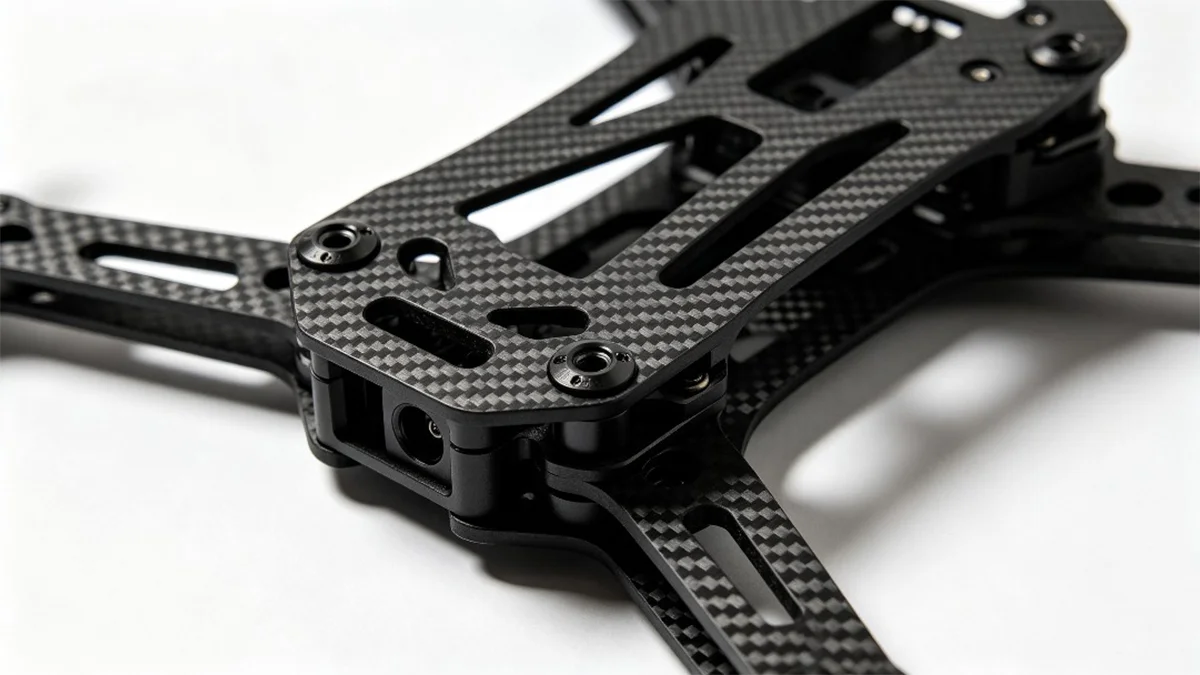
Choose CF when: your application demands maximum stiffness at minimum weight. FPV drone frames benefit enormously from its rigidity—even slight frame flex causes motor vibration and unstable flight. Aerospace structural components, high-performance automotive parts, robotic arms requiring precise positioning, and precision instruments where thermal expansion must be near zero all justify the premium cost. The near-zero CTE is critical in metrology equipment, telescope structures, and satellite components where dimensional stability across temperature ranges is non-negotiable.
Choose fiberglass when: cost-effectiveness and impact tolerance outweigh the need for ultimate stiffness. Marine applications are its territory—boat hulls, kayaks, and water tanks benefit from superior impact absorption at a fraction of the cost. Wind turbine blades exceeding 80 meters in length use glass or glass-CF hybrids because pure CF would be prohibitively expensive at that scale. Storage tanks, piping systems, and chemical-resistant equipment also favor glass composites for their corrosion resistance and low price point.
Consider a hybrid approach when: you need CF’s performance in critical load paths but want the cost advantages of glass fiber elsewhere. Many modern drone frames use CF in high-stress areas (center plates, arm junctions) paired with glass-reinforced sections in secondary structures. This strategy can reduce total material cost by 30-40% while maintaining 85-90% of full-CF performance—a compelling trade-off for production-grade products.
Thermal Behavior & Environmental Resistance
Thermal performance is a deciding factor that many material selectors overlook until it’s too late. CF composites have a coefficient of thermal expansion (CTE) near zero or even slightly negative along the fiber axis—meaning sheets and tubes barely change dimensions with temperature fluctuations. For precision machinery, optical systems, and measurement instruments, this stability is invaluable. A CF telescope tube won’t sag or expand as nighttime temperatures drop, maintaining optical alignment that aluminum or glass-composite tubes would lose.
Glass-reinforced composites exhibit a positive CTE of approximately 10-15 × 10⁻⁶/K, comparable to many metals. While this isn’t problematic for most structural applications, it becomes a liability in precision assemblies where thermal drift causes misalignment. They also have a lower glass transition temperature (Tg)—usually 80-120°C for standard polyester/vinyl ester systems versus 120-180°C for aerospace-grade epoxy used with CF. If your application involves elevated temperatures (engine bays, industrial processing equipment, desert environments), the higher thermal ceiling of CF matters.
Both materials share excellent corrosion resistance compared to metals—neither rusts, rots, or degrades in saltwater environments. However, glass composites with polyester resin can suffer from osmotic blistering in prolonged water immersion, a problem virtually absent in properly manufactured CF epoxy laminates. UV degradation affects both, but surface coatings and UV-resistant resins mitigate this effectively. For harsh environments, both composites outperform metals, but CF epoxy has the edge in long-term moisture resistance and thermal stability.
Carbon Fiber vs Fiberglass: Quick Comparison
Use this side-by-side comparison to evaluate which composite aligns with your project’s priorities:
| Property | Carbon Fiber | Fiberglass |
|---|---|---|
| Tensile Strength | 3,500-7,000 MPa | 500-1,500 MPa |
| Elastic Modulus | 230-600 GPa | 35-85 GPa |
| Density | 1.55-1.60 g/cm³ | 1.90-2.10 g/cm³ |
| Cost (Composite) | $30-80/kg | $3-8/kg |
| Impact Resistance | Brittle, sudden failure | Tough, progressive failure |
| CTE (Axial) | Near zero | 10-15 × 10⁻⁶/K |
| Electrical | Conductive | Insulator |
| Best For | Aerospace, UAV, racing, precision | Marine, tanks, construction, budget |
There’s no universal “better” material—only the right one for the right application. If maximum performance per gram is your priority, CF wins decisively. If you need toughness, affordability, and ease of manufacturing at scale, fiberglass is the pragmatic choice. The smartest engineering solutions increasingly combine both materials where each contributes its strengths.
Frequently Asked Questions
Is carbon fiber always better than fiberglass?
No. CF excels in stiffness-critical, weight-sensitive applications, but fiberglass outperforms it in impact resistance, cost-efficiency, and electrical insulation. For boat hulls, storage tanks, and budget-constrained projects, glass composites are often the superior choice. The best material depends on your application requirements, not raw performance numbers alone.
Can I mix both materials in the same part?
Yes, hybrid composites are common and effective. Many manufacturers use CF in high-stress areas (load-bearing plates, arm junctions) and glass fiber in secondary structures. This approach can reduce material costs by 30-40% while retaining 85-90% of full-CF performance. Just ensure the resin systems are compatible and interlaminar bonding is properly engineered.
Why is carbon fiber so much more expensive?
CF production requires energy-intensive processes—PAN precursor oxidation at 200-300°C, carbonization at 1,000-3,000°C in inert atmosphere, and surface treatment. Glass fiber manufacturing simply involves melting silica and extruding filaments—a far less complex process. The precursor cost, energy consumption, and lower production volumes all contribute to the 8-15× price premium.
Does carbon fiber degrade in sunlight or water?
Both composites are susceptible to UV degradation without proper surface protection. However, CF epoxy laminates have excellent moisture resistance and don’t suffer from the osmotic blistering that can affect glass-polyester in prolonged water immersion. With appropriate UV-resistant coatings, both materials perform well in outdoor environments for decades.
Need Help Choosing the Right Composite?
YTCarbon manufactures both carbon fiber and fiberglass composite products. Our engineering team can help you evaluate which material—or hybrid combination—delivers the best performance and value for your specific application.