
Carbon Fiber Sheet Thickness Guide: How to Choose the Right Thickness
Carbon fiber sheets come in thicknesses from 0.2mm to 120mm — each serving completely different purposes. Choosing the wrong thickness wastes money, adds unnecessary weight, or worse, causes structural failure. Here’s how to pick the right one for your project.
Why Thickness Matters
Carbon fiber thickness directly influences three key properties: rigidity, weight, and load-bearing capacity. Thinner sheets offer flexibility and minimal weight, while thicker plates provide maximum stiffness and structural strength. However, thicker plates also weigh more and cost significantly more.
Consequently, selecting the right thickness means balancing these factors against your application’s specific requirements. An overly thick plate adds unnecessary weight and cost. Conversely, a plate that is too thin will flex or fail under load.
Moreover, thickness affects machinability. Specifically, thin sheets below 2mm require careful handling during CNC cutting to prevent delamination. In contrast, thick plates above 30mm need specialized tooling but generally machine cleanly due to their rigidity.
Thickness Categories at a Glance
| Thickness Range | Category | Primary Use Cases |
|---|---|---|
| 0.2mm – 0.5mm | Ultra-thin | Veneers, surface wrapping, decorative panels |
| 0.5mm – 2mm | Thin | Drone frames, lightweight structures, electronics |
| 2mm – 10mm | Standard | Structural panels, FPV frames, automotive trim |
| 10mm – 30mm | Thick | Heavy-duty components, tooling plates, fixtures |
| 30mm – 120mm+ | Extra thick | Industrial molds, machine bases, CNC blanks |
Ultra-Thin Carbon Fiber Sheets (0.2mm – 0.5mm)
Ultra-thin carbon fiber sheets are the lightest and most flexible option available. These sheets bend easily by hand and conform to curved surfaces without cracking. Primarily, they serve aesthetic or surface-level functions rather than load-bearing roles.
Typical applications include surface veneers for automotive interiors, decorative overlay panels, and lightweight reinforcement layers in composite layups. Importantly, if your application requires structural support, you need to look at thicker options.
At YTCarbon, we produce ultra-thin sheets down to 0.2mm with consistent thickness tolerance and excellent surface quality.
Thin Carbon Fiber Sheets (0.5mm – 2mm)
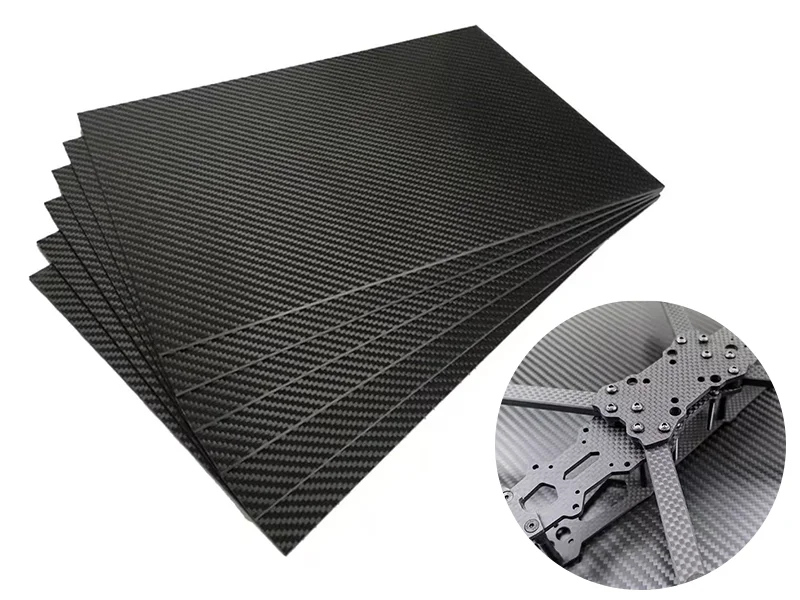
Moving up in thickness, thin carbon fiber sheets deliver noticeable rigidity while remaining lightweight and easy to cut. This range represents the most popular category for hobbyist and light industrial applications.
The 1mm carbon fiber sheet sits perfectly in this range — the industry standard for drone frame components where weight reduction directly improves flight time. Furthermore, 2mm sheets offer nearly double the rigidity of 1mm plates for applications with higher impact loads.
Typical uses include drone frame plates, robotics end-effectors, lightweight electronic enclosures, and RC vehicle chassis components.
Standard Carbon Fiber Sheets (2mm – 10mm)
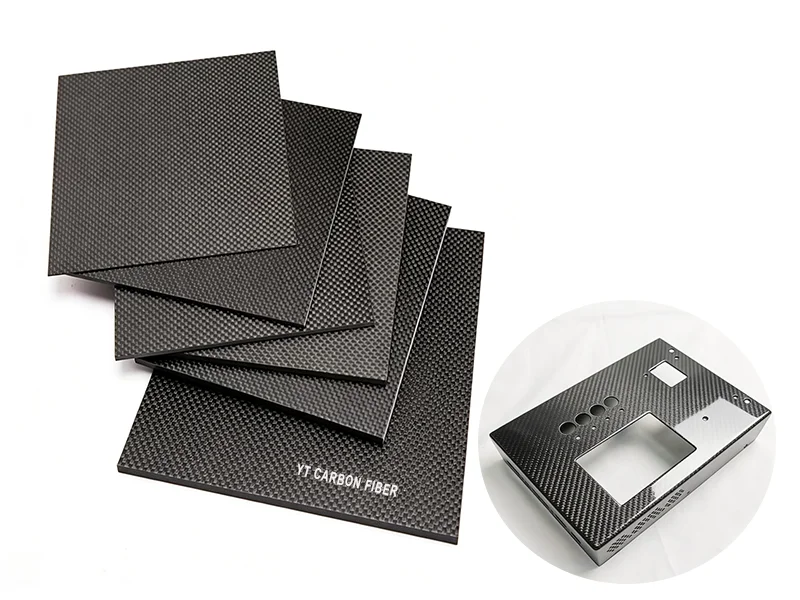
The standard thickness range covers the majority of industrial and hobbyist applications. These plates offer substantial rigidity and can handle moderate to heavy structural loads. Notably, standard sheets offer the best balance of cost, weight, and performance for most applications.
At this range, carbon fiber plates become rigid enough to serve as standalone structural elements. For example, a 3mm sheet makes an excellent FPV drone frame, while 5mm plates serve as robust covers for industrial equipment. Similarly, the 2mm carbon fiber sheet bridges the gap between thin and standard categories.
Typical uses include FPV racing frames, automotive interior trim, industrial machine covers, bicycle components, and architectural panels.
Thick Carbon Fiber Plates (10mm – 30mm)
Thick carbon fiber plates enter the realm of heavy-duty structural applications. At these thicknesses, plates become extremely rigid and capable of bearing significant loads without deflection. A 10mm plate can support orders of magnitude more weight than a 2mm plate of the same dimensions, while still weighing significantly less than an equivalent steel plate.
Additionally, thick plates serve well as bases for CNC machining into custom parts. The material provides enough depth for deep pocket milling, drilling, and threading operations. Consequently, they are ideal for tooling plates, fixture bases, structural brackets, and precision measurement platforms.
Typical applications include heavy-duty tooling plates, machinery covers, load-bearing panels in automation systems, optical tables, and high-end automotive structural components.
Extra Thick Carbon Fiber Plates (30mm – 120mm+)
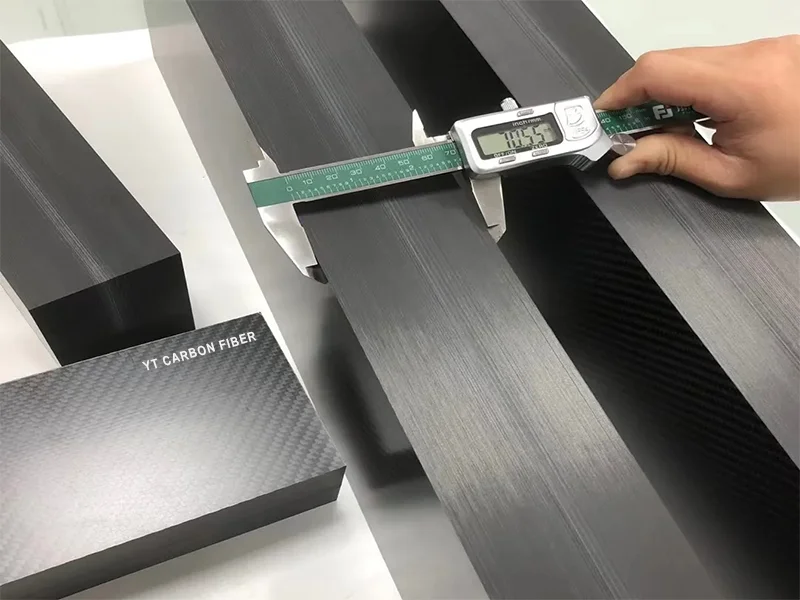
Extra thick carbon fiber plates represent the most extreme end of the thickness spectrum. These plates function more like solid blocks than traditional sheets, providing maximum rigidity and load-bearing capacity that thin plates cannot achieve.
The extra thick carbon fiber plate from YTCarbon covers 30mm to 120mm with sizes up to 3000×8000mm. These plates use unidirectional carbon fiber in the core for maximum strength, with twill or plain weave surface layers. Compared to steel blocks of the same size, they weigh over 80% less.
Typical applications include industrial mold tooling, heavy machinery bases, CNC machining blanks, marine structures, and bridge reinforcement.
See How We Manufacture Carbon Fiber Plates
Inside the YTCarbon factory — from raw material to finished carbon fiber plate
How to Choose the Right Thickness
Answer these four questions to find your ideal thickness:
Question 1
What load will the plate bear? Light loads → thin. Heavy loads → thick.
Question 2
How much weight can you tolerate? Choose the thinnest that meets strength needs.
Question 3
Will you CNC machine it? Thin needs care. Thick machines cleanly but needs power.
Question 4
What is your budget? Cost increases with thickness, but cost-per-strength may favor thicker.
Common Thickness Questions
Need Help Choosing the Right Thickness?
Send us your specs — thickness, size, quantity, and application. Our team responds within 24 hours with a detailed quote.