
Carbon Fiber in Automotive: Real-World Applications
Carbon fiber has fundamentally reshaped automotive engineering over the past three decades. What began as an exclusive material in Formula 1 race cars during the 1980s has evolved into a cornerstone of modern vehicle design, appearing in everything from supercars to electric vehicles. This transformation reflects not just advances in manufacturing capability but also a deeper understanding of how lightweight materials can deliver measurable performance improvements across multiple dimensions.
The Evolution from Racing to Road
When McLaren introduced the MP4/88 in 1988 with its full carbon fiber monocoque chassis, skeptics questioned whether this technology could ever transition to production vehicles. Within a decade, Ferrari, Lamborghini, and Porsche began offering carbon fiber components as standard or optional equipment. Today, virtually every major automaker incorporates carbon fiber into their vehicles, whether as visible styling elements or hidden structural reinforcement.
The journey from track to road wasn’t merely about copying racing technology. Engineers had to develop new manufacturing processes, reduce production costs, and establish quality standards that could scale to thousands of vehicles annually. The automotive industry’s embrace of carbon fiber reflects its proven ability to solve real-world challenges: reducing weight without compromising safety, improving fuel efficiency, and enabling design possibilities that conventional materials cannot achieve.
Interior Trim Applications
Interior components represent one of the most accessible entry points for carbon fiber in automotive design. These applications demonstrate how the material’s distinctive woven pattern can elevate the perceived quality of a vehicle’s cabin while delivering tangible weight savings compared to traditional materials.
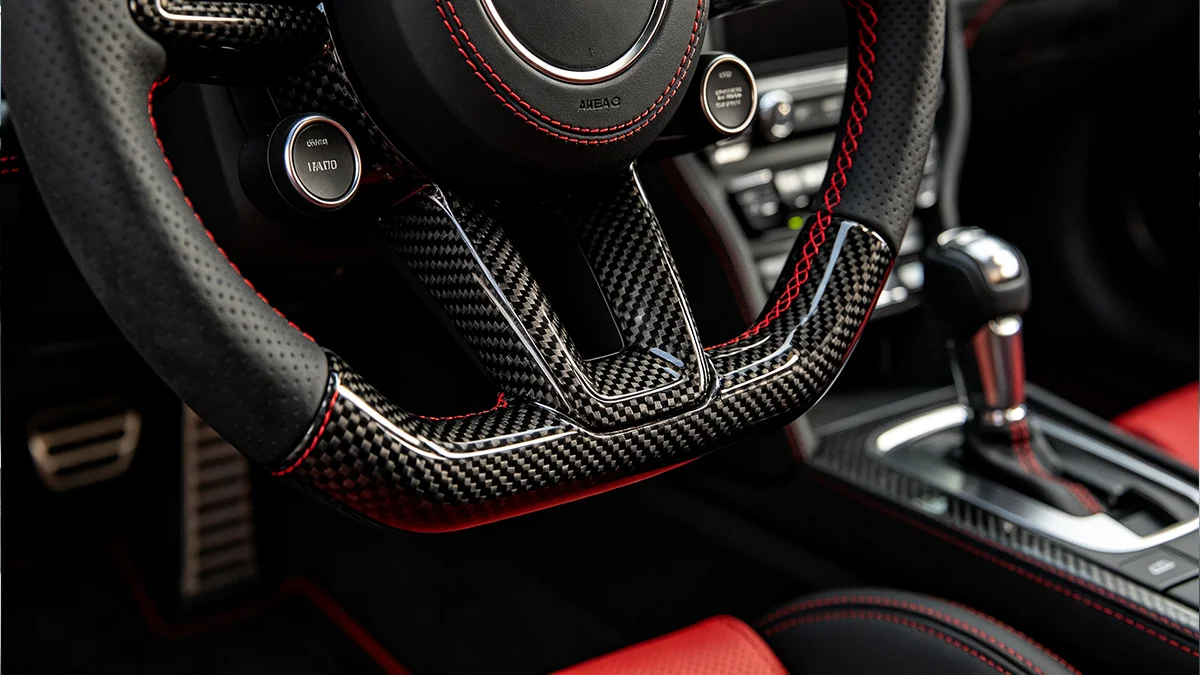
Carbon fiber trim panels appear throughout modern vehicle interiors, from instrument clusters and door handles to center console surfaces and steering wheel accents. Manufacturers favor these applications because they deliver immediate visual impact at a relatively modest weight penalty. A typical carbon fiber center console insert weighs 30-40% less than its aluminum counterpart while offering comparable durability.
Shift paddles and gear knobs benefit particularly from carbon fiber’s thermal resistance and grip characteristics. These high-touch components must withstand constant handling while maintaining their appearance, and carbon fiber delivers on both fronts. Premium brands like BMW, Mercedes-AMG, and Audi routinely offer carbon fiber interior packages that can add thousands to the vehicle’s sticker price, demonstrating the material’s perceived value among consumers.
Beyond aesthetics, carbon fiber interior components serve functional purposes. Carbon fiber-backed seat shells provide excellent support while minimizing weight, critical for performance vehicles where every kilogram affects handling dynamics. Some manufacturers have introduced carbon fiber rearview mirror housings that reduce wind noise while contributing to the vehicle’s overall aerodynamic profile.
Exterior Body Panels
Exterior applications showcase carbon fiber’s versatility in automotive design, combining visual drama with functional performance. These panels must withstand environmental exposure, resist impact damage, and maintain their appearance over years of service while contributing to the vehicle’s overall aerodynamic efficiency.
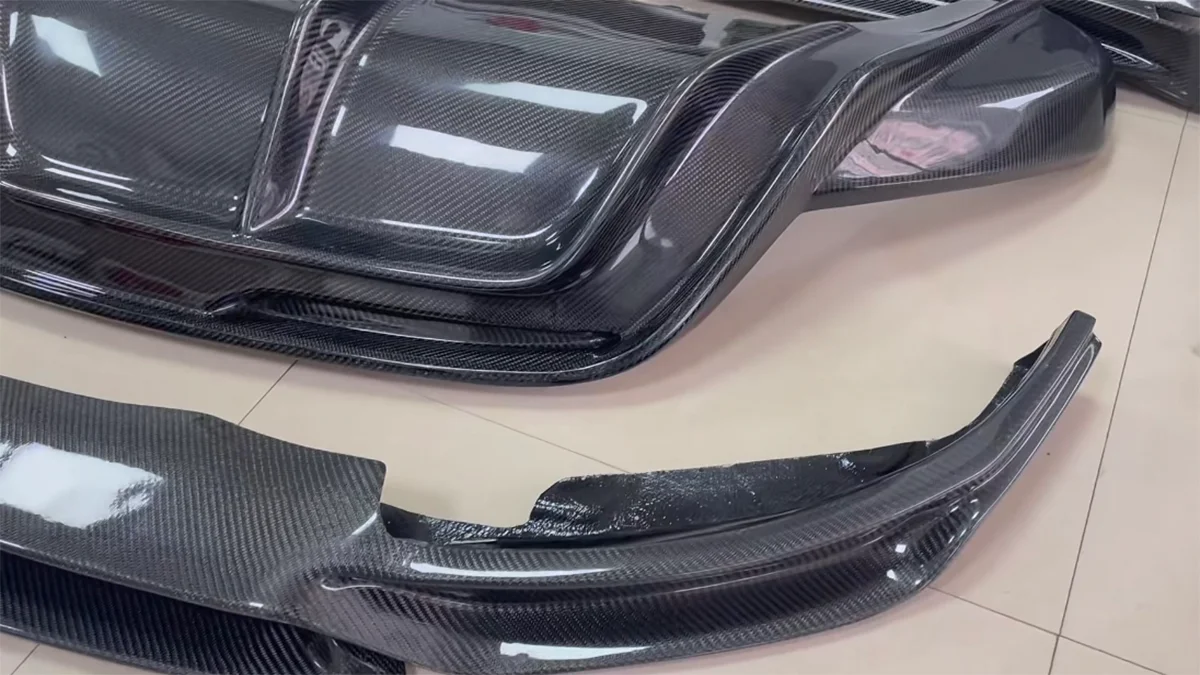
Engine hoods represent the most common carbon fiber exterior application, and for good reason. A carbon fiber hood can weigh 40-60% less than an equivalent steel panel, reducing the vehicle’s front-end mass. This weight reduction lowers the center of gravity when placed at the front of the vehicle, improving handling balance and reducing the moment of inertia during quick direction changes. Performance sedans and sports cars frequently feature carbon fiber hoods as part of lightweight packages designed to enhance track-day performance.
Roof panels offer another compelling application for exterior carbon fiber. Removing weight from the vehicle’s roofline lowers the center of gravity more effectively than equivalent weight reduction elsewhere, since roof mass sits higher above the road. Convertible models particularly benefit from carbon fiber roofs, which can compensate for structural rigidity lost when cutting out the passenger compartment’s fixed roof section.
Fender panels, trunk lids, and rear spoilers round out the most common exterior applications. Each component offers opportunities for optimized aerodynamics when designed as an integrated system rather than simple replacements for conventional panels. Many manufacturers use computational fluid dynamics to design carbon fiber panels that actively manage airflow, reducing drag or increasing downforce depending on the vehicle’s performance priorities.
Structural Components
Structural carbon fiber represents the highest level of engineering integration, where the material bears load rather than merely covering it. These applications demand the most sophisticated manufacturing techniques and deliver the most significant performance benefits, fundamentally changing how vehicles are designed and constructed.
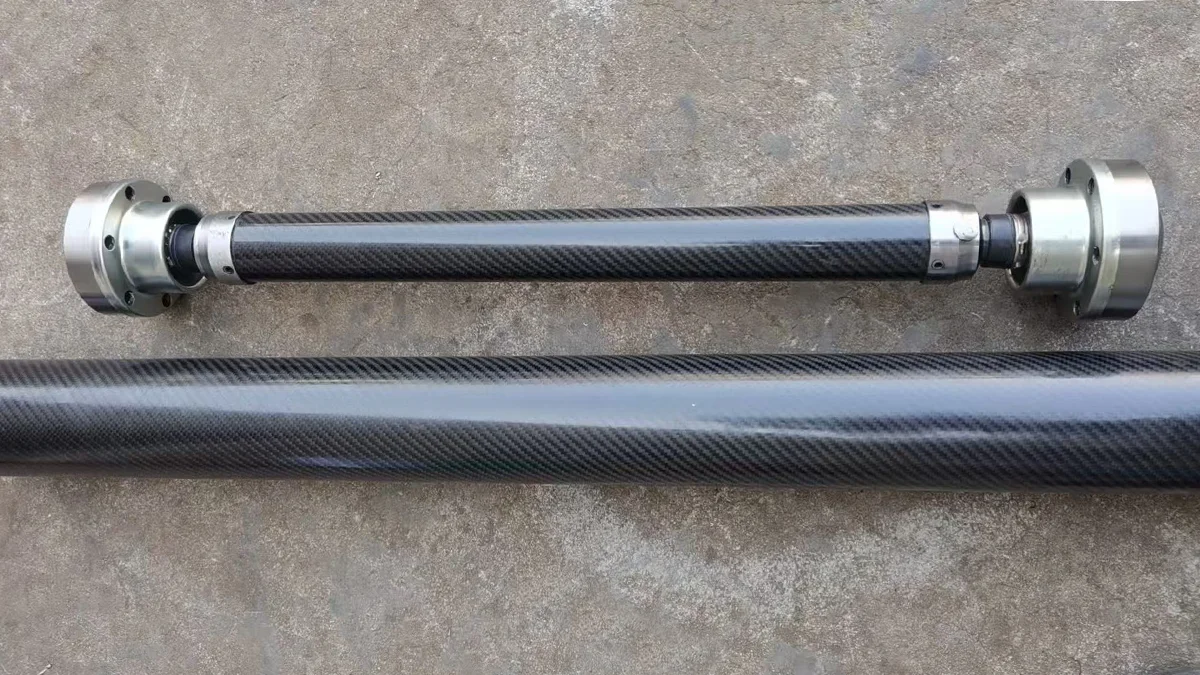
Carbon fiber driveshafts have become increasingly common in performance vehicles, replacing steel units that can flex and vibrate at high RPM. A properly designed carbon fiber driveshaft weighs 60-70% less than steel while offering superior torsional rigidity. The reduced rotating mass improves acceleration response and reduces drivetrain energy losses, translating to measurable performance gains that engineers can quantify on the test track.
Chassis reinforcement components, including strut braces, subframe connectors, and suspension pickup points, utilize carbon fiber to increase structural rigidity without adding substantial weight. These parts work by distributing forces more efficiently across the vehicle’s structure, reducing chassis flex during aggressive cornering or acceleration. Enthusiasts installing carbon fiber reinforcement components often report improved steering response and more predictable handling behavior.
Complete carbon fiber monocoque construction, once reserved for supercars and racing vehicles, is now appearing in more accessible segments. Electric vehicle manufacturers particularly favor this approach, as the structural battery pack can integrate directly into the chassis, eliminating the need for a separate battery enclosure. This integration maximizes interior space while minimizing overall weight, critical considerations for vehicles where range anxiety influences customer purchasing decisions.
Weight Savings and Performance Benefits
Understanding the concrete advantages of carbon fiber requires examining specific weight savings and how they translate into real-world performance improvements. The following comparison illustrates typical weight reductions achievable through strategic carbon fiber implementation.
| Component | Steel Weight | Carbon Fiber Weight | Weight Savings |
|---|---|---|---|
| Engine Hood | 12-15 kg | 5-7 kg | 50-60% |
| Roof Panel | 18-22 kg | 6-9 kg | 65-70% |
| Driveshaft | 8-12 kg | 2.5-4 kg | 60-70% |
| Interior Trim Set | 5-8 kg | 2-3 kg | 55-65% |
| Suspension Arms (pair) | 6-8 kg | 2-3 kg | 60-65% |
These weight reductions compound across the vehicle to deliver meaningful performance improvements. Every 100 kg removed from a vehicle’s curb weight improves its power-to-weight ratio, enhances braking performance, and reduces tire and brake wear. For electric vehicles, weight reduction directly translates to extended range, since the battery pack must work less to propel a lighter vehicle.
Cost Considerations: When Does Carbon Fiber Make Sense?
Despite its undeniable performance advantages, carbon fiber carries a significant cost premium that limits its application to specific vehicle segments and components. Understanding when this investment delivers appropriate value requires examining both the application context and the manufacturing economics.
Production volume fundamentally determines carbon fiber component cost. Hand-laid carbon fiber parts for low-volume supercars can cost ten times their steel equivalents, while high-volume compression-molded components for mainstream vehicles might cost only two to three times more. The automotive industry’s ongoing investment in automated manufacturing technology continues to narrow this gap, making carbon fiber viable for broader applications.
Components that require painting or surface finishing often favor alternative materials due to carbon fiber’s more complex preparation requirements. The visible carbon fiber weave pattern requires clear coat protection rather than paint, limiting design flexibility. Some manufacturers address this by using carbon fiber-reinforced plastic (CFRP) with painted surfaces, accepting slightly higher weight for greater design freedom.
For budget-conscious buyers, carbon fiber’s durability advantages deserve consideration. Carbon fiber components resist corrosion better than steel and don’t dent like aluminum, potentially reducing long-term maintenance costs. However, impact damage presents a different story: carbon fiber may shatter rather than deform, requiring complete replacement rather than repair. This characteristic makes carbon fiber less suitable for components prone to minor collisions or parking lot damage.
Future Trends in Automotive Carbon Fiber
The next decade will see carbon fiber technology evolve in response to electric vehicle requirements and manufacturing advances. Several trends are already emerging from research laboratories and pilot production lines around the world.
Electric vehicle adoption is accelerating carbon fiber development for structural applications. With batteries adding substantial weight to vehicles, manufacturers face pressure to reduce mass elsewhere. Carbon fiber-intensive vehicle architectures, where the battery enclosure serves as a structural chassis member, can offset battery weight while improving crash safety and interior packaging.
Recycling technology is addressing environmental concerns that have limited carbon fiber adoption. Carbon fiber reinforced polymers have historically created disposal challenges, but new pyrolysis and solvolysis processes can now recover high-quality fibers from end-of-life components. This development makes carbon fiber more attractive to manufacturers with sustainability commitments.
Manufacturing automation is reducing production costs while improving consistency. Robots that can lay carbon fiber towpreg in optimized orientations are replacing manual hand layup in high-volume applications. These advances, combined with faster-curing resin systems, promise to make carbon fiber cost-competitive with aluminum in many applications within the next decade.
Conclusion
Carbon fiber has earned its place in automotive engineering through decades of proven performance in racing and increasingly in production vehicles. From subtle interior trim accents to complete structural chassis, the material offers unique combinations of strength, stiffness, and low weight that no conventional material can match. As manufacturing technology advances and electric vehicles raise the importance of range efficiency, carbon fiber’s role in automotive design will only expand.
The material’s evolution from racing exoticism to engineering mainstream reflects broader trends in automotive manufacturing: increasing automation, falling costs, and growing integration between structural and functional requirements. For engineers and designers, carbon fiber represents not just a material choice but a design philosophy that prioritizes efficiency without sacrificing capability.
Ready to Upgrade Your Automotive Project with Carbon Fiber?
Custom composite panels, aerodynamic components, and structural tubes engineered to your CAD specifications. Get a tailored factory-direct quote within 24 hours.