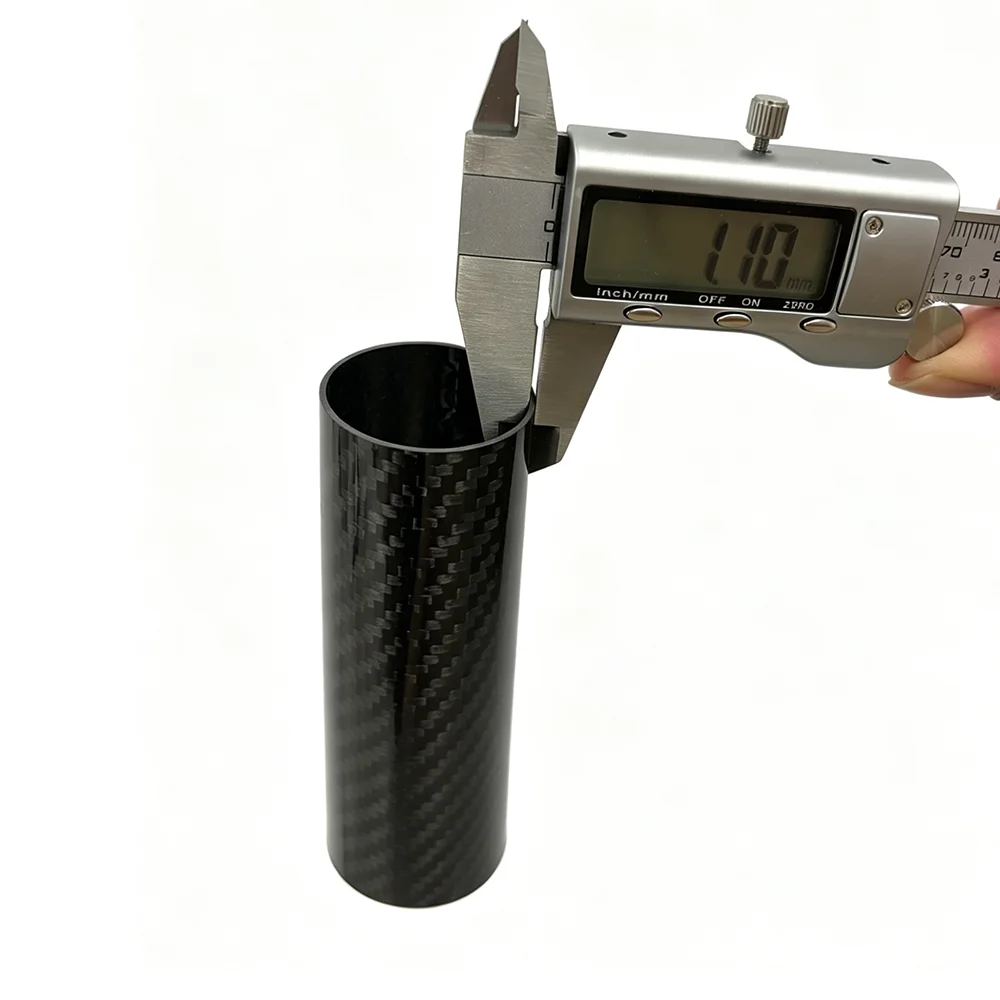
Product Details
Why Carbon Fiber for Antenna Tubes
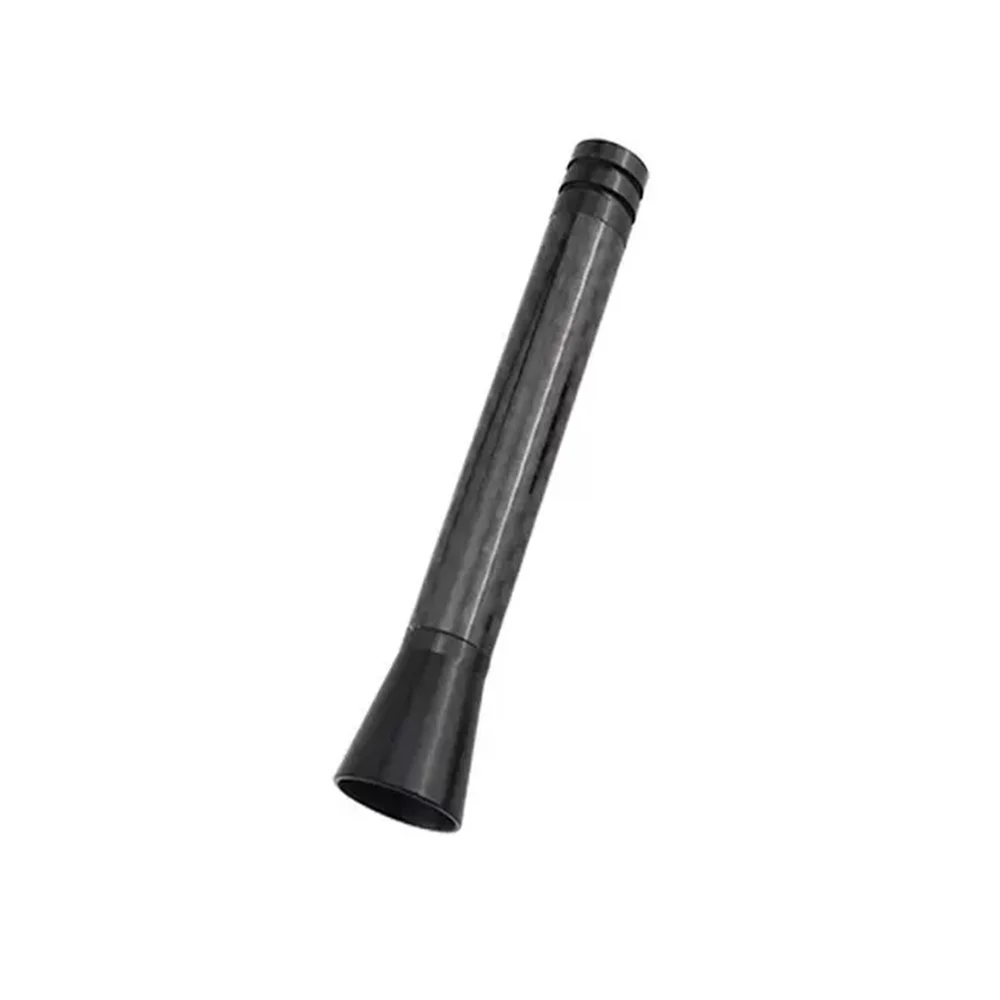
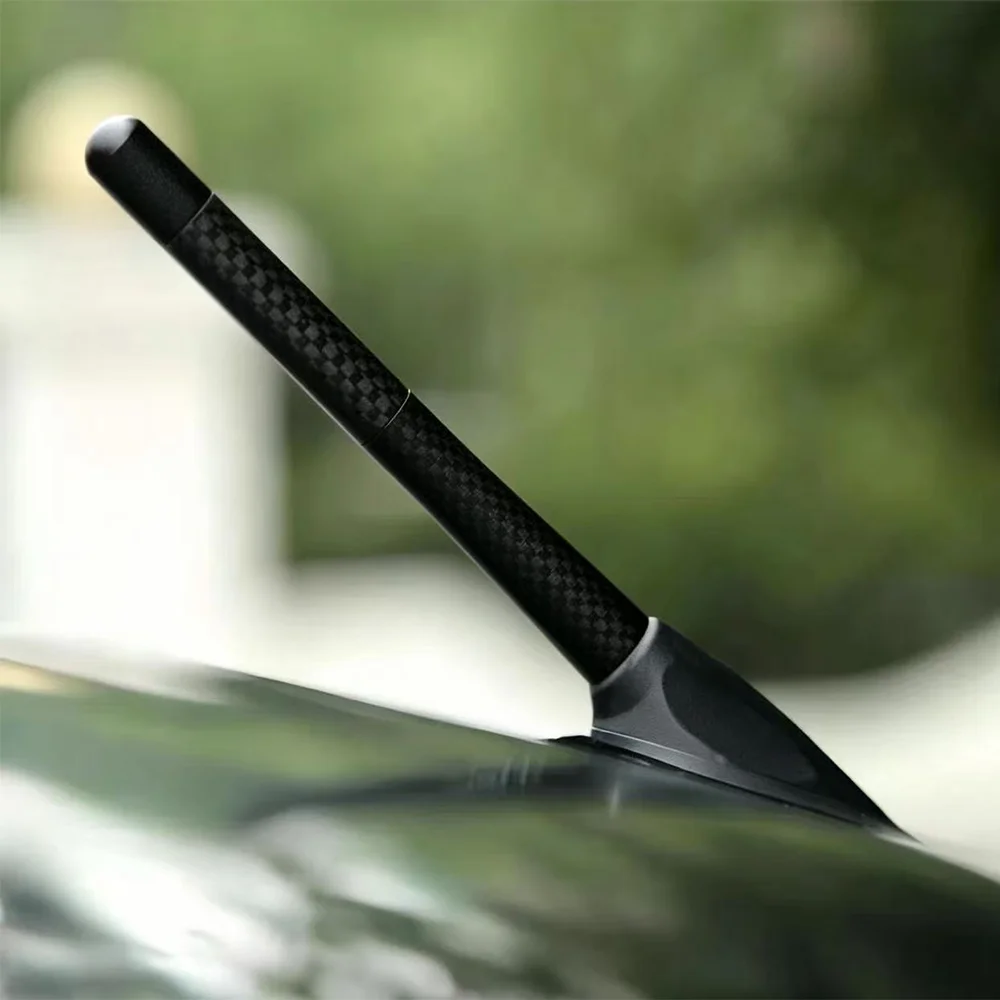
Fundamentally, carbon fiber antenna tubes solve a fundamental problem that metal masts cannot: they are RF-transparent. Unlike aluminum or steel supports, carbon fiber does not shield, reflect, or attenuate radio frequency signals. This means the antenna tube itself becomes invisible to the RF field — no detuning, no pattern distortion, and no signal loss caused by the support structure. For engineers and operators who depend on clean signal propagation, this property alone makes carbon fiber the only logical choice for antenna support tubes.
Lightweight Rigidity for Elevated Installations
Furthermore, carbon fiber antenna tubes weigh approximately one-third of equivalent aluminum tubes while delivering higher specific stiffness. In practical terms, this means less deflection under wind load at height — a critical factor for mast-mounted and rooftop antenna installations. Moreover, the weight reduction directly lowers the mechanical load on mounting hardware and rotation systems, extending service life and simplifying installation. For portable field deployments, the weight savings translate to easier transport and faster setup.
Weather-Proof by Material Nature
In addition, carbon fiber is inherently corrosion-resistant — it does not rust, oxidize, or degrade under prolonged UV exposure when properly surface-finished. Consequently, carbon fiber antenna tubes outperform aluminum in marine, coastal, and high-humidity environments where metal masts require regular maintenance or protective coatings. Our tubes come with a UV-resistant clear coat option specifically formulated for continuous outdoor exposure.
Specifications
| Parameter | Specification |
|---|---|
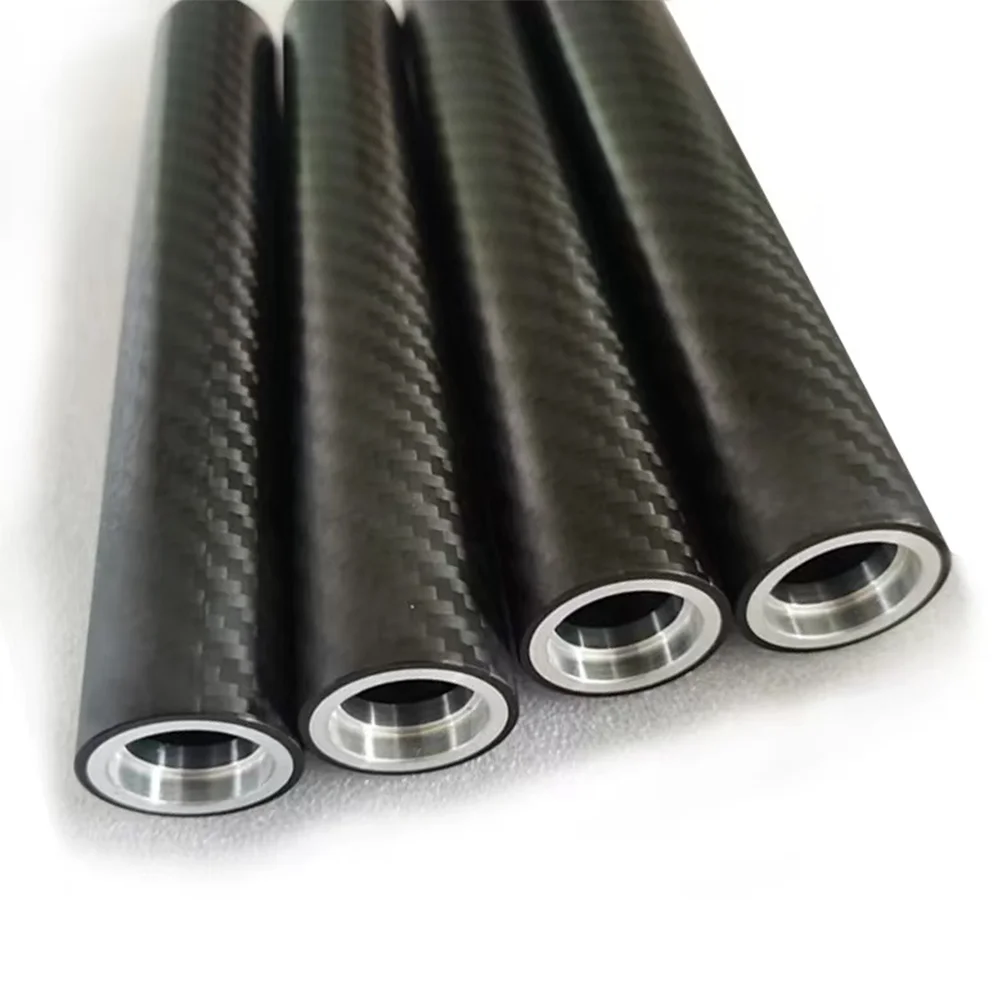
| Product Type | Carbon Fiber Antenna Tube |
| Inner Diameter | 6mm – 50mm |
| Outer Diameter | 8mm – 55mm |
| Wall Thickness | 0.5mm – 3mm |
| Maximum Length | 4000mm (roll-wrapped & pultruded) |
| Carbon Fiber Grade | T300 / T700 |
| Surface Finish | Glossy or Matte (UV-resistant clear coat optional) |
| Weave Pattern | 3K Twill / Plain / UD (Pultruded) |
| Manufacturing Process | Roll-wrapped or Pultruded |
| RF Transparency | Full — no signal shielding or detuning |
| Customization | Full dimensional and material customization |
Applications
Communication Infrastructure
- Amateur radio (ham) antennas — First, vertical antenna masts, boom elements for Yagi beams, and portable field-day supports. Carbon fiber keeps mast weight low for easy tilt-over operation while staying RF-transparent so antenna patterns remain clean
- Cellular and WiFi infrastructure — In addition, small-cell pole mounts, rooftop antenna masts, and CPE support tubes. Stiffness minimizes sway at height, maintaining antenna alignment and signal stability in wind
- Marine VHF antennas — Similarly, sailboat and powerboat antenna masts that face constant salt spray and humidity. Carbon fiber will not corrode like aluminum, and UV-resistant coating ensures years of trouble-free exposure
Specialized and Portable Installations
- UAV and drone antenna booms — Furthermore, lightweight booms for telemetry, GPS, and communication antennas on survey and delivery drones. Every gram saved on the support structure extends flight time
- Satellite ground station mounts — Moreover, support struts for LNB arms and feed horns on parabolic dishes. RF transparency ensures no interference with weak satellite downlink signals
- Temporary event and broadcast setups — Finally, rapid-deployment antenna masts for outdoor broadcasts, emergency communications, and field testing where quick assembly and light transport weight are essential
Why Choose YTCarbon
Signal and Performance Advantages
- RF-transparent guarantee. First and foremost, our carbon fiber antenna tubes are confirmed RF-transparent across HF through microwave frequencies. Unlike metal supports that detune nearby antennas, our tubes are electrically invisible — preserving your carefully designed radiation pattern
- Factory-direct manufacturer. In addition, we produce every tube in our Shenzhen facility — no trading company intermediaries, no unknown quality. You deal directly with the production team that can customize dimensions, layup, and finish to your exact requirements
Manufacturing and Quality Assurance
- UV-resistant outdoor coating. Furthermore, our optional UV-resistant clear coat is formulated for continuous outdoor exposure in marine and equatorial environments. It prevents surface degradation without adding significant weight or affecting RF transparency
- Both roll-wrapped and pultruded. Moreover, choose roll-wrapped for multi-directional stiffness and customizable fiber orientation, or pultruded for maximum axial strength at lower cost. We help you select the right construction for your wind load and mounting conditions
- Lengths up to 4 meters. Additionally, standard maximum length is 4000mm for both construction types. Multi-section mast configurations are available with precision-fit joiner sleeves for extended heights
- ISO 9001 certified quality. Finally, every production batch undergoes dimensional verification, concentricity measurement, and surface inspection. Full traceability from raw material to shipped product
Certifications
First of all, quality consistency is non-negotiable for antenna infrastructure that operates 24/7 in outdoor environments. Specifically, our manufacturing facility operates under ISO 9001 quality management, ensuring every carbon fiber antenna tube meets the same dimensional and material standards from batch to batch. Moreover, our products are RoHS and CE compliant, meeting regulatory requirements for the European market. In addition, for installations that demand documented traceability, we provide material test reports and dimensional certificates with your order. Finally, need documentation for your project approval? Contact us and we will send the PDFs.
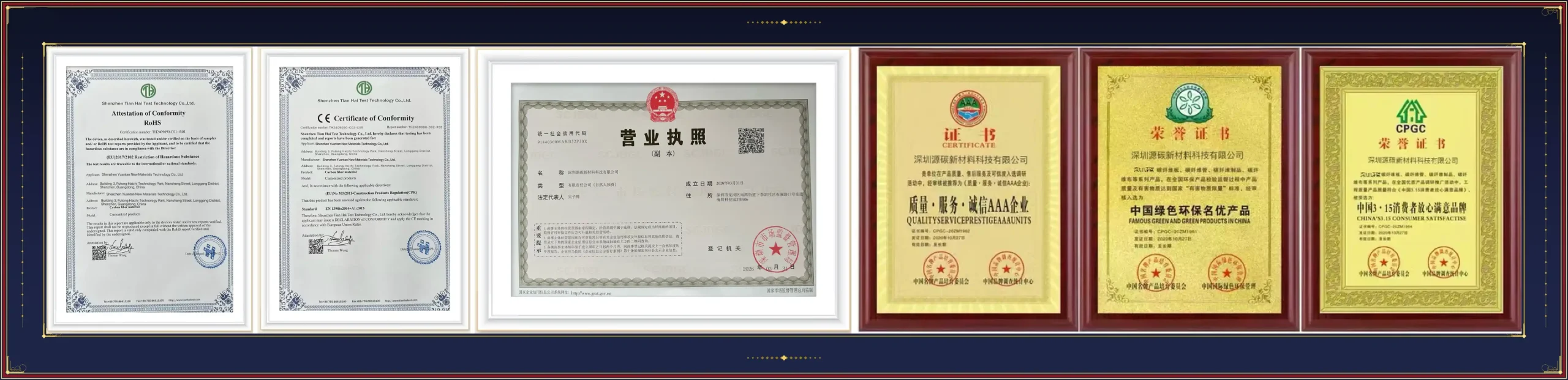
ISO 9001 · RoHS · CE Certified
Production Process
To begin with, carbon fiber antenna tube production follows the same precision manufacturing process as our structural carbon fiber tubes, with additional attention to surface finish quality — since antenna tubes are typically visible and exposed to weather. Here is our step-by-step process:
- Mandrel Preparation — First, precision-ground steel mandrels matching the target inner diameter, surface-polished for clean demolding
- Prepreg Cutting — Next, carbon fiber prepreg cut to width based on tube circumference and layup schedule
- Roll Wrapping / Pultrusion — Then, controlled tension application for roll-wrapped tubes; heated die drawing for pultruded tubes
- Vacuum Bagging & Curing — Subsequently, vacuum consolidation eliminates voids; temperature-controlled oven cure for complete resin crosslinking
- Demolding & Finishing — After that, compressed-air demolding, precision sanding, and clear-coat application for glossy or matte finish
- UV Coating (Optional) — Additionally, application of UV-resistant clear coat for outdoor antenna installations requiring long-term weather protection
- Quality Inspection — Finally, dimensional measurement of ID, OD, wall thickness, and concentricity; surface quality verification; straightness check for mast applications

Carbon Fiber Antenna Tube Production Process
Frequently Asked Questions
RF Performance & Material Questions
+ Is carbon fiber really RF-transparent for antenna use?
+ Do I need the UV-resistant coating?
+ How does carbon fiber compare to aluminum for antenna masts?
Sizing & Assembly Questions
+ What diameter do I need for my antenna mast?
+ Can I join sections for a taller mast?
+ Roll-wrapped or pultruded — which is better for antenna masts?
Ready to Order Carbon Fiber Antenna Tubes?
Get a custom quote today. Our team responds within 24 hours.