
Carbon Fiber Weight Explained: Why It Matters for Engineering
Every gram saved optimizes fuel efficiency, structural endurance, and dynamic velocity. Discover the science behind carbon fiber weight, head-to-head metal density comparisons, and industry-proven reduction formulas.
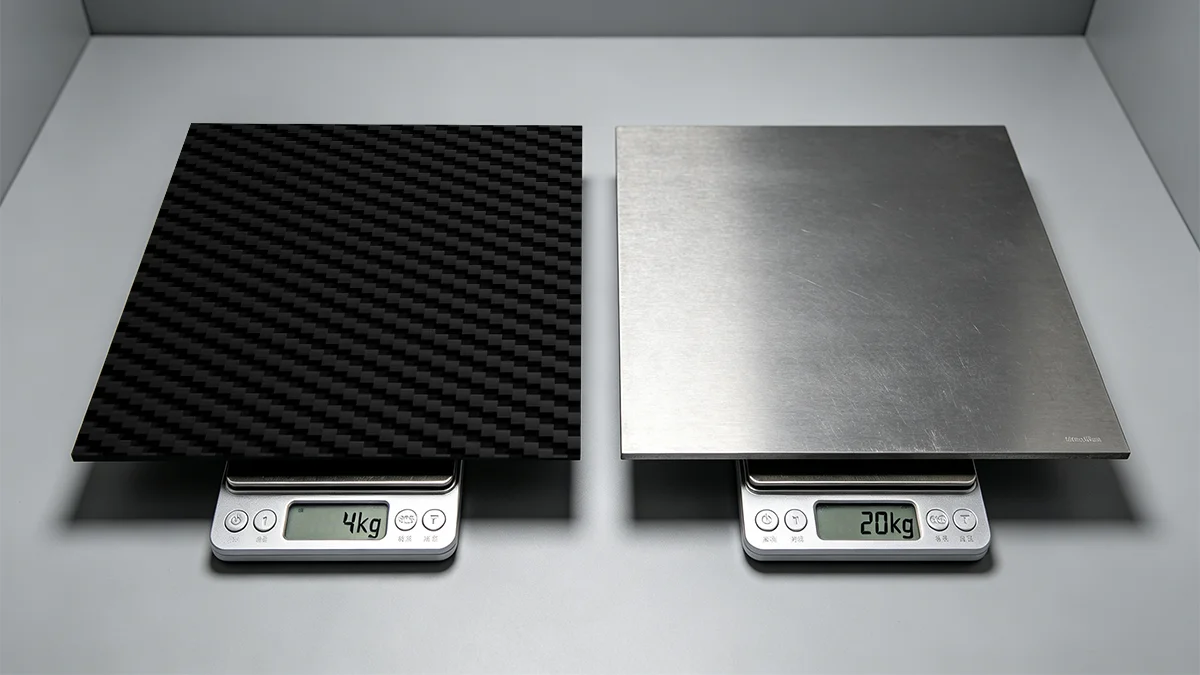
Same exterior dimensions, dramatically different mass profiles: carbon fiber laminates versus structural steel
Why Is Carbon Fiber So Light? Understanding Material Density
Crafting lightweight hardware successfully always begins with atomic geometry. Indeed, composite filaments consist of densely aligned carbon arrangements, yielding an ultra-stiff structural medium featuring remarkably low mass.
Furthermore, carbon fiber density typically spans between 1.4 and 1.9 g/cm³, while high-grade structural panels settle tightly near 1.55 to 1.60 g/cm³. Consequently, advanced laminates rank among the absolute lightest structural options accessible to modern creators.
Thus, visualizing these metrics tangibly reveals that one single cubic centimeter of composite weighs less than two standard medical tablets, whereas an equivalent block of steel equals a heavy electronic battery.
Carbon Fiber Weight vs. Steel, Aluminum, and Titanium
Selecting appropriate hardware media requires analyzing how composite mass stacks against traditional metals. By volume, carbon fiber runs roughly 70% to 80% lighter than steel while also checking in 40% to 50% lighter than aluminum.
However, low density tells only half the story. Although aluminum maxes near 310 MPa and steel peaks around 2,500 MPa, carbon fiber composites routinely exceed 3,500 MPa in tensile strength.
Hence, project builders require drastically less cross-sectional bulk to achieve superior load-bearing resilience.
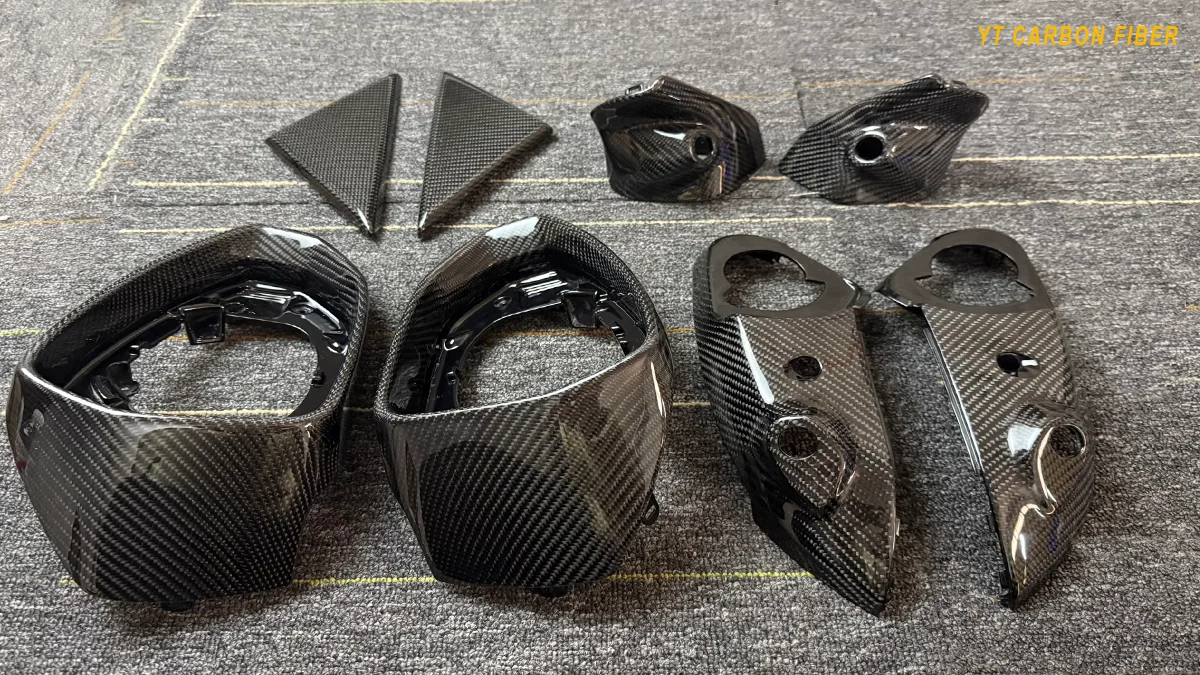
Comparative Technical Matrix
| Alloy Group | Specific Density | Mass Variance | Ultimate Threshold |
|---|---|---|---|
| Composite Material | 1.55 – 1.60 | Baseline | 3,500+ MPa |
| Aluminum Metal | 2.70 | ~70% heavier | 270 – 310 MPa |
| Magnesium Metal | 1.74 | 10% – 15% heavier | 170 – 260 MPa |
| Titanium Metal | 4.50 | 180% heavier | 900 – 1,000 MPa |
| Industrial Steel | 7.85 | 400% heavier | 400 – 2,500 MPa |
How Weight Savings Transform Aerospace, Auto & Drones
Commercial aviation leaders like Boeing and Airbus integrate composites across 50% of primary airframes. Consequently, trimming aircraft structural weight by 20% preserves millions of gallons of fuel annually.
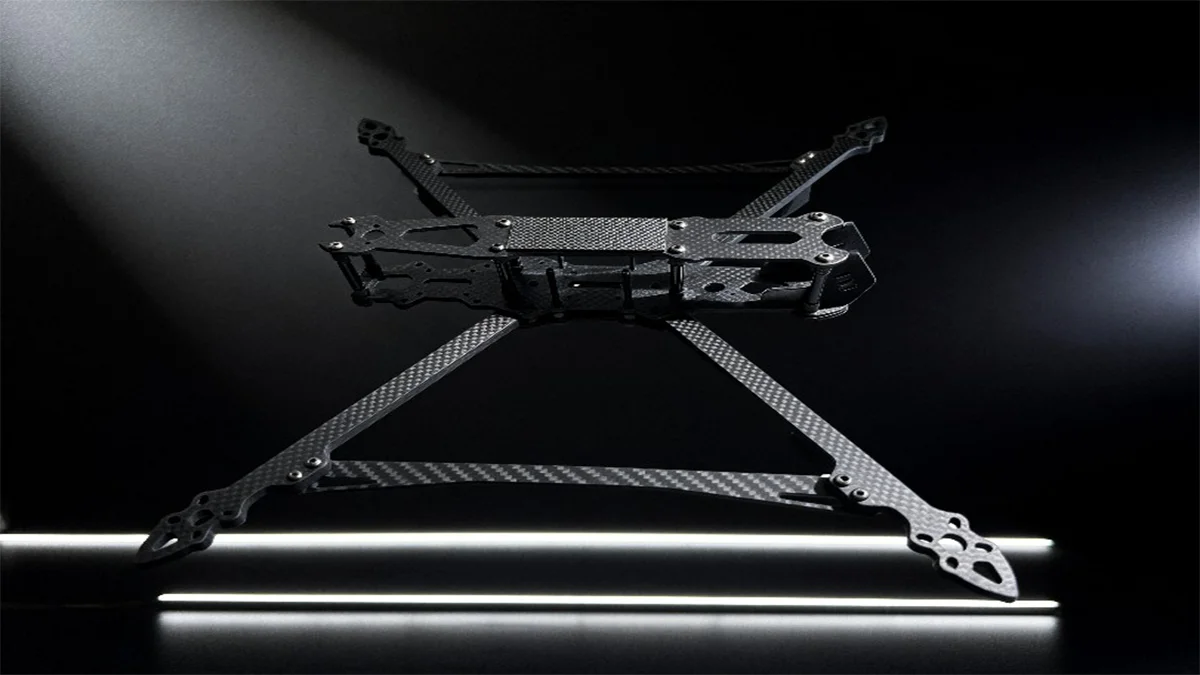
Meanwhile, industrial drone manufacturers utilize lightweight carbon fiber drone frames to slash deadweight by 40% to 60%. This substantial mass reduction directly maximizes flight endurance and optical sensor payloads.
Moreover, modern transit rail networks incorporating composite bodies accomplish an 11% overall car weight decrease, dropping power consumption significantly.
Performance Summary Matrix
| Assembly Item | Metal Standard | Composite Target | Gain Metric |
|---|---|---|---|
| Auto Hood Panel | 9.0 kg (Steel) | 2.3 kg | 75% lighter |
| Bicycle Chassis | 1,750 g (Aluminum) | 950 g | 46% lighter |
| Drive Shaft Rod | Steel baseline | 35% of steel mass | 65% lighter |
| Aircraft Spar Box | Aluminum baseline | 80% of aluminum mass | 20% lighter |
Engineering Calculation Framework for Weight Reduction
Planning custom mass savings for specialized builds requires adhering to a structured four-phase engineering workflow:
First, establish current metal hardware mass by multiplying total component volume by the specific alloy density.
Second, project composite equivalents using standardized conversion factors (multiply aluminum mass by 0.57–0.60, steel mass by 0.20–0.25, and titanium mass by 0.35–0.40).
Third, access operational efficiency multipliers — typically, every 10% mass reduction in mobile chassis returns a 6% to 8% gain in energy performance.
Finally, review total lifecycle expenses. Although advanced composite materials carry higher initial costs, operational savings quickly offset these investments.
Frequently Asked Questions
Density & Comparative Metrics
Design & Sourcing Optimization
Looking to Reduce Weight in Your Next Engineering Project?
Get factory-direct carbon fiber sheets up to 3m × 8m with thicknesses starting at 0.2mm. Request a custom CNC quotation with rapid response within 24 hours.