
Carbon Fiber vs Aluminum vs Steel: Which to Choose?
If you’re designing anything that moves — drones, automotive parts, robotic arms — material choice isn’t academic. Specifically, it’s the difference between a product that performs and one that just barely ships. Three materials dominate structural engineering: carbon fiber, aluminum, and steel. Here is how they actually compare — in numbers that matter.
The Quick Answer
Before we go deep, here’s the short version for busy engineers:
- Choose carbon fiber when weight savings and stiffness are mission-critical (aerospace, FPV drones, high-performance automotive). Namely, budget is secondary.
- Choose aluminum when you need a solid strength-to-weight ratio at a reasonable cost (enclosures, frames, general structural parts). Admittedly, the safe middle ground.
- Choose steel when ultimate strength and impact resistance matter more than weight (heavy machinery, tooling, structural beams). Furthermore, cost is king.
Now let’s see why — with real numbers.
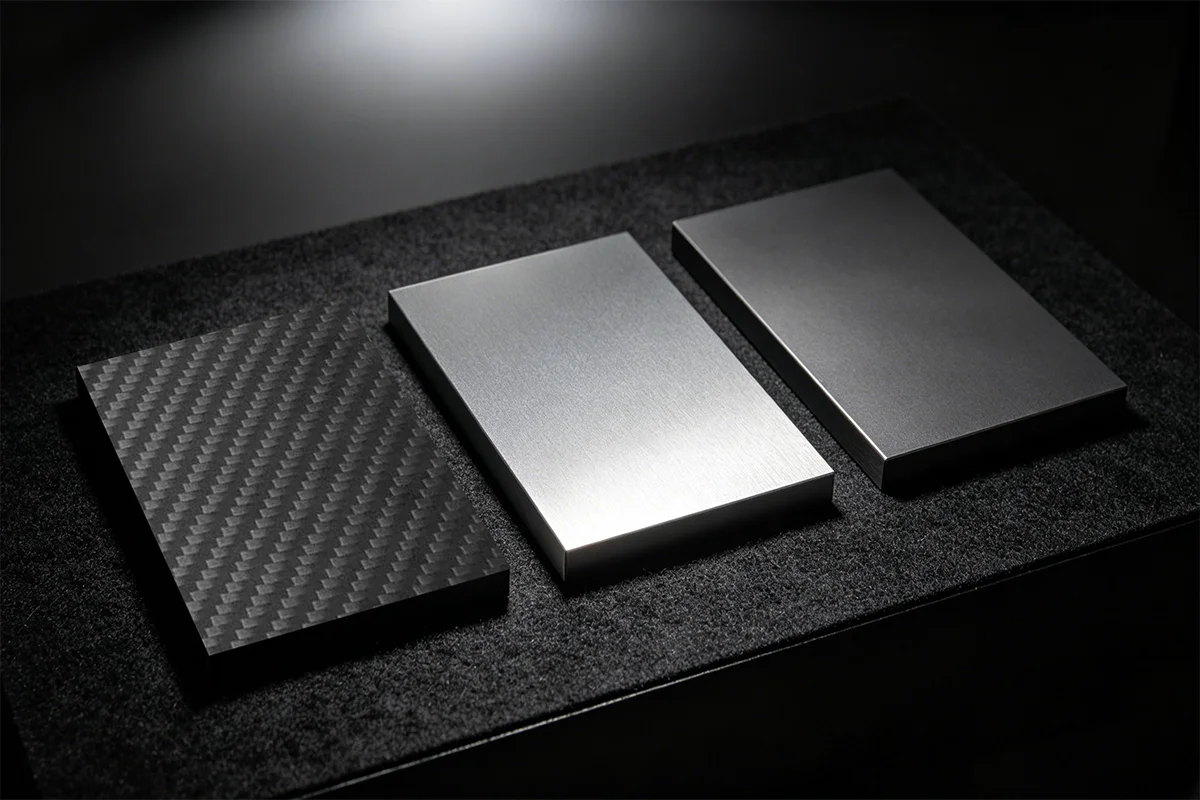
Material Properties: Head-to-Head Data
Forget marketing brochures. Accordingly, here’s what the datasheets actually say:
| Property | Carbon Fiber (3K Twill) | Aluminum (6061-T6) | Steel (A36) |
|---|---|---|---|
| Density | 1.55 g/cm³ | 2.70 g/cm³ | 7.85 g/cm³ |
| Tensile Strength | 3,500–5,000 MPa | 310 MPa | 400–550 MPa |
| Elastic Modulus | 230 GPa | 69 GPa | 200 GPa |
| Strength-to-Weight | ★★★★★ | ★★★☆☆ | ★☆☆☆☆ |
| Stiffness-to-Weight | ★★★★★ | ★★★☆☆ | ★★☆☆☆ |
| Corrosion Resistance | Excellent | Good (anodized) | Poor (needs coating) |
| Fatigue Resistance | Excellent | Moderate | Moderate |
| Thermal Conductivity | Low (anisotropic) | High (167 W/m·K) | High (50 W/m·K) |
| Relative Cost | High | Medium | Low |
Weight: The Number That Changes Everything
In real-world engineering, weight isn’t just a spec — it’s a compounding factor. For instance, every gram you save on a drone frame is a gram of battery you don’t have to carry. Moreover, every kilogram shed from an automotive component improves range, handling, and fuel efficiency.
To make it concrete, consider a 300mm × 300mm × 3mm flat panel:
| Material | Panel Weight | vs Carbon Fiber |
|---|---|---|
| Carbon Fiber (3mm) | 418 g | Baseline |
| Aluminum (3mm) | 729 g | +74% heavier |
| Steel (3mm) | 2,120 g | +407% heavier |
Consequently, that steel panel weighs five times what the carbon fiber one does. In aerospace or drone applications, that’s not a trade-off — it’s a dealbreaker.
Strength and Stiffness: Not the Same Thing
Notably, this is where most comparison articles get sloppy. Strength and stiffness are different properties, and understanding the distinction matters for your design.
Strength = how much load before the material breaks. Stiffness = how much the material deflects under load.
Carbon fiber wins both — but especially stiffness. Specifically, its elastic modulus (230 GPa) means it barely flexes under load. That’s why FPV drone racers and precision CNC machines use carbon fiber: zero flex means zero vibration, which means tighter tolerances and better control.
In contrast, aluminum flexes about 3× more than carbon fiber at the same thickness. Steel is stiff, but you pay for it in weight. For many applications, a 2mm carbon fiber sheet gives you the stiffness of a 3mm steel sheet at one-fifth the weight.
Cost: The Elephant in the Room
Admittedly, carbon fiber is expensive — no sugarcoating it. Here’s a rough per-kilogram comparison for raw sheet material:
| Material | Approximate Cost/kg | Notes |
|---|---|---|
| Steel (A36) | $1–3 | Commodity pricing, widely available |
| Aluminum (6061) | $4–8 | Standard industrial alloy |
| Carbon Fiber Sheet | $40–120 | Varies by weave, thickness, and finish |
However, here’s what raw material cost doesn’t capture:
- Machining costs: Steel wears out tools fast. Carbon fiber requires diamond tooling but machines cleanly. Aluminum is the easiest to machine.
- Finishing costs: Steel needs painting or plating to prevent rust. Carbon fiber and aluminum are fine bare.
- Lifetime costs: Carbon fiber’s fatigue resistance means longer service life in cyclic-loading applications. Steel and aluminum both fatigue visibly over time.
Therefore, for B2B procurement teams, the better question isn’t “what’s cheaper?” — it’s “what’s the total cost of ownership over the product lifecycle?”
What About Machining and Fabrication?
Material choice doesn’t end at the spec sheet. Specifically, how you work with it matters just as much.
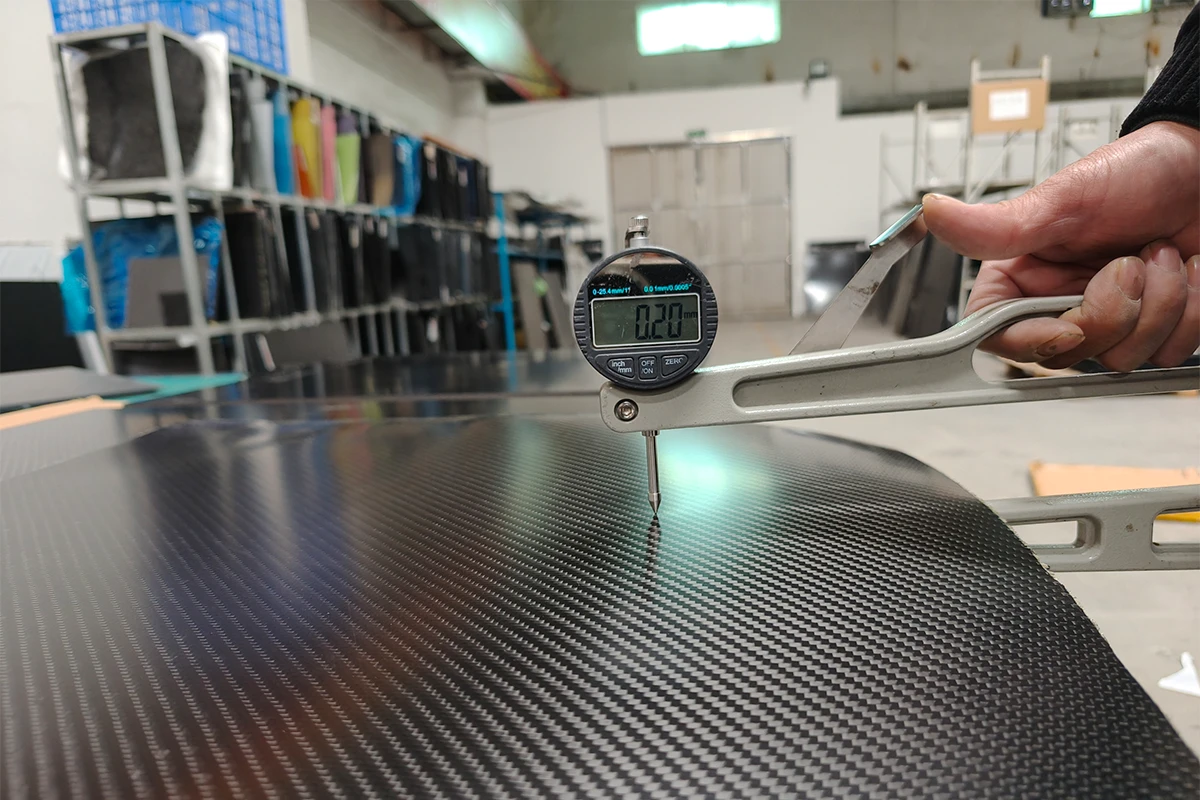
Carbon fiber: CNC machines beautifully with diamond-coated tooling. In fact, it can be cut, drilled, milled, and routed to tight tolerances. The key is preventing delamination — use proper feeds, speeds, and support backing. Custom shapes (like drone frame arms or automotive brackets) are routine for experienced fabricators.
Aluminum: The easiest of the three to machine. Furthermore, standard carbide tools, moderate speeds, and excellent chip evacuation make it straightforward. Welding, bending, and forming are all simple. If you need complex geometries fast, aluminum is your friend.
Steel: Machinable but tough on tools. Consequently, it requires slower cutting speeds and frequent tool changes. Welding is strong but introduces heat distortion. Overall, steel is best when you’re working with standard profiles (tubes, angles, plates) rather than complex custom shapes.
Quick Reference: Where Each Material Shines
Decision Framework: Which One Should You Use?
Instead of a flowchart you’ll never use, here are three questions to ask yourself:
1. Is weight a constraint? If yes → carbon fiber or aluminum. Otherwise, steel is probably fine.
2. What’s your budget reality? If budget is tight → aluminum or steel. If performance justifies cost → carbon fiber.
3. Does the part see cyclic loading? If yes → carbon fiber has the best fatigue life. In contrast, steel and aluminum will develop microcracks over time.
Ultimately, most engineering decisions aren’t about finding the “best” material — they’re about finding the right trade-off for your specific application.