
Carbon Fiber vs Aluminum for Robot Arms: A Practical Guide
When Chinalco rolled out robot-grade aluminum profiles at the World Robot Conference, it confirmed what the market already knows: robot structural materials are now a strategic category. Namely, for engineers specifying robot arm components, here is how carbon fiber and aluminum actually compare — in numbers that matter.
Why Material Selection Matters for Robot Arms
A robot arm’s performance ceiling is set by its structural material. Specifically, the arm needs rigidity for positional accuracy under load, low inertia for fast acceleration, and fatigue resistance for millions of duty cycles. Furthermore, every unnecessary gram compounds through the kinematic chain — heavier arms demand larger motors, beefier reducers, and more power consumption.
Aluminum has been the default structural material for decades. Admittedly, it is cheap, easy to machine, and widely available. However, as robot speed, precision, and duty cycle demands increase — which is exactly where the market is heading — aluminum’s limitations become hard to ignore. Consequently, higher payload ratios, faster cycle times, and tighter positional accuracy all push toward lighter, stiffer, more fatigue-resistant materials.
Carbon fiber composite delivers measurable returns in every one of these categories. For instance, a carbon fiber tube matching an aluminum tube’s stiffness weighs roughly 40–50% less. Moreover, its specific stiffness is roughly 5× higher. In addition, its fatigue life is effectively unlimited under properly designed loads — no endurance limit, no crack propagation. Therefore, the question is no longer whether carbon fiber outperforms aluminum for robot arms, but where the performance premium justifies the material cost.
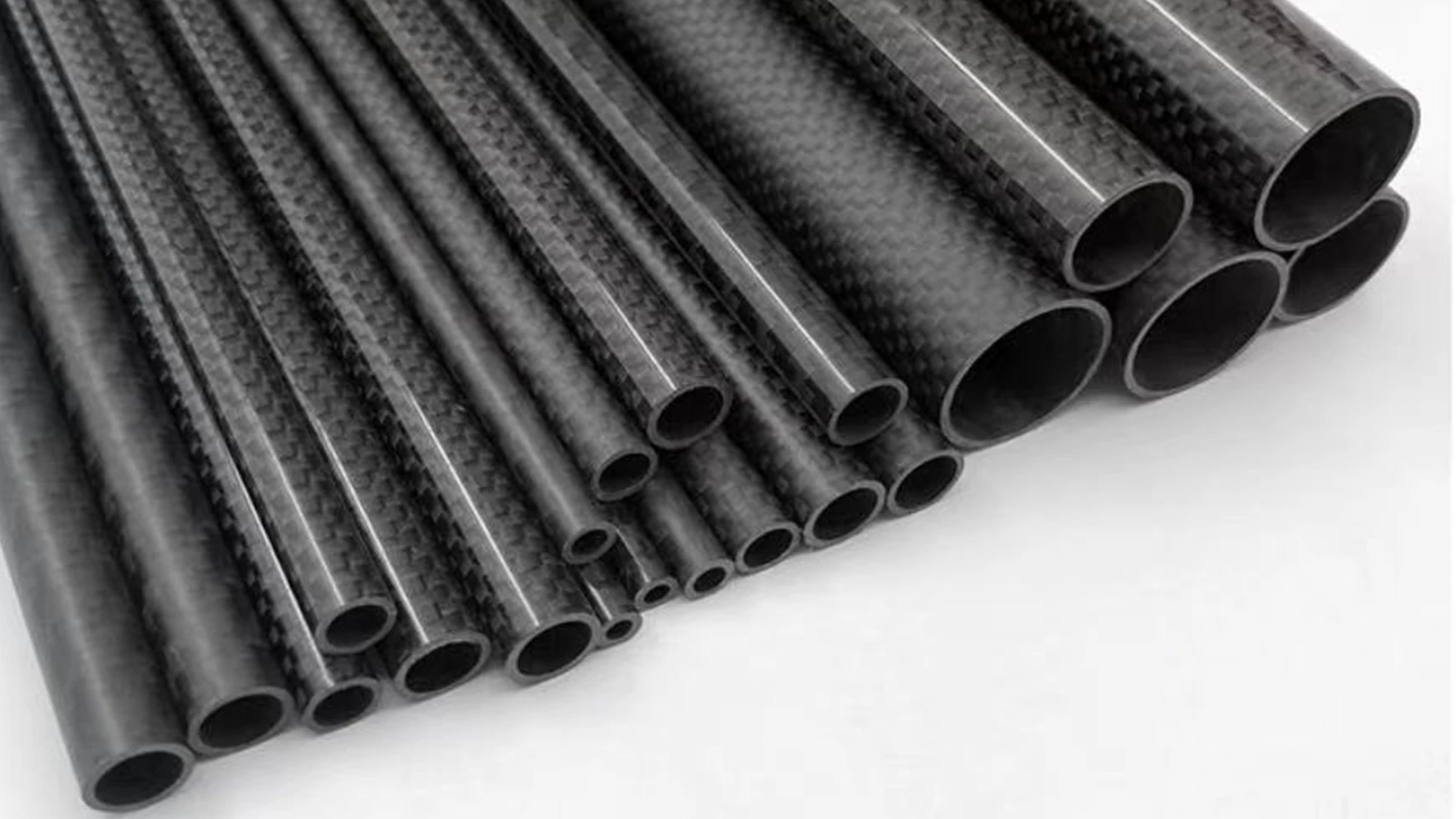
Property Comparison Table
| Property | Aluminum 6061-T6 | Carbon Fiber Composite |
|---|---|---|
| Density (g/cm³) | 2.70 | ~1.55 (43% lighter) |
| Tensile Strength (MPa) | 310 | 600–800 |
| Specific Modulus (GPa/(g/cm³)) | ~26 | ~130 (5× higher) |
| Fatigue Behavior | Endurance limit ~96 MPa | No yield point, excellent |
| Vibration Damping | Baseline (1×) | 8–10× aluminum |
| CTE (×10⁻⁶/°C) | 23.6 | 0.5–2.0 (near zero) |
| Weight Reduction (same stiffness) | Baseline | 40–50% lighter |
| Corrosion Resistance | Oxidizes, needs coating | Excellent — no rust |
| Upfront Cost | Low | Higher |
| Best Use Case | Static brackets, low-cycle parts | High-speed, high-precision arms |
Rigidity and Fatigue: Where the Gap Widens
On paper, aluminum’s elastic modulus (~69 GPa) looks competitive. However, the number that actually matters for robot arm design is specific stiffness — stiffness per unit weight. In contrast, carbon fiber’s specific modulus of ~130 GPa/(g/cm³) is roughly 5× higher than aluminum’s ~26 GPa/(g/cm³). As a result, you can build a carbon fiber arm that is simultaneously lighter and stiffer, or match aluminum’s stiffness at less than half the weight.
For high-speed pick-and-place arms chasing sub-millimeter repeatability, that specific stiffness margin is what separates a good design from one that cannot hold tolerance. After all, lighter links reduce motor torque requirements, while stiffer links reduce end-effector deflection under load. Consequently, both benefits compound through every joint in the kinematic chain.
Fatigue life is where the difference becomes structural. First, aluminum has a defined endurance limit — micro-cracks form under cyclic loading and propagate to failure. Carbon fiber composites, on the other hand, have no yield point. Under properly designed loads, their fatigue life is effectively unlimited. Therefore, when your robot arm runs 18 hours a day, 7 days a week, that difference shows up directly in maintenance costs and unplanned downtime.
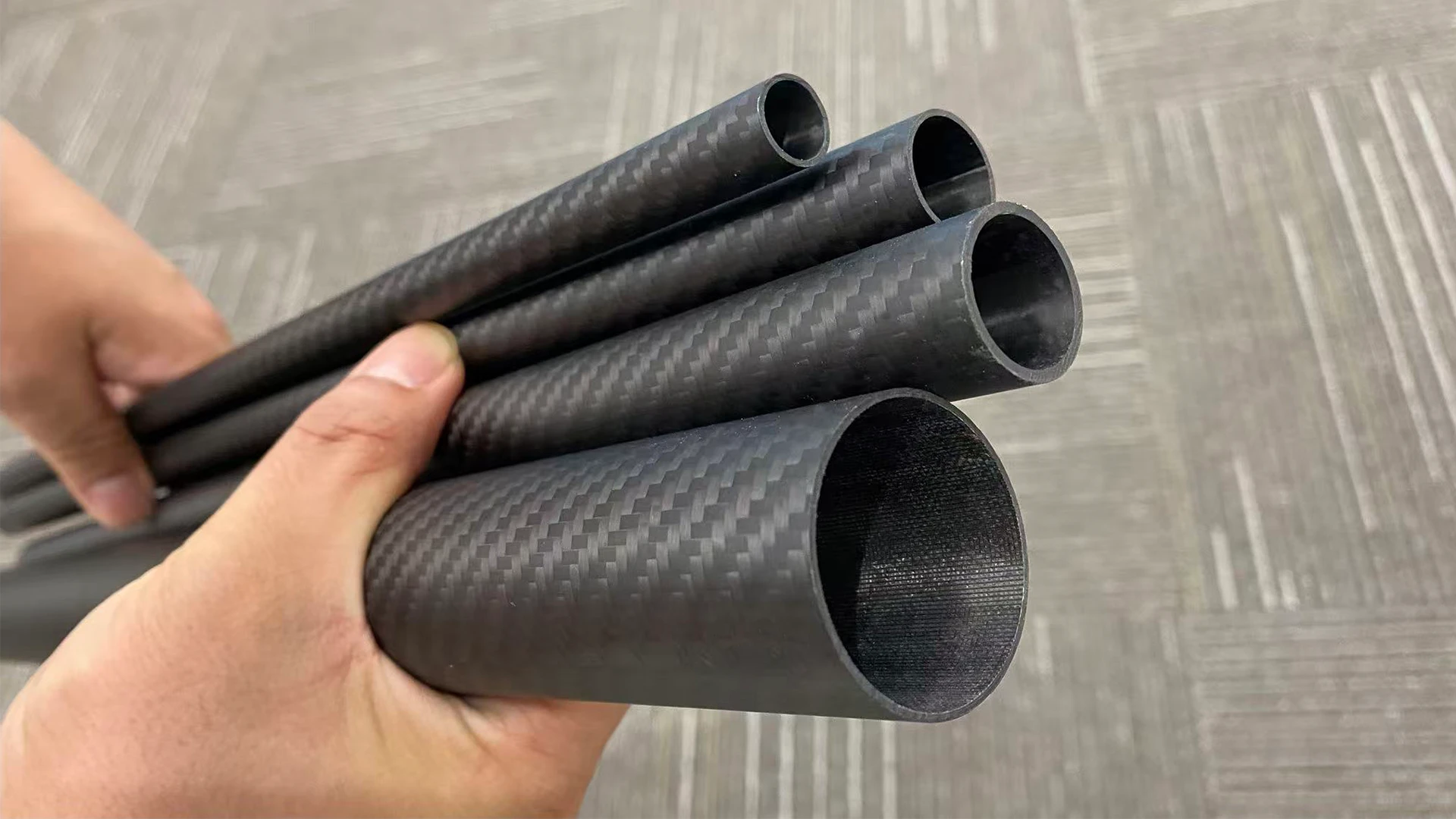
Vibration Damping and Thermal Stability
Notably, carbon fiber absorbs vibrations 8–10× more effectively than aluminum. In semiconductor handling, precision assembly, or CNC-guided robotic machining, this translates to faster settling times after each move and tighter positional accuracy. Given that a robot arm accelerates and decelerates thousands of times per shift, the material’s ability to dissipate vibration energy directly determines cycle time and part quality.
Equally critical in factory environments is thermal stability. Importantly, through layup design, carbon fiber’s coefficient of thermal expansion can be engineered close to zero — typically 0.5–2.0 × 10⁻⁶/°C, compared to aluminum’s 23.6 × 10⁻⁶/°C. On a factory floor near heat-generating equipment, an aluminum arm expands and contracts measurably with temperature shifts. Conversely, a carbon fiber arm does not. Accordingly, for robots tasked with precision placement — electronic component insertion, optical assembly, metrology — that dimensional stability is not optional.
When Aluminum Still Makes Sense
Admittedly, cost is aluminum’s main advantage. For static structural brackets, low-cycle components, or applications where the weight premium does not justify the material cost, aluminum is a reasonable choice. Additionally, it is faster to prototype with conventional machining — any machine shop can mill an aluminum bracket overnight.
Nevertheless, as robot speed, precision, and duty cycle demands increase, the total cost of ownership shifts. Because heavier arms need larger motors, more powerful drives, stronger bearings, and more frequent maintenance, the material savings at the component level get eaten — and then some — by downstream system costs. In fact, many high-performance robot designs find that carbon fiber ends up cheaper in total system cost when you account for the smaller motors, lighter gearboxes, and reduced service intervals it enables.