
How to Choose Carbon Fiber Sheet Strength for Structural Applications
Carbon fiber sheet strength cannot be judged by thickness or surface weave alone. Fiber grade, ply orientation, laminate construction, part geometry and load direction all influence how a carbon fiber plate performs in a real structural application.
One of the most common questions when sourcing structural carbon fiber plate is: “Which carbon fiber sheet is the strongest?”
The answer is not determined by one specification. A thicker sheet can provide considerably more bending rigidity than a thin sheet, but thickness alone does not tell you how the carbon fibers are arranged inside the laminate. Likewise, selecting T700, T800 or T1000 carbon fiber does not automatically guarantee the best result for every component.
For UAV structures, robotic equipment, automotive components and precision industrial parts, the better approach is to start with the load case and component geometry, then determine the appropriate fiber grade, laminate configuration, thickness and machining requirements.
What Actually Determines Carbon Fiber Sheet Strength?
Unlike a homogeneous metal plate, a carbon fiber sheet is a laminated composite. Its structural behavior depends on how the reinforcement is arranged throughout the thickness of the plate.
Several variables therefore need to be considered together:
- Carbon fiber grade: different grades provide different combinations of mechanical performance, processing requirements and cost.
- Fiber orientation: carbon fibers carry loads most effectively along their reinforcement direction.
- Laminate thickness: increasing thickness can substantially increase bending rigidity.
- Layup construction: the number and orientation of plies determine how loads are distributed through the plate.
- Finished geometry: holes, slots, narrow sections, edge distances and mounting locations all influence the finished component.
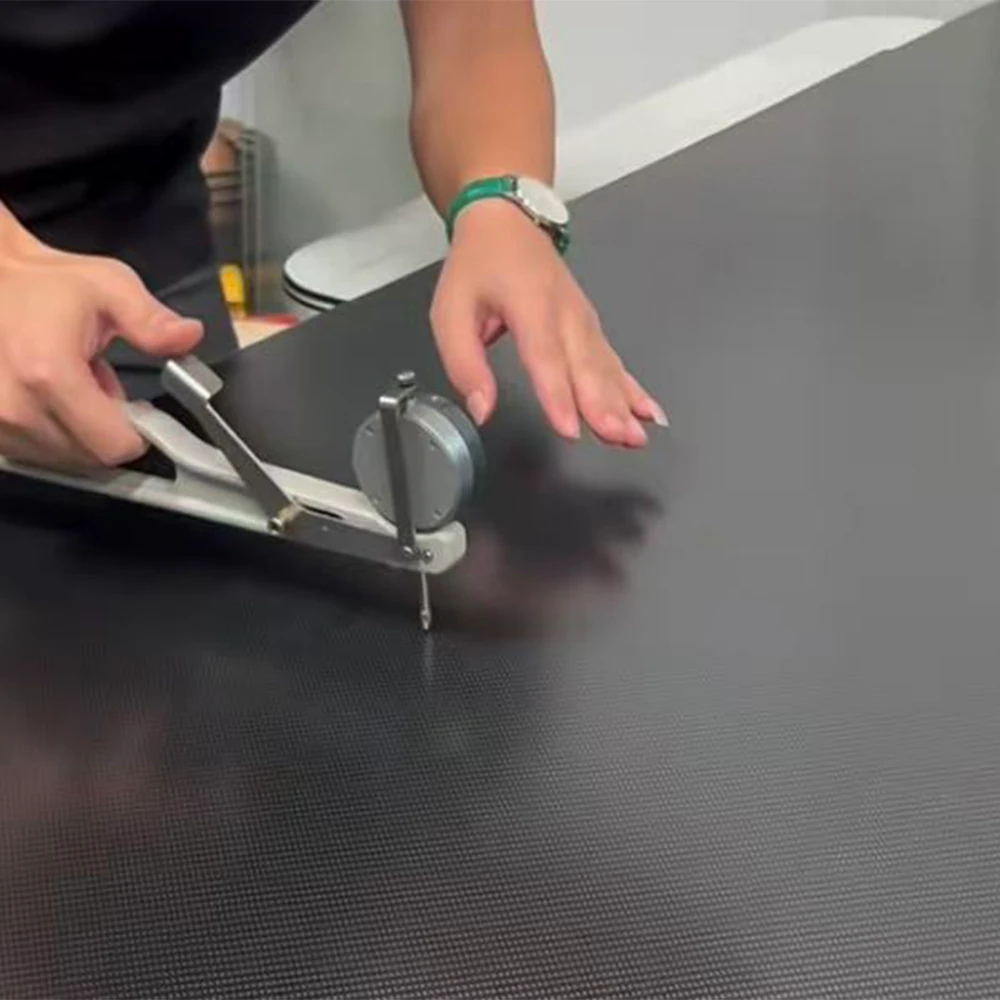
Why Fiber Orientation Matters as Much as Fiber Grade
Carbon fiber is highly directional. Fibers carry loads most efficiently along their reinforcement direction, so the internal architecture of a plate can be just as important as the grade of fiber used to manufacture it.
For a component carrying most of its load in one direction, more reinforcement can be concentrated along that axis. Components exposed to bending, torsion and multidirectional loads usually require a more balanced laminate arrangement.
This is why two carbon fiber sheets with the same overall thickness can behave differently after installation. A visible twill or plain-weave surface describes the outer appearance, but it does not provide a complete picture of the internal structural laminate.
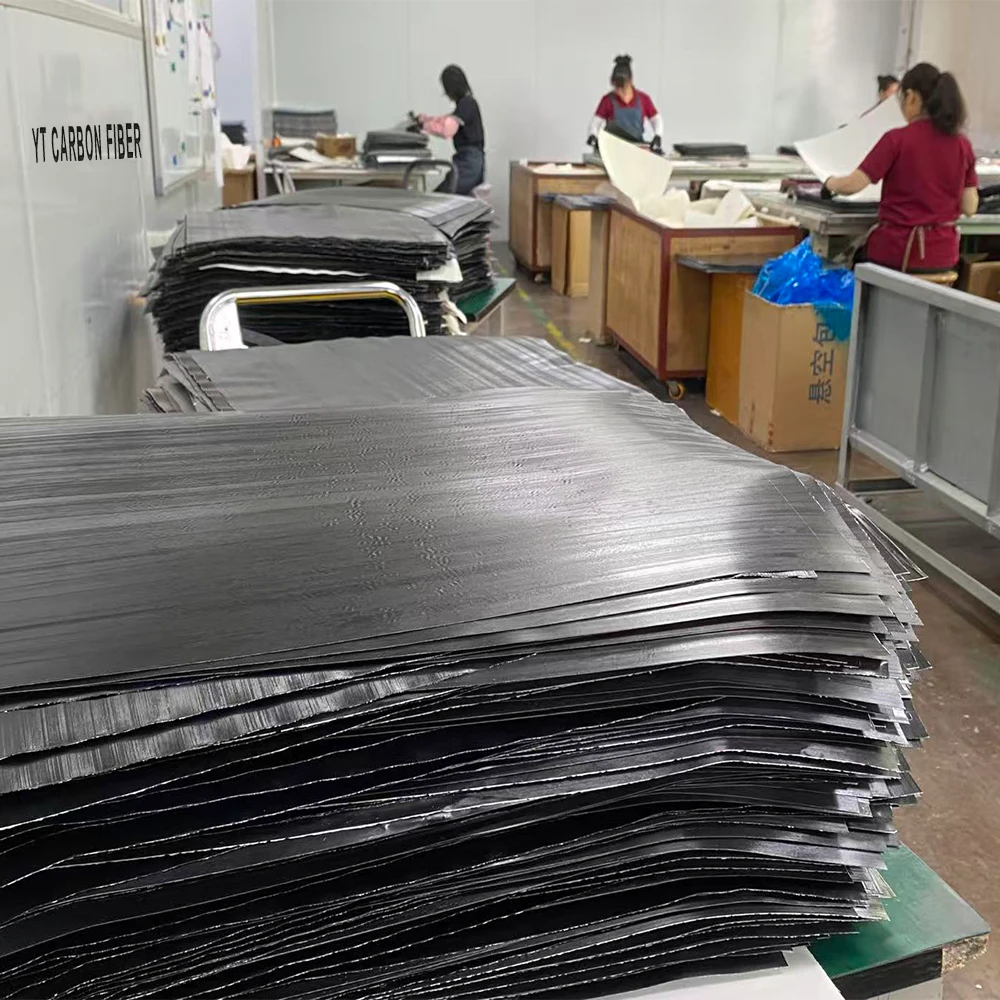
T300, T700, T800 or T1000: Which Carbon Fiber Grade Should You Choose?
YTCarbon can manufacture carbon fiber sheets using T300, T700, T800 and T1000 carbon fiber options. However, choosing the highest grade by name is not automatically the best engineering or commercial decision. The fiber should be selected together with the laminate construction, weight target, component geometry and expected loads.
| Fiber Grade | Selection Direction | Project Consideration |
|---|---|---|
| T300 | General engineering option | A practical option for projects requiring a balance between structural requirements, manufacturability and cost. |
| T700 | Higher-performance structural option | Can be considered when greater structural performance is required without automatically moving to the highest available fiber grade. |
| T800 | Advanced structural option | Suitable for projects where weight, stiffness and laminate design require more careful material optimization. |
| T1000 | Specialized high-performance option | Should be evaluated against actual structural requirements, laminate design, manufacturing needs and project budget rather than selected by grade designation alone. |
Engineering note: Fiber grade is only one part of a composite laminate. Final component performance also depends on fiber direction, laminate construction, thickness, geometry, processing quality and the actual loading condition.
Does a Thicker Carbon Fiber Sheet Always Mean a Stronger Part?
Increasing carbon fiber sheet thickness generally increases bending rigidity. This is why a 5mm plate can feel dramatically more rigid than a 1mm plate made with a similar laminate construction.
However, simply specifying the thickest possible sheet is rarely the most efficient solution. Additional thickness increases material use, component mass and cost. In UAVs, robotics and other moving equipment, unnecessary weight can reduce the benefit of using carbon fiber in the first place.
A better question is: what laminate thickness and fiber arrangement provide the required stiffness and load capacity without unnecessary weight?
This distinction is particularly important in structural carbon fiber components because thickness, load direction, mounting geometry and fiber orientation all interact with one another.
Matching Carbon Fiber Sheet Strength to the Application
UAV & Drone Structures
Weight is critical, but center plates, arms and equipment mounts must also resist motor vibration and flight loads. Material selection therefore needs to consider rigidity together with total airframe mass.
Robotics & Automation
Reducing the mass of moving components can improve the efficiency of robotic systems. Carbon fiber plates can be used for moving arms, end-effector structures and equipment supports where a high stiffness-to-weight ratio is required.
Industrial Equipment
Precision fixtures, machine components and equipment structures may prioritize rigidity and dimensional consistency rather than simply choosing the lightest possible sheet.
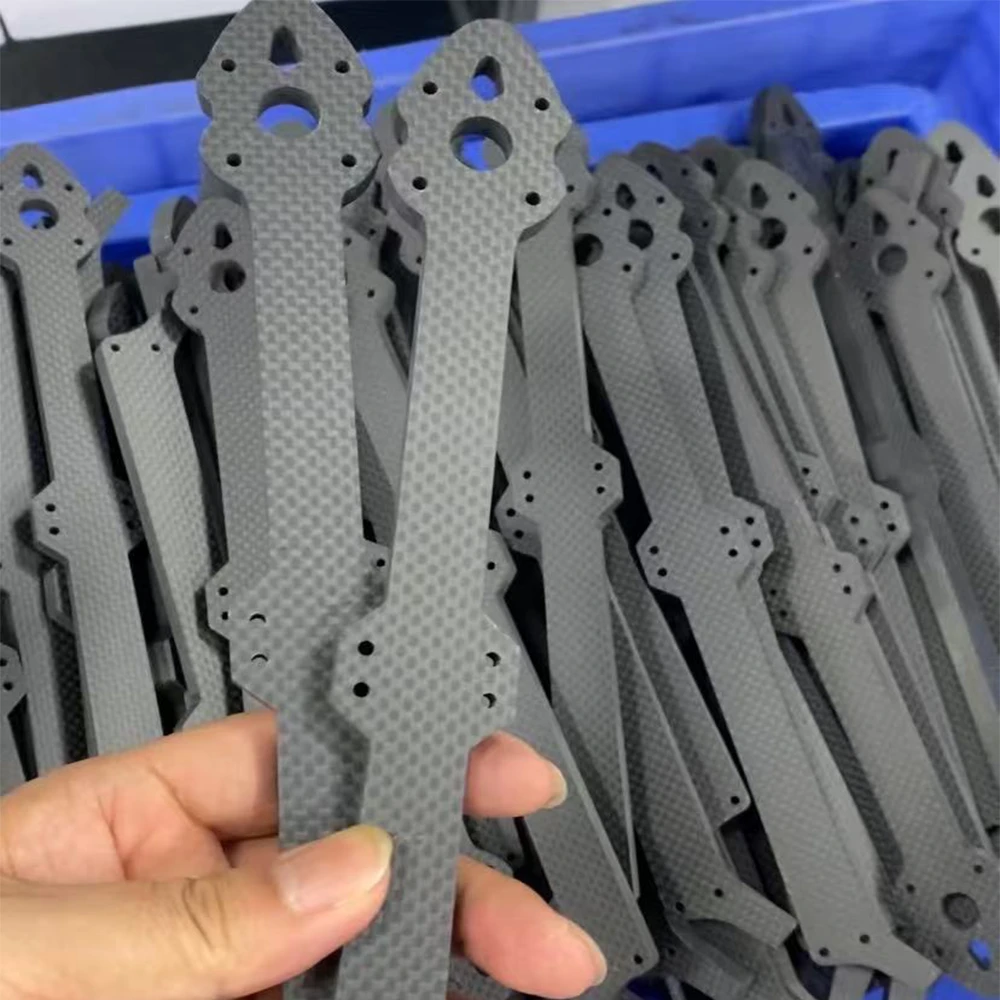
Do Not Ignore CNC Machining and Final Part Geometry
Selecting the right raw carbon fiber sheet is only part of the process. The geometry created during machining becomes part of the structural design.
Mounting holes located too close to an edge, narrow sections between cut-outs, sharp internal corners and unnecessary material removal can change how loads travel through the finished component.
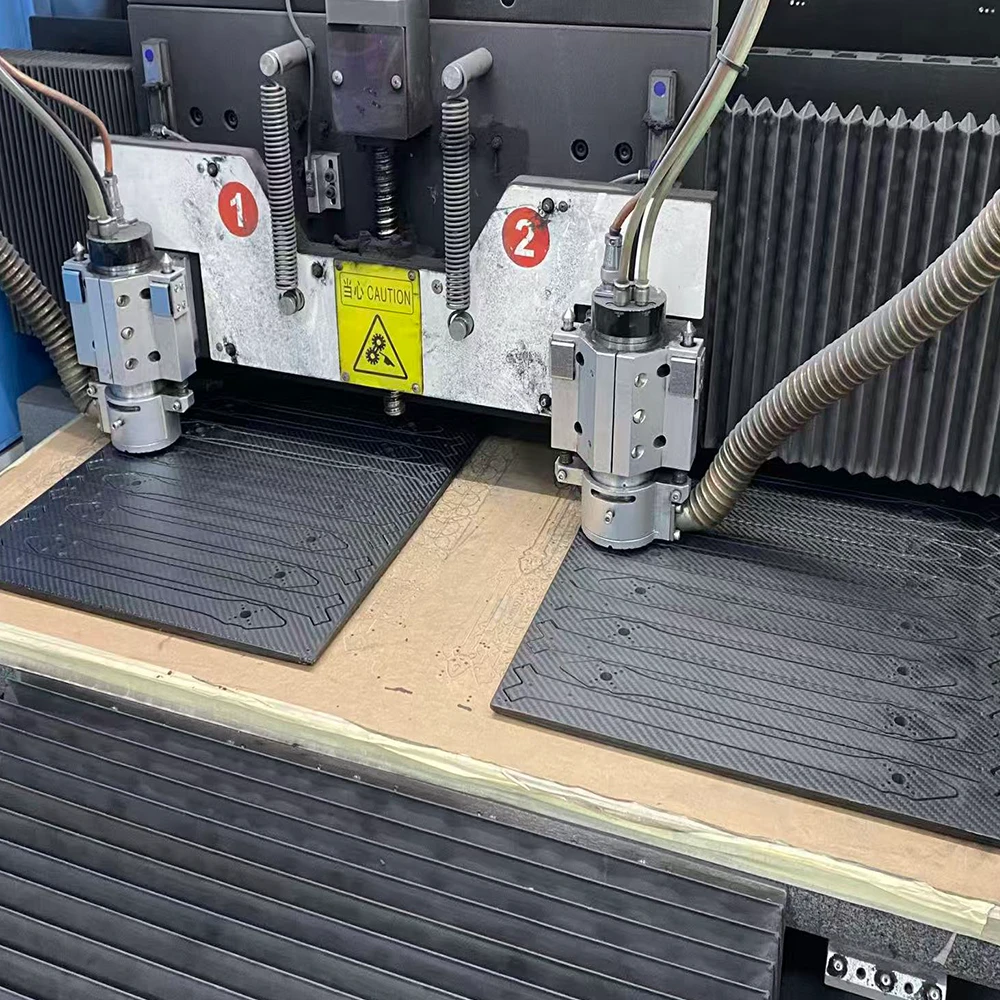
YTCarbon supports drawing-based CNC machining from STEP, STP and IGS files. Small-part CNC machining typically reaches approximately ±0.05–0.1mm depending on part geometry, while larger equipment can process material up to approximately 2.5 meters in length.
This allows customers to source both the carbon fiber sheet and the finished machined component from the same manufacturing workflow.
What Information Should You Send to a Carbon Fiber Sheet Manufacturer?
For a structural carbon fiber plate project, providing more than length × width × thickness helps the manufacturer understand the actual application and prepare a more useful quotation.
- Required sheet or finished component dimensions
- Target thickness
- Expected structural function or load direction
- Preferred carbon fiber grade, if already specified
- Surface pattern and finish
- Required quantity
- Critical dimensional tolerances
- STEP, STP or IGS drawing for CNC-machined components
If the material specification has not yet been finalized, sharing the application and design requirements usually provides more useful information than simply requesting the “strongest carbon fiber sheet.”
Looking for High Strength Carbon Fiber Sheet?
YTCarbon manufactures high strength carbon fiber sheets with T300, T700, T800 and T1000 options. Standard sheet sizes include 400×500mm, 500×500mm and 500×600mm, with large-format panels available up to approximately 2m × 4m. Drawing-based CNC machining is also available for OEM structural components.
Frequently Asked Questions
About the Author: YTCarbon Engineering Team
This article was prepared by the YTCarbon Engineering Team at Shenzhen Yuantan New Materials Technology Co., Ltd. Drawing on more than 12 years of experience in carbon fiber composite manufacturing, our team works with carbon fiber sheets, tubes, CNC-machined components and custom composite structures for international OEM and engineering projects. Our technical content is based on practical manufacturing experience, material selection, machining processes and customer application requirements.