Dragon Boat Festival 2026: Why Carbon Fiber Paddles Are Changing the Race
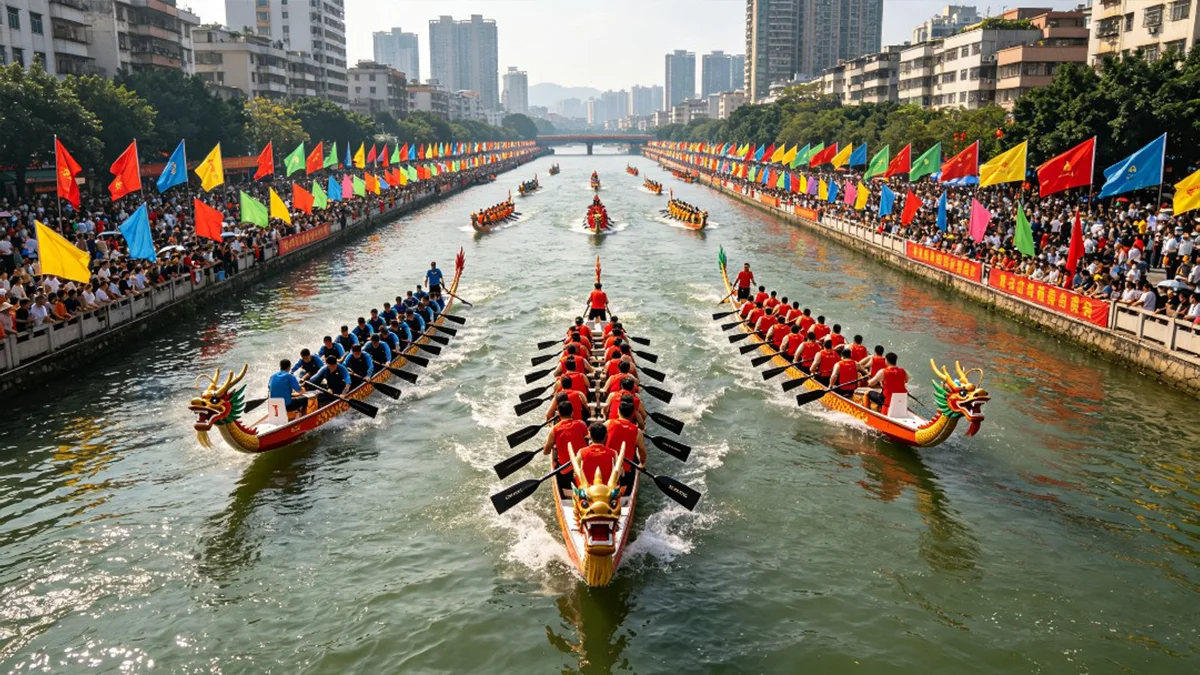
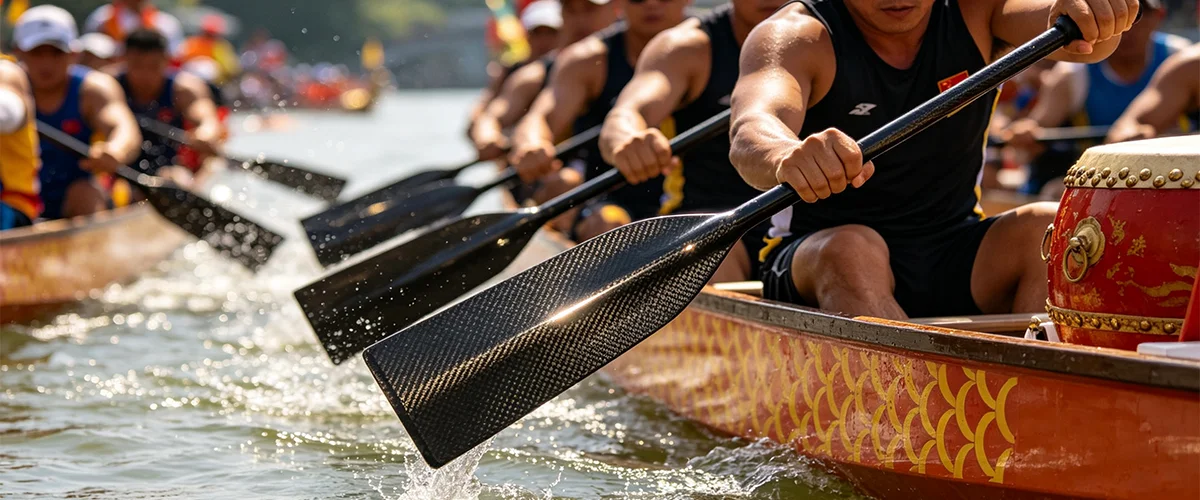
Every June, millions across Asia pick up paddles and take to the water for Dragon Boat Festival — a 2,000-year-old tradition honoring the poet Qu Yuan. But while the drums beat the same rhythm they did centuries ago, the equipment beneath the paddlers’ hands has quietly undergone a revolution. Wooden paddles are giving way to carbon fiber dragon boat paddles, and the difference isn’t subtle.
The Weight Difference That Changes Everything
A standard wooden dragon boat paddle weighs around 600–700 grams. A competitive-grade carbon fiber dragon boat paddle comes in at approximately 350–480 grams — roughly 45% lighter. That might not sound like much on paper, but in a 500-meter sprint at 40 strokes per minute, it changes the entire race.
Less weight means lower rotational inertia with each stroke. Paddlers can maintain higher cadence for longer without the shoulders and forearms burning out. Teams that switched to full carbon fiber paddles reported heart rates 5–7 BPM lower during continuous sprint drills, and the advantage compounds in the final 100 meters where races are won and lost.
Stiffness, Snap, and Stroke Efficiency
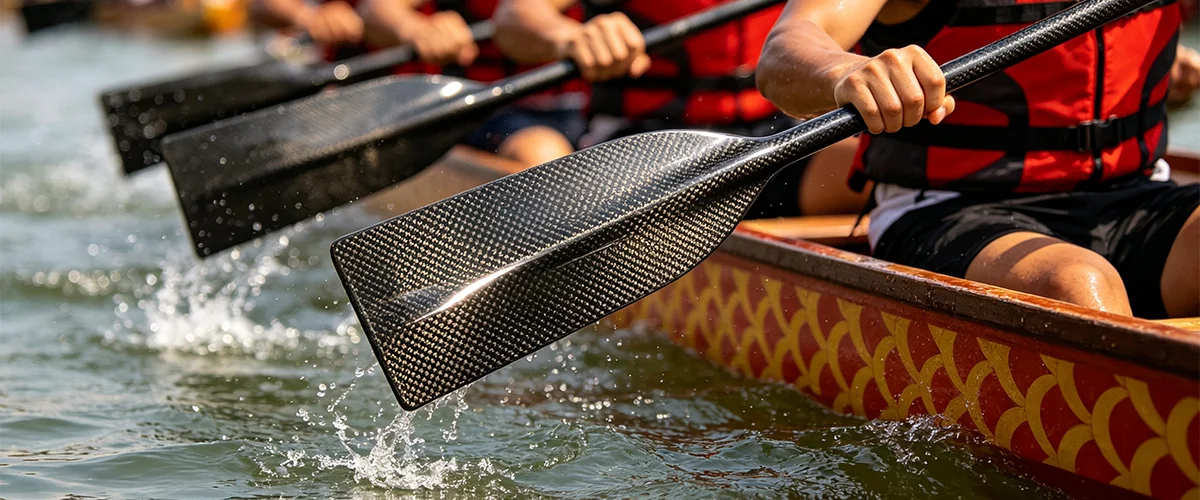
Carbon fiber’s defining property in paddle design isn’t just lightness — it’s the stiffness-to-weight ratio. Unlike fiberglass, which flexes unpredictably mid-stroke, a properly engineered carbon laminate holds its shape under load. Every ounce of force goes into moving water, not bending the shaft.
The blade itself uses a dihedral or ridged profile that splits water cleanly on entry, reducing the “slap” that wastes energy. Carbon fiber’s vibration-dampening properties also mean less shock transmitted to paddlers’ joints over hundreds of strokes — a critical factor in preventing rotator cuff injuries during multi-heat regattas.
Built to IDBF Standards
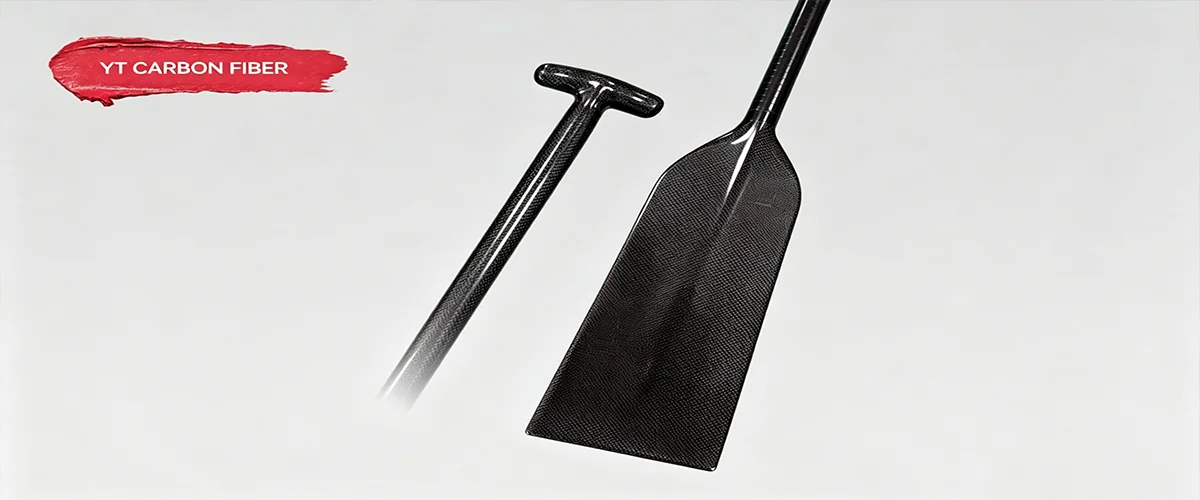
Competitive dragon boat paddles aren’t a free-for-all. The International Dragon Boat Federation (IDBF) maintains Specification 202a — a set of 40+ dimensional, material, and performance requirements that every certified paddle must meet. Blade dimensions are locked to 48cm × 18cm. Weight tolerances are tight. And every paddle carries an IDBF serial number traceable to its manufacturer.
This level of standardization ensures fair competition, but it also means the manufacturing behind these paddles is serious business. The hand layup process uses PMI foam cores for blade thickness control. Shaft and blade are formed as one piece — no junction gap — through a combination of pre-impregnated carbon fiber layup and CNC finishing. Reinforced edges with carbon filament resist impact damage from paddle-on-paddle contact at the start line.
Why This Matters for Carbon Fiber Manufacturing
A carbon fiber dragon boat paddle might seem like a niche product, but it represents exactly what modern composite manufacturing does best: take a demanding application, engineer to tight tolerances, and deliver a product that outperforms traditional materials by a measurable margin.
At Yuantan Carbon, we work with the same principles — high-modulus carbon fiber prepreg, CNC precision cutting, and hand-laid composite construction — across our full product range. Whether it’s a 0.2mm thin carbon sheet, a 4-meter carbon tube, or a custom-machined drone frame component, the manufacturing DNA is the same: light, stiff, and built to spec.
Dragon Boat Festival reminds us that tradition and technology aren’t opposites. The best paddlers in the world still follow a 2,000-year-old rhythm. They just do it with better tools.
Ready to Start Your Carbon Fiber Project?
Get a free quote and technical consultation — our engineers respond within 24 hours.