Product Details
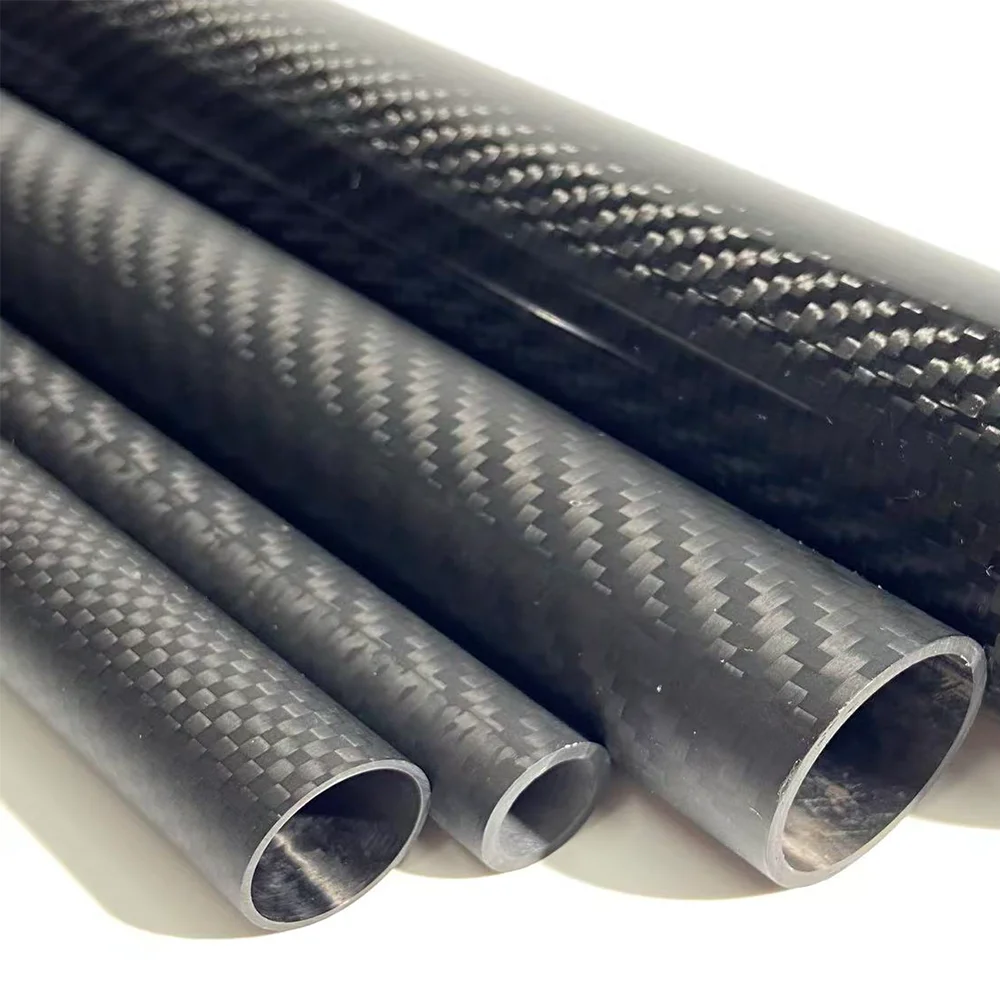
Roll wrapping is the carbon fiber tube process that gives you control over every layer. Pre-impregnated fabric sheets are cut, oriented, and wrapped one ply at a time onto a precision-ground steel mandrel — each ply at whatever angle your design requires. Then the whole assembly is vacuum-bagged, oven-cured, and demolded. The result is a tube where you know exactly what’s inside: how many plies, which direction each one runs, and where the cosmetic outer layer sits. If you need a hybrid layup — say, ±45° torsion plies in the core, 0° axial plies for bending, and a 3K twill cosmetic wrap on the outside — roll wrapping is the only process that delivers it cleanly.
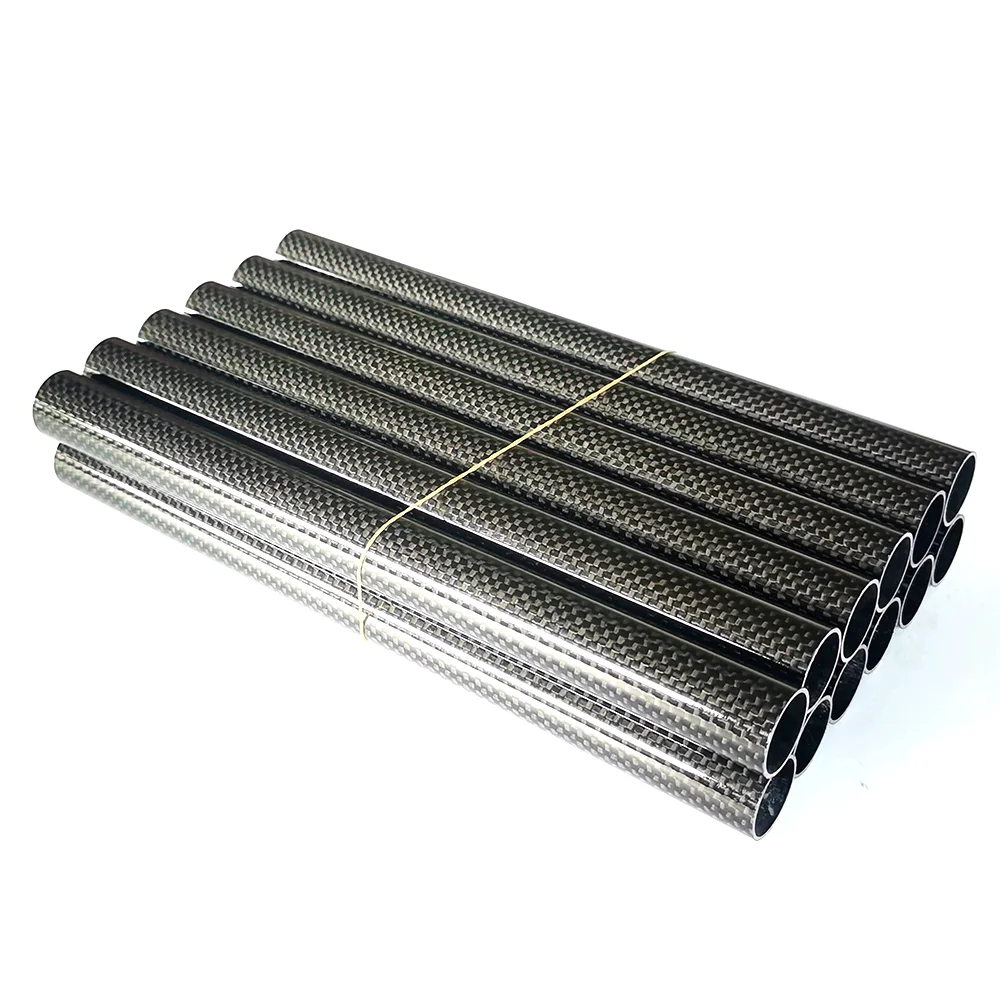
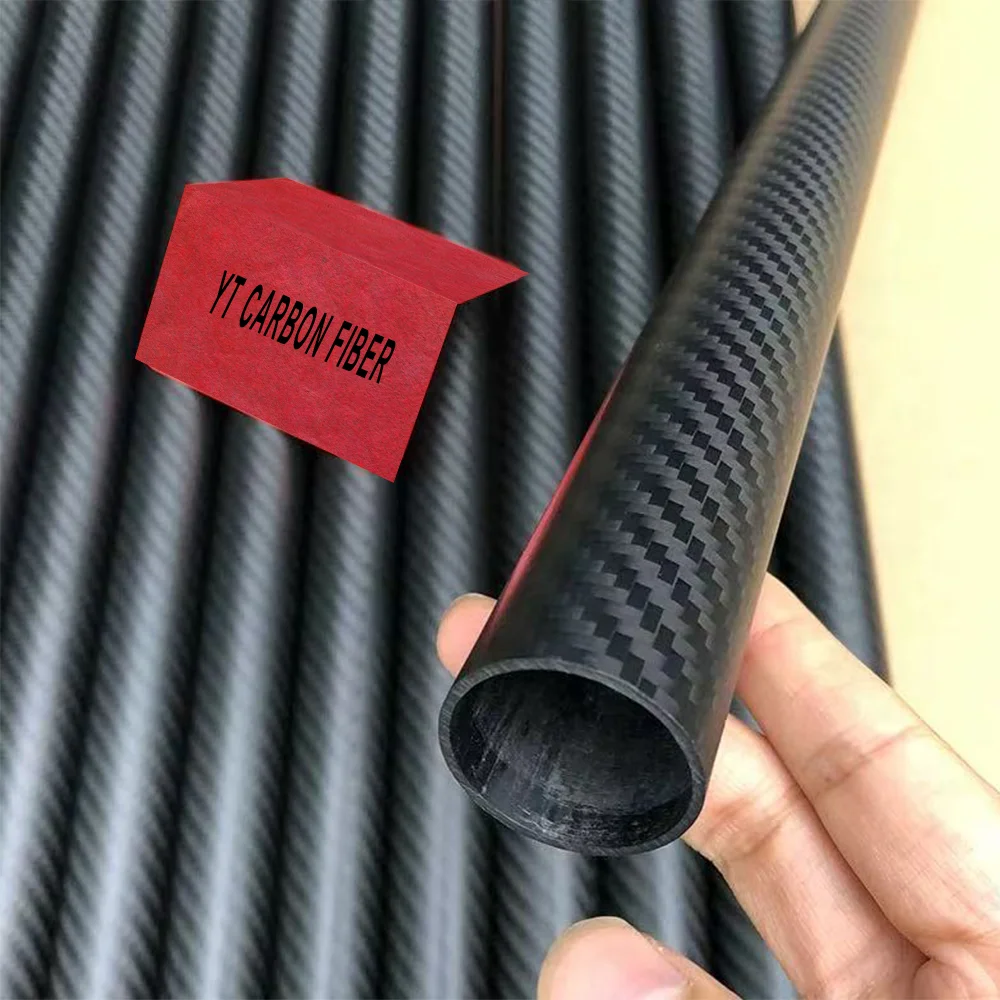
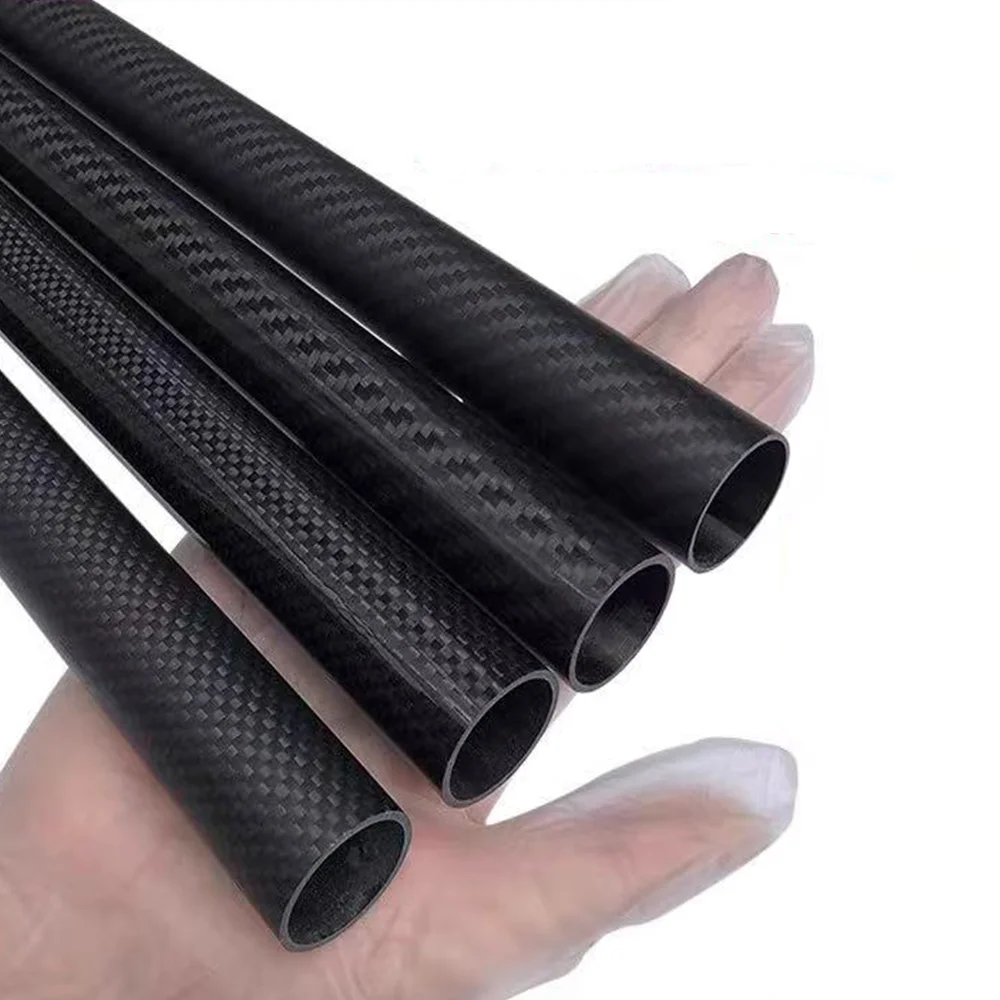
The other thing roll wrapping gives you is surface quality. Because the outer layer is a single continuous fabric wrap — not the skin of a die-formed profile — you get consistent weave alignment, no die marks, no drag lines, and no fiber washing. Glossy tubes come out with a deep, mirror-like resin finish. Matte tubes have a uniform low-gloss texture across the full length. For visible components where appearance matters — camera rigs, display stands, consumer product housings — that surface quality is the reason to choose roll wrapped over pultruded. For high-volume, cost-sensitive runs where surface finish is secondary, see our pultruded carbon fiber tubes.
We roll wrap these carbon fiber tubes in our Shenzhen factory on mandrels from 5mm to 200mm diameter, with round and square cross-sections available. Single-piece length is limited to approximately 4 meters by mandrel size — beyond that, we recommend pultrusion. Every mandrel is ground to ±0.02mm tolerance, and we measure OD at three points minimum along each tube after demolding. Our laminate database covers over 200 tested ply schedules, so when you tell us your load case, we’re not guessing — we’re selecting from proven configurations.
Specifications
| Specification | Details |
|---|---|
| Material | T300/T700/T800 carbon fiber pre-preg |
| Process | Roll-wrapped (mandrel-wound) |
| Cross-Section | Round / Square / Rectangular |
| Outer Diameter / Side | 5mm – 200mm |
| Wall Thickness | 0.5mm – 10mm (per-ply control) |
| Max Single-Piece Length | 4000mm (4 meters) |
| Layup Options | 0° / ±45° / 90° / hybrid combinations |
| Weave Options | 3K Twill / Plain / UD (inner) + Twill (outer) |
| Surface Finish | Glossy / Matte / One-side each |
| Fiber Volume Fraction | 60–65% |
| Density | 1.55–1.60 g/cm³ |
| OD Tolerance | ±0.05mm (standard) / ±0.02mm (ground) |
| Cure Temperature | 120°C (standard epoxy) |
| Mandrel Tolerance | ±0.02mm |
| Operating Temperature | -40°C to 120°C |
Applications
- Camera rigs and display stands — The glossy 3K twill outer layer looks as good as it performs. No die marks, no drag lines, no surface blemishes. For visible consumer and pro AV hardware, roll wrapped is the standard
- High-performance RC and UAV components — Hybrid layups (UD core + twill outer) give you torsional stiffness where you need it and a damage-tolerant cosmetic shell on the outside. Custom ply schedules per arm or spar
- Precision telescoping assemblies — Tight OD tolerance (±0.05mm standard, ±0.02mm ground) means nested sections slide smoothly with minimal play. Each layer is wrapped to a controlled thickness
- Medical and scientific instruments — Where every ply’s orientation is documented and traceable. Roll wrapping gives you a known, repeatable laminate — not a statistical average from a die
- Custom mechanical prototypes — Need a tube with 0° inner plies, ±45° mid-wall, and a 90° outer hoop wrap? Roll wrapping is the only process that builds it ply by ply. Change the layup between orders without retooling
Why Choose YTCarbon
- One plant, full control. We cut, wrap, vacuum-bag, cure, and inspect every tube in the same Shenzhen facility. No outsource wrapping, no mystery plies. We exhibited at the 2025 World UAV Expo — see what a real carbon fiber factory puts on the table
- 200+ tested laminate schedules. We’re not guessing when we recommend a layup. Our database covers torsion-optimized, bending-optimized, crush-resistant, and hybrid configurations across all common diameters and wall thicknesses
- Ply-by-ply documentation. Every tube ships with a layup record: ply count, angle, material, and sequence. For traceability requirements in aerospace and medical, this is the documentation you need
- ±0.02mm mandrel precision. Our ground-steel mandrels are the foundation of tube accuracy. We re-measure mandrel OD after every 50 uses — worn mandrels get reground or replaced before they affect your product
- Surface finish guarantee. No die marks, no fiber washing, no dry spots. If a tube has a cosmetic defect on the outer layer, we catch it at inspection and remake it — you never see it
Certifications
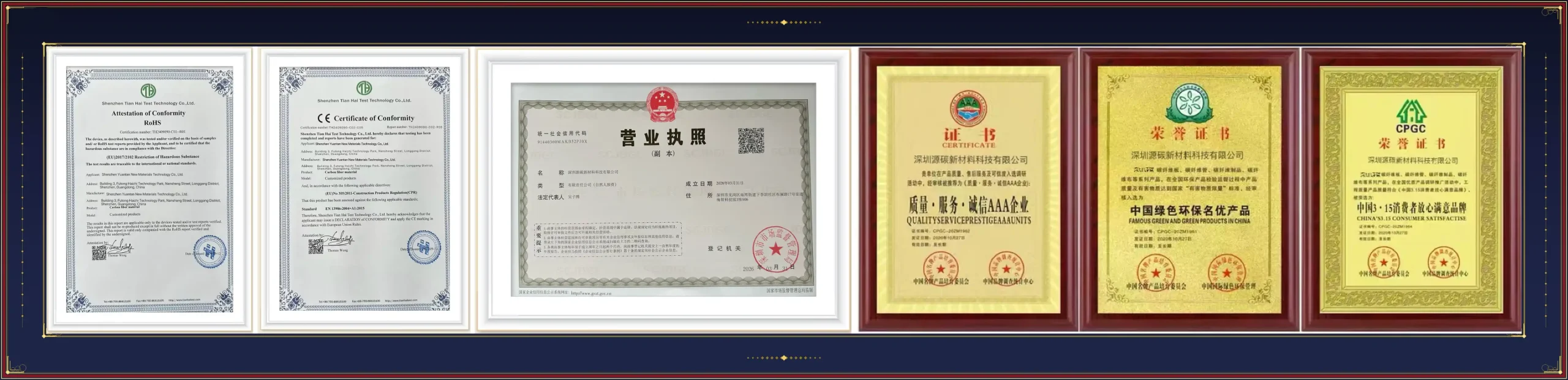
Every roll wrapped carbon fiber tube we ship carries documented quality credentials. Our facility holds ISO 9001 certification for quality management, and our materials are RoHS and CE compliant — required if you’re selling into the EU or supplying customers who need traceable material documentation. Need a copy for your records? Just ask and we’ll send the PDF.
How We Manufacture Your Tube
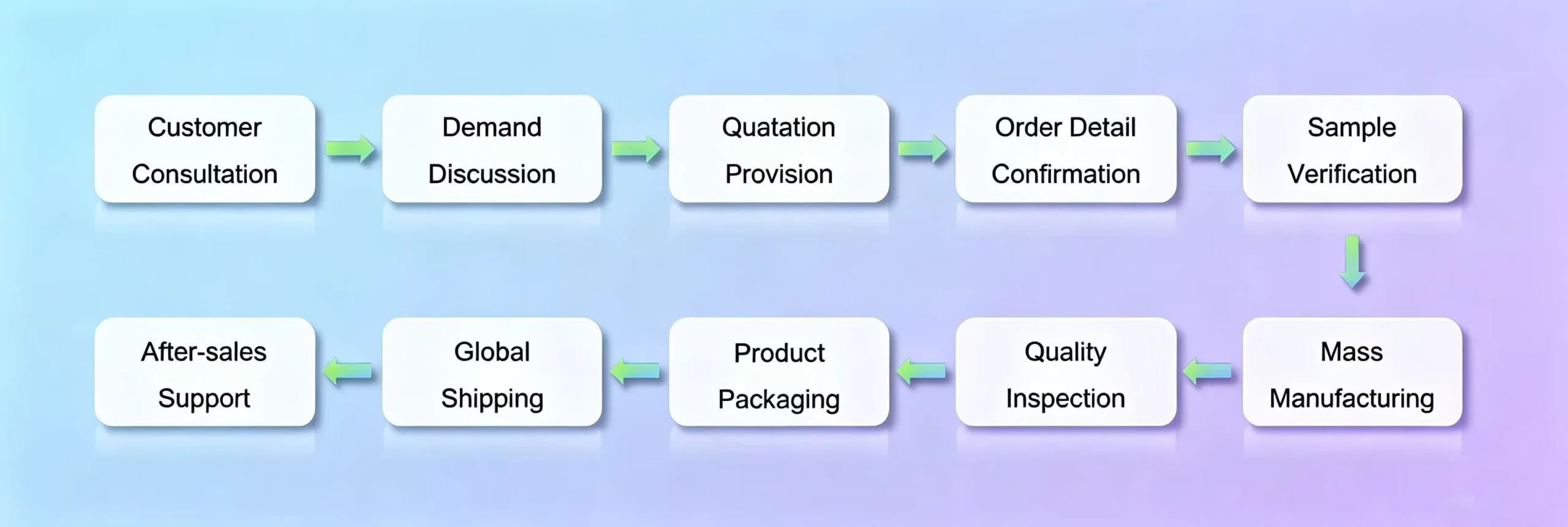
The roll wrapping process starts with pre-impregnated carbon fiber fabric — we cut each ply to width and angle on a CNC cutting table, then wrap it onto a precision-ground steel mandrel in the sequence your laminate schedule requires. Once all plies are in place, the wrapped mandrel is sealed in a vacuum bag and loaded into our curing oven at 120°C under controlled pressure. The vacuum consolidates the laminate, squeezing out trapped air and excess resin to achieve the target fiber volume fraction. After curing, the tube is demolded, trimmed to length, and measured at a minimum of three cross-sections for OD, ID, wall thickness, and roundness. Surface finish is inspected visually and by touch — glossy tubes must be free of pinholes and dry spots; matte tubes must have uniform texture. Each tube’s layup record is archived by batch number for full traceability.
Frequently Asked Questions
+ What is the difference between roll wrapped and pultruded carbon fiber tubes?
+ Can I specify a custom laminate schedule for a roll wrapped tube?
+ Why does a roll wrapped carbon fiber tube have better surface finish?
+ What is the maximum length for a roll wrapped carbon fiber tube?
+ How do you ensure ply alignment and avoid wrinkles in roll wrapping?
Need a Custom Roll Wrapped Carbon Fiber Tube?
Custom laminate schedule, surface finish, and cross-section. Ply-by-ply documentation on every order. Factory direct from Shenzhen.