
1mm Carbon Fiber Sheet: 6 Applications for Ultra-Thin CF
A 1mm carbon fiber sheet sits in a unique space — too rigid to be called a veneer, too thin to be a structural panel. Yet that exact balance makes it the go-to material for applications where every gram and every millimeter matters. Here are six real-world uses that demand ultra-thin carbon fiber.
1. Electronics Enclosures & Device Covers
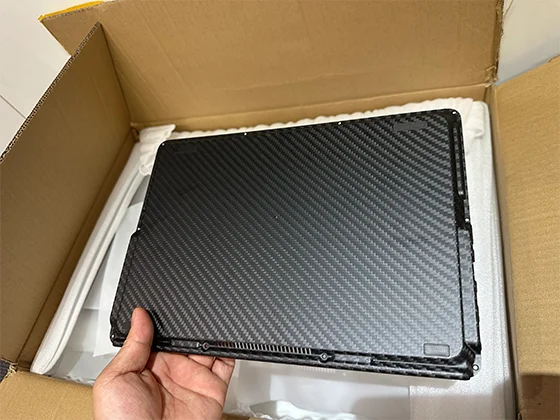
Modern laptops, tablets, and industrial instruments share a common challenge: replacing plastic housings with something stiffer and more premium — without adding weight. A 1mm carbon fiber sheet answers that call perfectly.
At 1mm thickness, a carbon fiber panel fits the same envelope as a plastic shell but delivers roughly 5x the flexural stiffness. Therefore, ultrabook covers, tablet backs, and handheld device housings can maintain their slim profiles while gaining structural integrity that ABS or polycarbonate simply cannot match.
Furthermore, the material’s natural EMI shielding properties add a functional advantage for electronics — no secondary conductive coating needed. Designers get structural, aesthetic, and electrical benefits from a single 1mm layer.
2. Drone Fairings & Aerodynamic Covers
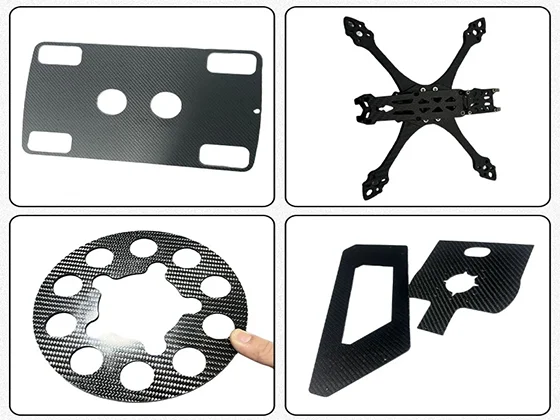
In the drone world, every gram directly impacts flight time. A 1mm carbon fiber sheet weighs approximately 1.5 kg/m² — roughly half the weight of a 2mm panel. Consequently, it has become the standard choice for top shells, canopy covers, and aerodynamic fairings on both commercial and racing UAVs.
The 1mm gauge provides enough rigidity to hold shape under aerodynamic loads at speed, yet flexes just enough to absorb landing impacts without cracking. In particular, agricultural drones, inspection platforms, and delivery UAVs all use thin carbon fiber skins to maximize payload capacity while protecting internal electronics.
Moreover, the sheet can be CNC cut to complex shapes for mounting sensor cutouts, GPS antennas, and ventilation patterns — all in a single machining operation.
3. Sensor & Instrument Panels
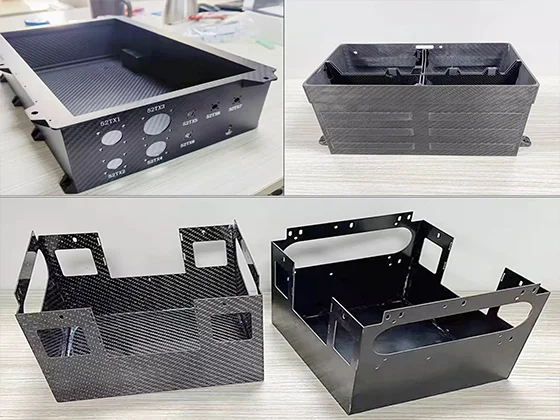
Precision sensors — accelerometers, gyroscopes, pressure transducers — require mounting surfaces that remain dimensionally stable under thermal cycling and vibration. A 1mm carbon fiber sheet provides exactly that stability.
Carbon fiber’s coefficient of thermal expansion approaches zero along the fiber axis. In other words, a sensor panel cut from 1mm CF sheet will not warp, bow, or shift when temperatures fluctuate between -20°C and 80°C — a range that causes aluminum panels to expand measurably and plastic panels to deform.
Additionally, the material is radiolucent, meaning X-rays and other imaging wavelengths pass through with minimal interference. This makes 1mm carbon fiber panels ideal for medical diagnostic equipment housings where internal components must remain visible to imaging systems.
1mm Carbon Fiber vs. Plastic vs. Aluminum
| Property | 1mm CF Sheet | 1mm ABS Plastic | 1mm Aluminum |
|---|---|---|---|
| Weight (per m²) | ~1.5 kg | ~1.1 kg | ~2.7 kg |
| Flexural Stiffness | Very High | Low | Medium |
| Thermal Expansion | Near Zero | High | Medium |
| EMI Shielding | Natural | None (needs coating) | Excellent |
| Radiolucency | Yes | Partial | No |
| Corrosion Resistance | Excellent | Good | Poor (needs treatment) |
4. Automotive Interior Trim
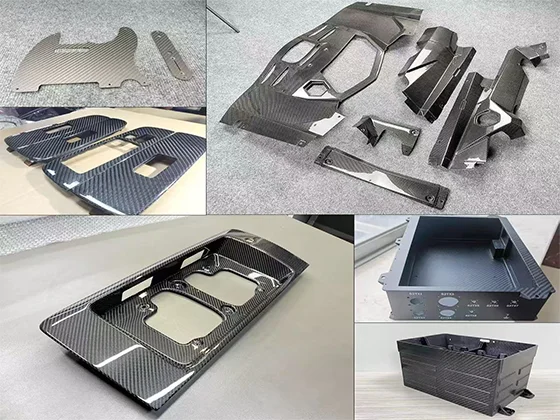
Premium vehicle interiors increasingly feature carbon fiber accents — dashboard overlays, center console panels, door trim inserts, and steering wheel inlays. The 1mm gauge fits seamlessly into existing design envelopes without creating clearance issues with surrounding components.
Specifically, the visual impact of real carbon fiber weave under clear coat outperforms any hydro-dipped or vinyl-wrapped imitation. OEMs and aftermarket suppliers both recognize that genuine carbon fiber interior trim commands higher perceived value — and the 1mm thickness keeps material costs manageable for visible, non-structural applications.
In addition, the material withstands the temperature extremes inside a parked vehicle (up to 120°C surface temperature in direct sun) without warping or discoloring, unlike plastic trim pieces that can deform over time.
5. Medical Device Housings
Medical diagnostic equipment — portable X-ray units, ultrasound probes, and patient monitoring devices — demands housings that are lightweight, sterilizable, and transparent to imaging wavelengths. A 1mm carbon fiber sheet satisfies all three requirements simultaneously.
First, the radiolucency of carbon fiber at 1mm thickness allows X-ray beams to pass through with minimal attenuation, meaning housing panels do not create imaging artifacts. Consequently, diagnostic accuracy remains uncompromised — a critical requirement for medical certification.
Second, carbon fiber composites withstand standard hospital sterilization protocols including alcohol wipes, UV exposure, and autoclave temperatures (for brief cycles). The material does not degrade, discolor, or outgas under these conditions.
Finally, the weight reduction compared to metal housings makes portable medical devices easier to transport between examination rooms, reducing staff fatigue and improving point-of-care flexibility.
6. RC & Hobby Builds
The RC and hobby community has embraced 1mm carbon fiber sheets for chassis plates, frame reinforcements, and custom brackets across racing cars, boats, and aircraft. At this thickness, the material cuts easily with a Dremel, fine-toothed saw, or CNC router — making it accessible to both casual builders and serious competitors.
Furthermore, the stiffness-to-weight ratio gives competitive RC racers a tangible advantage. A 1mm CF chassis plate provides the same rigidity as a 2mm fiberglass plate at roughly 30% less weight. For racing classes with strict weight limits, that margin translates directly into faster lap times.
Moreover, the material’s fatigue resistance outperforms both fiberglass and polycarbonate. Repeated flexing from jumps, crashes, and vibration does not cause progressive cracking — the carbon fiber maintains its structural properties through hundreds of run cycles, making it a cost-effective choice despite the higher upfront material cost.
When to Choose 1mm Over Other Thicknesses
Not every project needs a 1mm sheet. Here’s a quick guide to help you decide:
Choose 0.5mm
Decorative veneers, wraps, and cosmetic overlays where no structural load exists
Choose 1mm
Self-supporting skins, enclosures, covers, and panels under distributed loads
Choose 2mm+
Structural brackets, load-bearing parts, and applications with concentrated point loads
Frequently Asked Questions
Need 1mm Carbon Fiber Sheets?
T300 and T700 grades, matte or glossy finish, CNC cut to your specs. Get a factory-direct quote today.